Amazon and Transaera Partner to Scale High-Efficiency Heat Pump Technology
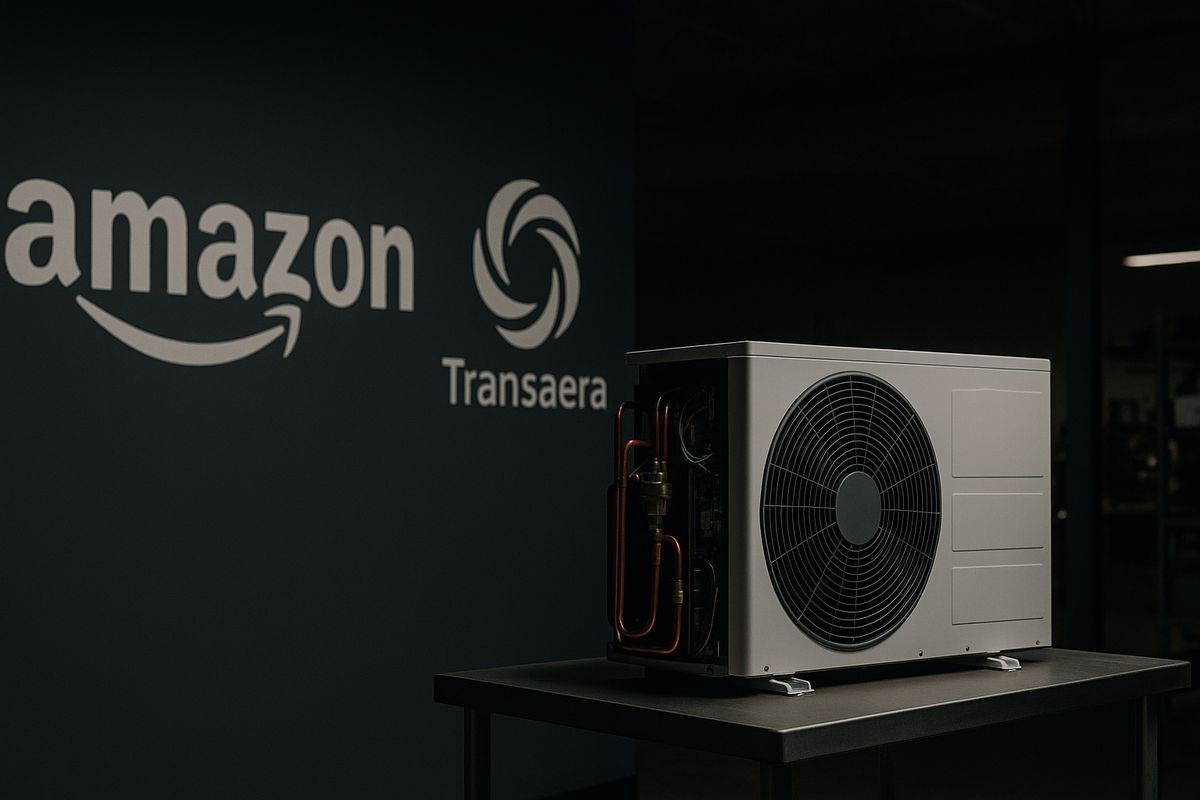
In a significant move toward decarbonizing data center operations, Amazon has announced a partnership with Transaera, a climate technology company, to expand the deployment of high-efficiency heat pump technology. The collaboration, covered by multiple news outlets including the Financial Times and PR Newswire, signals a strategic push by Amazon to reduce the energy intensity of its massive cloud computing infrastructure. While specific financial terms and deployment timelines were not disclosed in the available source material, the announcement underscores a growing trend among hyperscale cloud providers to integrate advanced thermal management solutions into their facilities.
Heat pumps, which transfer heat rather than generate it, are widely recognized for their potential to slash energy consumption in heating and cooling applications. Transaera, a startup spun out of MIT, specializes in novel sorbent-based heat pump technology that can achieve higher efficiencies than conventional vapor-compression systems. By partnering with Transaera, Amazon aims to retrofit or equip its data centers with these next-generation systems, potentially reducing both operational costs and carbon emissions. The move aligns with Amazon's broader Climate Pledge commitment to reach net-zero carbon by 2040.
What the Partnership Entails: Specifics of the Transaera-Amazon Deal
According to the company announcement, Amazon and Transaera will work together to expand the use of high-efficiency heat pump technology across Amazon's data center portfolio. The partnership focuses on deploying Transaera's proprietary heat pump systems, which utilize a unique sorbent material to capture and release moisture, enabling more efficient cooling in humid environments—a common challenge in data centers. This technology can reportedly achieve up to 30% higher efficiency compared to traditional heat pumps in certain conditions, though independent verification of these figures was not available in the source material.
The collaboration is not a one-off pilot but rather a strategic expansion. Amazon has already tested Transaera's technology in select facilities, and the new agreement aims to scale deployment to multiple data centers globally. The partnership also includes joint research and development efforts to further optimize the technology for data center-specific applications, such as managing the intense heat loads generated by servers and networking equipment. Amazon Web Services (AWS), the company's cloud computing arm, will be the primary beneficiary, as its data centers account for a substantial portion of Amazon's total energy consumption.
Background on Key Players: Amazon, Transaera, and the Heat Pump Landscape
Amazon's Climate and Data Center Strategy
Amazon is the world's largest cloud computing provider, with AWS generating over $90 billion in annual revenue. The company operates hundreds of data centers across the globe, each consuming vast amounts of electricity for computing and cooling. In 2019, Amazon co-founded The Climate Pledge, committing to achieve net-zero carbon emissions by 2040—a decade ahead of the Paris Agreement targets. To meet this goal, Amazon has invested heavily in renewable energy, electric delivery vehicles, and energy-efficient infrastructure. The partnership with Transaera is a natural extension of these efforts, targeting one of the hardest-to-abate sources of emissions: data center cooling.
Transaera: MIT Spin-Off with a Novel Approach
Transaera was founded in 2017 by a team of MIT researchers led by Dr. John B. Goodenough (no relation to the Nobel laureate) and Dr. Evelyn Wang, a professor of mechanical engineering. The company's core innovation is a sorbent-coated heat exchanger that removes moisture from air before it enters the cooling system, dramatically improving efficiency in humid climates. Traditional heat pumps lose efficiency when they must dehumidify air, but Transaera's technology decouples sensible and latent cooling, allowing the system to operate at peak performance. The company has raised venture capital from investors including The Engine, a Boston-based fund that backs tough-tech startups. Prior to the Amazon partnership, Transaera had focused on commercial building HVAC systems, but data centers represent a high-growth vertical.
The Heat Pump Technology Landscape
Heat pumps are not new—they have been used for decades in residential and commercial HVAC. However, recent advances in materials science and thermodynamics have pushed efficiency boundaries. Traditional vapor-compression heat pumps achieve coefficients of performance (COP) of 3–4, meaning they deliver three to four units of heat for every unit of electricity. Transaera's sorbent-enhanced system can achieve COPs of 5 or higher in humid conditions, according to company claims. Other players in the high-efficiency heat pump space include Trane Technologies, Carrier Global, and Daikin, but Transaera's niche focus on humidity management gives it a unique value proposition for data centers, which often operate in diverse climates.
Analysis: What This Means for the Data Center Industry and Climate Tech
The Amazon-Transaera partnership is emblematic of a broader shift in the data center industry toward sustainable cooling solutions. Data centers currently account for approximately 1–2% of global electricity consumption, and cooling systems can represent 30–40% of a facility's total energy use. As AI workloads and cloud computing continue to grow—driven by generative AI, streaming, and enterprise digitalization—the energy footprint of data centers is expected to rise sharply. Hyperscalers like Amazon, Microsoft, and Google are under increasing pressure from investors, regulators, and customers to decarbonize their operations.
Transaera's technology could be a game-changer because it addresses a specific pain point: humidity. In tropical and subtropical regions, where many data centers are located, conventional cooling systems must expend significant energy to remove moisture. By improving efficiency in these conditions, Transaera's heat pumps could reduce both energy costs and water consumption (since less condensate is produced). This is particularly relevant for Amazon, which has been expanding its data center footprint in regions like Southeast Asia, India, and South America.
However, the partnership is not without challenges. Scaling novel hardware from pilot to production is notoriously difficult, and data centers have stringent reliability requirements. Any cooling system failure can lead to server downtime, costing millions of dollars per hour. Transaera will need to prove that its technology can operate reliably at scale, with minimal maintenance, over the 10–15 year lifespan of a data center. Additionally, the upfront cost of retrofitting existing facilities with new heat pump systems could be significant, though Amazon's deep pockets and long-term energy savings may justify the investment.
From a competitive standpoint, this partnership gives Amazon a potential edge over rivals like Microsoft and Google, which are also investing in alternative cooling technologies. Microsoft, for example, has explored liquid immersion cooling and two-phase cooling for its data centers, while Google has used AI to optimize cooling efficiency. Amazon's bet on high-efficiency heat pumps suggests a preference for incremental, hardware-based improvements rather than radical redesigns of data center architecture.
What's Next: Implications, Predictions, and the Road Ahead
Looking forward, the Amazon-Transaera partnership could catalyze broader adoption of advanced heat pump technology across the data center industry. If the deployment proves successful, other cloud providers and colocation operators may follow suit, creating a new market for high-efficiency thermal management solutions. This could accelerate innovation in sorbent materials, heat exchanger design, and system integration, driving down costs and improving performance over time.
One key area to watch is regulatory tailwinds. Governments worldwide are tightening energy efficiency standards for buildings and industrial facilities. The U.S. Department of Energy, for instance, has proposed new rules for commercial HVAC equipment that would require higher efficiency levels. Similarly, the European Union's Energy Efficiency Directive mandates annual energy savings for large enterprises. These regulations could create a favorable environment for Transaera's technology, as data center operators seek compliant solutions.
Another implication is the potential for technology spillover. Transaera's sorbent-based heat pumps could find applications beyond data centers, including commercial buildings, hospitals, and even residential homes. Amazon's validation of the technology could attract additional investment and partnerships, helping Transaera scale its manufacturing and reduce unit costs. This, in turn, could make high-efficiency heat pumps more accessible to a broader market, contributing to global decarbonization efforts.
Finally, the partnership raises questions about the role of large tech companies in shaping climate technology. Amazon, with its immense purchasing power and operational scale, can effectively de-risk early-stage technologies by providing a guaranteed customer and real-world testing grounds. This model—where hyperscalers act as launch customers for climate tech startups—could become more common, accelerating the commercialization of innovations that might otherwise languish in the lab. For Transaera, the Amazon partnership is a validation of its technology and a springboard for growth. For the data center industry, it is a signal that high-efficiency heat pumps are no longer a niche experiment but a viable path toward sustainability.