
Bitcoin hits the headlines again, with BTC trading around $86,500
Bitcoin is back in the centre of the conversation on 23 September 2026, not because of a single dramatic announcement, but because the market is doing that quietly loud thing it sometimes does. Multiple live price trackers put BTC in the mid $86,000s today. One widely used retail trading app shows $86,428.40, while a major charting platform lists the current price at $86,529 and notes it is up 0.05% over the past 24 hours. That is not a fireworks move. But it is a meaningful level, psychologically and structurally, because it reinforces the idea that bitcoin is trading like a mature macro asset, not just a speculative punt.
And yes, the exact number varies slightly depending on the venue and timestamp. That is normal in a global, always on market. What matters is the cluster: bitcoin is hovering around $86.5k, and it is doing so without the kind of manic volatility that used to define the asset in earlier cycles. For anyone searching “bitcoin” today, the practical question is simple: what is driving this price zone, and what does it imply for the months ahead?
This story, then, is about a specific development that is easy to miss because it looks calm: bitcoin is holding a high level, with only marginal daily movement, while public discussion increasingly frames it as “digital gold”, a censorship resistant network, and a self custody asset where the old mantra still applies: not your keys; not your coins. That mix of price stability at elevated levels and ideology about verification and self custody is the real headline.
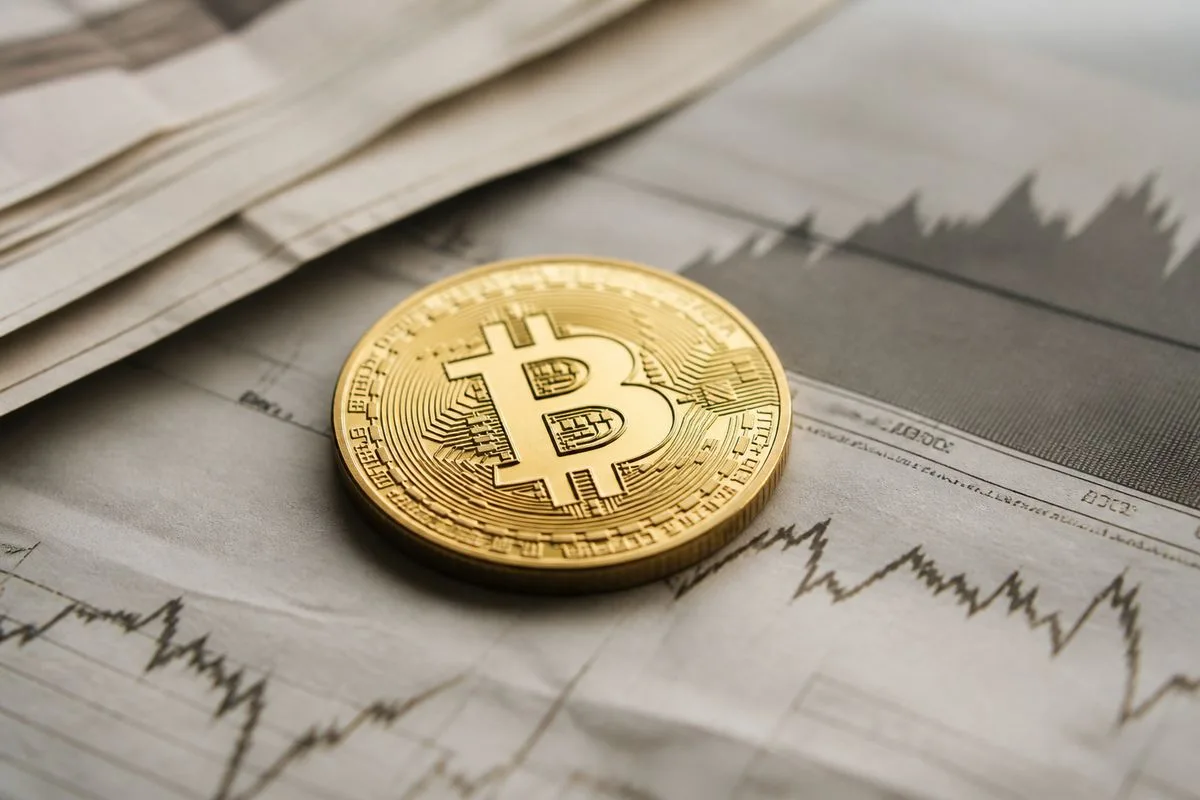
What the numbers actually say today, and what they do not
Start with the hard details available. A live price page on a popular trading app lists bitcoin at $86,428.40. A separate charting platform lists $86,529 and explicitly states the move is 0.05% higher in the past 24 hours. Those are the only concrete, time stamped figures in the supplied material, so any broader claims about weekly performance, monthly returns, or market capitalisation would be guesswork. Fair enough, but even this narrow slice tells a story: the market is not reacting to a single shock. It is digesting.
That 0.05% daily change is almost comically small by bitcoin standards. Historically, bitcoin is famous for days when it moves several percentage points before lunch. A near flat day at $86,500 suggests two things at once: there is enough liquidity to absorb routine buying and selling, and there is enough conviction on both sides that neither bulls nor bears are forcing a decisive break. It is a stalemate, but at a very high altitude.
There is also a second layer to today’s “news” that is less about price and more about narrative. One community description frames bitcoin as an open source, censorship resistant, peer to peer, immutable network, and calls it trackable digital gold. That language matters because it signals what many participants think they own when they buy BTC. Not a share in a company. Not a claim on cashflows. A bearer style asset secured by a network, where verification is the point.
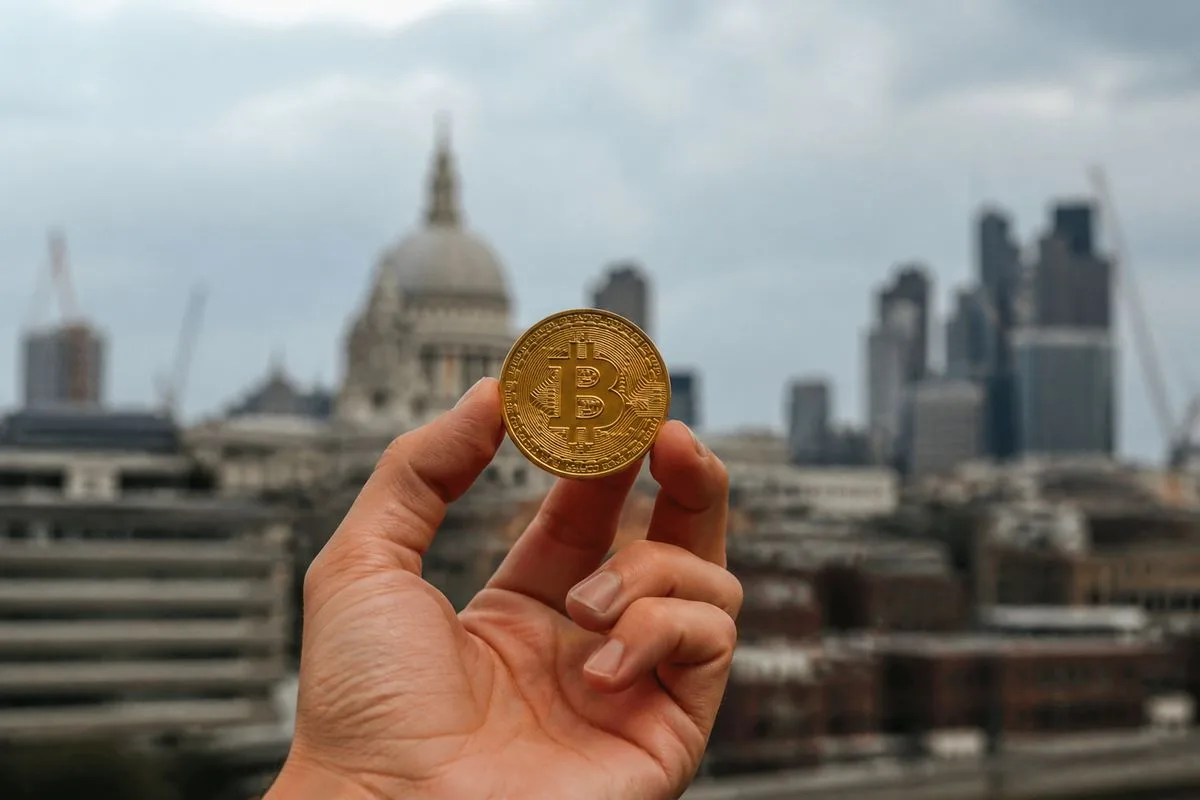
Bitcoin’s foundations: open source money, self custody, and the “don’t trust, verify” mindset
To understand why bitcoin can sit at $86,500 with a tiny daily move and still dominate attention, it helps to revisit what it is. Bitcoin is routinely described as an open source network that enables peer to peer value transfer without relying on a central authority. The emphasis on “immutable” is not marketing fluff, it is a claim about the ledger’s resistance to alteration once transactions are confirmed. That is the core of the asset’s credibility, and it is why so much of the culture revolves around verification rather than trust.
The phrase don’t trust; verify is more than a slogan. It is a design principle. In practice, it pushes users towards running their own checks, using transparent rules, and relying less on intermediaries. That naturally leads to the other mantra that keeps resurfacing whenever prices rise and new buyers arrive: not your keys; not your coins. The idea is blunt: if someone else controls the private keys, the user does not truly control the bitcoin. They have an IOU, not the asset itself.
This is where the unglamorous topic of wallets becomes central. A mainstream wallet directory frames the decision plainly: choose a wallet to store bitcoin so a user can start transacting on the network. That sounds basic, but it is a big deal. In traditional finance, custody is usually invisible. In bitcoin, custody is the product. And in periods when the price is high, the custody conversation gets louder because the stakes are higher. A small operational mistake can become an expensive lesson.
There is also a subtle point that long time holders tend to stress: bitcoin’s “value” is not just a number on a screen. One community discussion tries to explain it in terms of energy and security, arguing that the network stores a record of spent energy used to secure the system. The supplied material does not provide measurable figures for that claim, so it cannot be quantified here. But the framing is revealing: many participants see bitcoin as a settlement network with a cost to attack, not merely a speculative token.
How bitcoin gets here: a quick historical arc from sub-$1,000 to $86,500
Bitcoin’s current price zone makes more sense when placed against its longer trajectory. One general market overview notes that from 2016 to 2020, bitcoin’s price gradually recovered. By the end of 2016, it traded above US$900. In 2017, after breaking US$2,000 mid year, it soared. The material stops short of giving a precise peak, and it would be wrong to invent one here. But the direction is clear: bitcoin’s first mainstream boom period is tied to that 2017 acceleration.
Community recollections push the timeline even further back, and the numbers get almost surreal. A discussion about early monthly purchase dates describes prices around $13 in August 2011, $5 in October, and $3 in December. Those figures are presented as extraordinarily low, and they underline a point that newer buyers sometimes miss: bitcoin has always been volatile, but it has also been capable of long, grinding repricings over years. Not days. Years.
Put those snapshots together and the scale of the shift becomes obvious. Above $900 at the end of 2016. Above $2,000 mid 2017. And now around $86,500 in September 2026. That does not mean the path is smooth, it never is. But it does show why bitcoin attracts both evangelists and sceptics. The asset has a track record of surviving multiple narratives, multiple bubbles, and multiple “this time it’s over” moments, then reappearing at a higher plateau.

It also explains why today’s tiny 24 hour move is, paradoxically, interesting. When an asset that once lurched violently at much lower prices can sit near $86,500 and barely budge over a day, it suggests a different market structure. More participants. More hedging. More two way flow. And, crucially, more people treating bitcoin as something to hold through cycles rather than flip on headlines.
What is driving bitcoin sentiment right now: rally quality, short covering questions, and spot demand
Even without a single defining breaking news event in the supplied material, there is a clear theme in community chatter: people are debating the quality of the move. One recent discussion asks whether the rally is being driven by genuine bitcoin buyers or “just shorts getting squeezed”, and what would need to be seen before calling it a real breakout. That question matters because it goes to market mechanics. A rally powered by forced buying from short sellers can be sharp, but it can also fade once that pressure is relieved.
The same discussion hints at what traders look for as confirmation: spot volume. The source material does not provide actual volume figures, so the analysis has to stay conceptual. But the point is still useful for readers: if bitcoin rises mainly because leveraged traders are closing losing positions, the move can be fragile. If it rises because spot buyers are steadily accumulating, the move tends to be more durable. In other words, not all rallies are built the same, even if the price chart looks identical at first glance.
There is also a behavioural angle. At higher prices, the market attracts a different mix of participants. Some are long term holders who view bitcoin as “digital gold” and care about custody and verification. Others are momentum traders who care about breakouts and liquidations. When bitcoin is flat on the day, as it is now by the 0.05% measure, it often signals a temporary balance between these groups. The long term crowd is not panicking out, and the short term crowd is not forcing a directional move.
And then there is the retail interface effect. When a mainstream app displays bitcoin at $86,428.40, it normalises the idea that BTC is just another asset a person can buy. That accessibility can increase participation, but it can also encourage complacency about custody and risk. The market’s culture keeps pushing back with the same reminder: if the buyer does not control the keys, they do not control the coins. That tension between convenience and sovereignty is basically bitcoin’s story in miniature.
The Bigger Picture
The most interesting thing about bitcoin at $86,500 is not the number itself, it is what the number represents in 2026. Bitcoin increasingly behaves like a macro asset with a global audience and a permanent feedback loop between ideology, infrastructure, and price. The ideology is the “don’t trust; verify” ethos. The infrastructure is wallets, exchanges, custody tools, and the broader rails that make buying and holding possible. The price is the scoreboard that pulls in attention, which then pushes more people to learn the ideology and adopt the infrastructure. It is self reinforcing, for better and for worse.
There is also a quiet maturation happening in how people talk about value. Early debates often got stuck on whether bitcoin is “real”. Now, even sceptics tend to argue about what kind of real it is. Is it a store of value? A settlement network? A speculative asset? The community explanation that bitcoin stores a record of spent energy used to secure the network is one attempt to answer that. It is not a complete economic model, and the supplied material does not provide data to test it. But it shows the conversation moving away from vibes and towards mechanisms, security budgets, and incentives.

Finally, today’s near flat 24 hour move at a high price level hints at something many headlines miss: volatility is not just drama, it is information. When volatility compresses, it often means the market is waiting for a catalyst, or it is building a base, or it is distributing risk across more participants. In plain English, bitcoin is not just “up” or “down”. It is being absorbed into portfolios, trading systems, and long term plans. That is a different phase of adoption, and it changes the kinds of risks that matter. Less about whether the asset exists next year, more about who controls it, how it is stored, and how it behaves under stress.
What to watch next for bitcoin holders and would-be buyers
With bitcoin trading around $86,500 today, the next questions are practical. First, market participants will keep interrogating the rally’s foundations: is demand coming from spot buyers, or is it mostly positioning and short covering? Without volume and positioning data in the supplied material, no definitive call can be made here. But readers can still use the framework: sustainable moves tend to be accompanied by steady participation rather than sudden forced buying.
Second, custody remains the evergreen issue. As prices rise, the cost of mistakes rises too. The wallet question is not a side quest. It is central to the asset’s promise. Anyone engaging with bitcoin, whether through a retail app or a dedicated wallet, faces a trade off between convenience and control. And the culture’s warnings are not paranoia, they are a response to the asset’s bearer nature. If the keys are lost or compromised, there is no customer service desk that can reverse it.
Third, context matters. Bitcoin has moved from $900 at the end of 2016 to above $2,000 mid 2017, and now to the mid $86,000s in September 2026, based on the figures available in the source material. That long arc does not guarantee future gains, and it certainly does not eliminate drawdowns. But it does suggest that bitcoin’s core proposition, an open source, censorship resistant, peer to peer network, continues to attract capital and attention through multiple eras.
Closing thought: today’s “headline” is not a single event, it is a condition. Bitcoin is expensive, widely accessible, and oddly calm on the day. That combination tends to be when the serious questions start. What is it for? Who holds it? How is it secured? And what happens when the calm breaks, in either direction?