

Entrepreneurship books are having a moment, and it is not just hype
Entrepreneurship books are hardly new, but in 2026 they are being packaged and discussed in a more deliberate way: as a toolkit mapped to the founder journey, not a random pile of inspirational reads. That is the real news hook behind the latest “must read” round ups, including a widely circulated list from the U.S. Chamber of Commerce that explicitly organises recommendations by business growth stage and leans into practical, real world advice.
On the surface, a reading list is not exactly groundbreaking. But the framing matters. The U.S. Chamber’s editorial pitch is clear: founders are busy, days are unpredictable, and yet the best ones still carve out time to read because it improves decision making and personal growth. And in 2026, with capital tighter in many markets and customer acquisition more expensive than it used to be, that promise of “nimble and flexible” learning lands differently. It is less about hustle culture, more about survival and smart iteration.
The list itself spans leadership, strategy, innovation, financial skills, and personal development. It also highlights a shift that is easy to miss if someone only skims the titles: a stronger emphasis on who gets to be an entrepreneur, and what “credentials” actually count. Books such as Kathryn Finney’s Build the Damn Thing: How to Start a Successful Business If You're Not a Rich White Guy and Madeleine Shaw’s The Greater Good: Social Entrepreneurship for Everyday People Who Want to Change the World are not just business manuals. They are arguments about access, legitimacy, and power.
What is the specific 2026 development, and why does it matter?
The specific development is the publication and amplification of curated entrepreneurship books lists in 2026 that position reading as a staged, practical operating system for founders. The U.S. Chamber of Commerce’s “20 Must Read Books for Entrepreneurs This Year” is a prime example, explicitly promising “everything that you need to know to start your own business”, from business ideas and researching competition through to managing employees, keeping the books, attracting customers, and finding capital.

That might sound like standard small business editorial, but there are two notable angles in the source material. First, the list is presented as a structured pathway: “broken down by business growth stage”. Second, the write ups are not vague blurbs. They pull out specific founder pain points, like accessing capital, overcoming fear, and testing ideas through validated learning. In other words, the list is trying to function like a lightweight curriculum for entrepreneurship in 2026, aimed at both “current and aspiring founders”.
It also reflects a broader reality: entrepreneurship education is increasingly decentralised. Many founders are not going back to business school, and plenty do not want to. They are learning from books, podcasts, communities, and short courses, then applying the lessons immediately. The Chamber’s list leans into that behaviour, pitching reading as something that fits around the chaos of building a company rather than replacing it.
And yes, there is a commercial undertone, because there always is with business advice ecosystems. But the editorial choices still tell a story about what founders are anxious about in 2026: permission, capital, speed, and proof. Those themes show up again and again in the highlighted titles.
Inside the must read entrepreneurship books list: the themes that keep coming up
One of the most striking inclusions is Kathryn Finney’s Build the Damn Thing, described as a Wall Street Journal bestseller. The Chamber’s summary frames the book as a guide for entrepreneurs “struggling to find their way in a world created by and for the ‘Entitleds’.” It points to practical areas founders wrestle with, including business plans, team growth, investor relations, and product development. But the core message is more pointed: accessing capital remains one of the most challenging aspects of launching a business, and the book encourages entrepreneurs to “take up space” rather than waiting for permission.
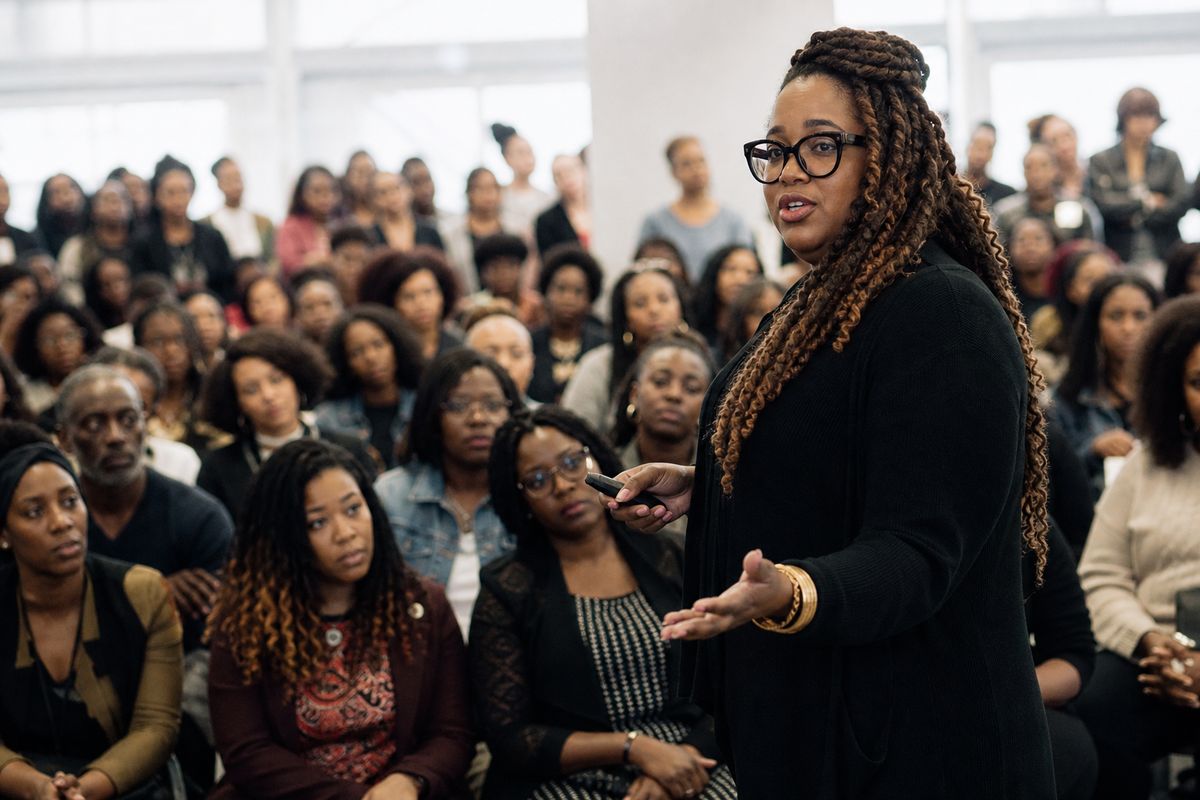
That is not just motivational language. It is a direct response to structural barriers that many founders experience, especially those outside traditional networks. The list does not provide statistics on funding gaps or approval rates, so it is important not to overclaim. Still, the editorial emphasis on capital access and legitimacy signals what the Chamber believes its audience needs to hear in 2026: the playing field is uneven, but founders can still build with the resources available.
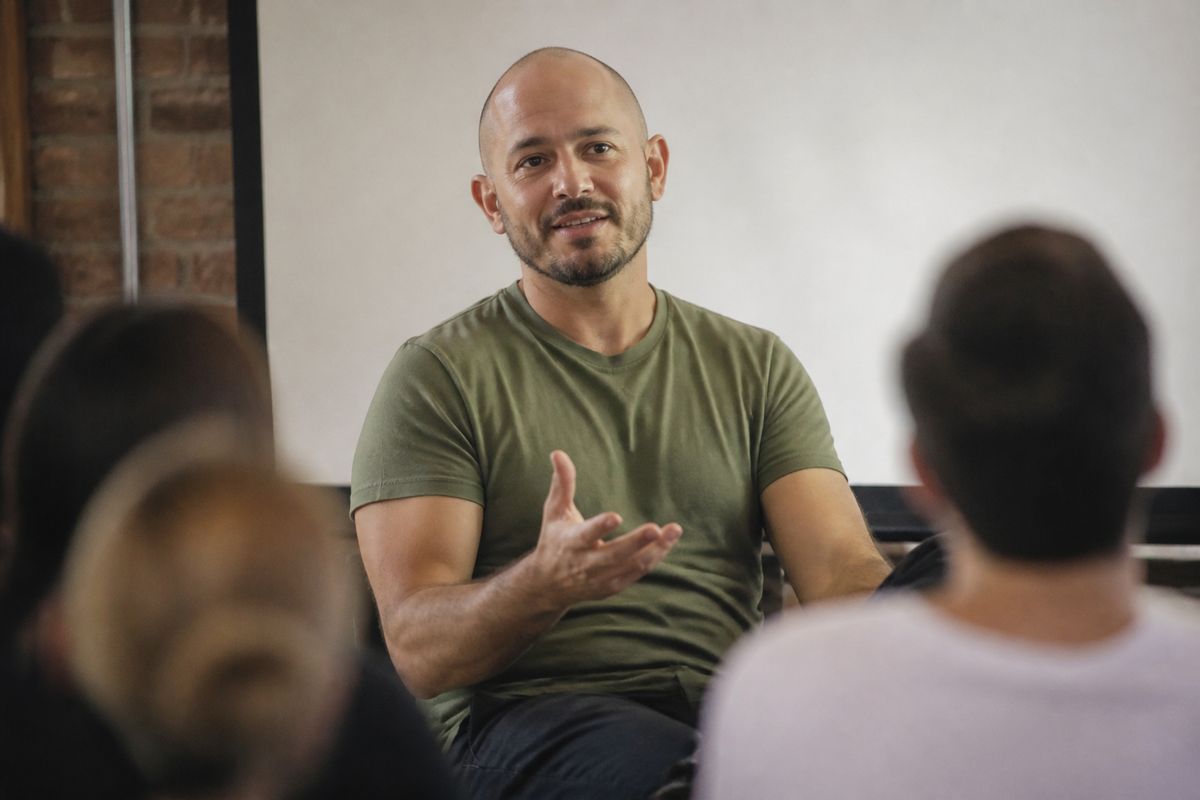
Noah Kagan’s Million Dollar Weekend: The Surprisingly Simple Way to Launch a 7 Figure Business in 48 Hours, written with Tahl Raz and described as a New York Times bestseller, represents a different but complementary theme: speed over perfection. The summary is blunt, urging entrepreneurs to stop dithering, stop endless research, and stop waiting for the perfect “how”. Identify a problem, provide a solution, and use a weekend to overcome fear and start. The takeaway is equally direct: start small, start fast, and accept that learning happens along the way.
Then there is Madeleine Shaw’s The Greater Good, which speaks to women and others “traditionally left out of mainstream business”. Shaw is described as a social entrepreneur and menstrual health innovator, and the book is positioned as a guide for purpose driven ventures, with the explicit reassurance that “no business degree” is required. The Chamber’s framing is telling: audiences and consumers are hungry for purpose driven brands, and lived experience can be the real credential. That is a big shift from older entrepreneurship narratives that treated social impact as a nice to have, or a marketing angle bolted on later.
Finally, the list nods to modern startup methodology through Eric Ries’ The Lean Startup: How Today’s Entrepreneurs Use Continuous Innovation to Create Radically Successful Businesses. The source material highlights “validated learning” and real time adaptation, with the promise that founders can course correct before mistakes become expensive. Even though The Lean Startup is not new, its inclusion in a 2026 must read list is a reminder that uncertainty is still the default setting for startups. And founders still need systems for learning quickly.
Background: the authors and ideas shaping entrepreneurship in 2026
It is worth pausing on who these authors are, because the list is not just a set of tactics. It is a set of perspectives. Kathryn Finney’s positioning, as presented in the Chamber’s write up, is explicitly about navigating entrepreneurship when the system was not designed with you in mind. The language of “Entitleds” is confrontational on purpose. It reframes entrepreneurship from a meritocracy myth into a terrain where networks, bias, and access to capital shape outcomes.
Noah Kagan’s angle is almost the opposite in tone, but not in intent. Where Finney focuses on structural barriers and claiming space, Kagan focuses on behavioural barriers: fear, procrastination, and analysis paralysis. The “48 hours” framing is a provocation. It is not saying a business is fully built in a weekend, it is saying momentum can be. In 2026, when founders can test demand quickly through lightweight landing pages, small paid campaigns, or direct outreach, that mindset is attractive.
Madeleine Shaw’s contribution, as described, sits in the social entrepreneurship lane. The Chamber calls her an award winning entrepreneur and menstrual health innovator, and the book is aimed at people who want to “change the world” through everyday social entrepreneurship. The key idea is that values and lived experience are not distractions from business building, they are inputs. That matters because the market has changed. Many consumers do look for purpose, and many founders want their work to mean something beyond revenue. The list reflects that cultural shift without pretending it is simple.
And Eric Ries remains the methodological anchor. “Validated learning” and continuous innovation are now part of the startup vocabulary, but the reason they persist is that they solve a timeless problem: founders are guessing. Ries’ promise is not certainty, it is a disciplined way to reduce risk by testing assumptions early. In 2026, with AI tools accelerating prototyping and content creation, the temptation is to build more, faster. Lean thinking is the counterweight: build what you can learn from, not what you can show off.
What this means for founders, investors, and the entrepreneurship industry
For founders, the practical implication is that the “best entrepreneurship books” conversation is shifting from inspiration to execution. The Chamber’s list repeatedly returns to operational pressure points: capital, customers, team growth, and bookkeeping. That is a signal that entrepreneurship content is being judged less on vibes and more on whether it helps someone make a decision on Monday morning. Fair enough. When cash runway is finite, clarity is valuable.
For investors and accelerators, these lists are a window into founder psychology. A founder reading Finney may be thinking about power dynamics and access to networks. A founder drawn to Kagan may be trying to overcome fear and move faster. A founder reading Shaw may be building a purpose driven brand and looking for a model that does not require elite credentials. None of that guarantees success, obviously. But it does shape how founders pitch, how they prioritise, and how they interpret setbacks.
For the entrepreneurship publishing and coaching ecosystem, the list underscores a competitive reality: founders have too many options. Books now compete with short form video, newsletters, community playbooks, and AI generated summaries. So the books that cut through tend to do one of two things. They either offer a distinctive worldview, like Finney’s “take up space” framing, or they offer a simple, repeatable action plan, like Kagan’s weekend challenge. The middle ground, generic advice without a strong organising principle, is easier to ignore in 2026.
There is also a subtle industry implication in the Chamber’s stage based approach. It suggests a market for more modular entrepreneurship education, where founders pick resources based on where they are: idea stage, launch, early traction, scaling. That is how people already behave, but formalising it makes it easier to sell, package, and measure. The risk, though, is that founders treat reading as a substitute for doing. The best lists, including this one, try to avoid that trap by emphasising action and iteration.

The Bigger Picture
The deeper story here is not that entrepreneurs should read more. It is that entrepreneurship in 2026 is being redefined around three pressures: legitimacy, speed, and meaning. Legitimacy shows up in the insistence that founders who are not part of traditional power structures still belong in the room, still deserve capital, and should not have to wait for permission. Speed shows up in the push to test ideas quickly, to stop over researching, and to learn by shipping. Meaning shows up in the growing expectation that businesses, especially new ones, can articulate a purpose that is more than “we want to grow”.
What most coverage misses is how these pressures interact. A founder who feels excluded from mainstream business networks may also feel a stronger need to move quickly, because time spent waiting for validation is time spent losing momentum. A purpose driven founder may need lean experimentation even more, because they are balancing impact goals with commercial realities. And a founder chasing speed without a grounding purpose can end up building something that gets traction but not loyalty. The books highlighted by the Chamber sit at these intersections, even if the list does not spell that out explicitly.
There is also a quiet recalibration happening in what counts as “expertise”. Shaw’s “no business degree required” message and Finney’s emphasis on lived experience both point to a broader cultural shift: entrepreneurship knowledge is not only held by institutions. It is held by practitioners, communities, and people who have navigated constraints. That is good news for diversity of ideas. But it also raises the bar for readers. In a world full of advice, discernment becomes a core founder skill. Reading is not the advantage. Choosing what to believe, and what to test, is.
Historical context: from guru era business books to founder field manuals
Entrepreneurship books have long swung between two poles: big idea manifestos and step by step playbooks. Earlier eras of business publishing often rewarded the charismatic “guru” voice, the sweeping framework, the promise that one mindset shift changes everything. Those books still exist, and some are genuinely useful. But the 2026 appetite, reflected in the Chamber’s framing, leans toward field manuals: guidance that acknowledges uncertainty, encourages experimentation, and speaks to specific constraints like capital access.
The Lean Startup is an interesting bridge in that history. It helped popularise the idea that startups should be treated as learning machines, not miniature versions of big companies. Its continued presence in modern lists suggests that the core problem has not changed: founders still build under uncertainty. What has changed is the speed of the environment. Tools are faster, markets move quicker, and competition can appear overnight. That makes the “validated learning” concept feel less like a nice methodology and more like basic hygiene.
Meanwhile, the rise of books that explicitly address exclusion and non traditional founder journeys marks a shift from the older “anyone can do it” narrative to a more honest “anyone can try, but the obstacles are not evenly distributed” narrative. Finney’s framing of a world built for the “Entitleds” is part of that correction. It is not saying effort does not matter. It is saying context matters too, and pretending otherwise helps nobody.
And the social entrepreneurship angle has matured. A decade or two ago, purpose led business books often sat in a separate category, almost like a niche. In 2026, lists like this treat purpose as mainstream. The Chamber explicitly notes that consumers are hungry for purpose driven brands. It does not provide numbers, so the claim remains qualitative here. But the inclusion itself is the point: social impact is no longer a side conversation in entrepreneurship publishing, it is part of the core syllabus.
Closing thoughts: what to take from the 2026 entrepreneurship books wave
The most useful way to read the 2026 entrepreneurship books conversation is as a diagnostic of founder needs. The Chamber’s list is not just recommending titles, it is spotlighting recurring problems: fear, lack of permission, lack of capital, and the need to learn quickly. Those are not new problems, but they are sharper now because the margin for error is thinner in many sectors.
It also hints at a healthier attitude to entrepreneurship education. Rather than pretending there is one correct path, the list’s stage based approach and its mix of perspectives suggest that founders can assemble their own operating system. A founder can take Finney’s insistence on claiming space, pair it with Kagan’s bias toward action, and ground it all in Ries’ discipline of testing assumptions. Add Shaw’s reminder that values and lived experience can be credentials, and the result is a more modern, more inclusive model of what entrepreneurship can look like.
But the final takeaway is simple. Reading is only valuable when it changes behaviour. In 2026, the best entrepreneurship books are the ones that push founders to do something concrete: make an offer, test demand, talk to customers, tighten the books, ask for capital, build a team, or course correct early. Everything else is just shelf decoration, and founders have enough clutter already.