Reading and Leeds Festival 2026 bets big on a new look, new spaces, and a broader crowd
Reading and Leeds Festival 2026 arrives with a promise that is hard to ignore: organisers call it the “biggest staging and arena overhaul” in the event’s history. That is not a minor tweak to a tent here or a barrier there. It is a deliberate attempt to reshape what the twin festivals feel like on the ground, who they are for, and how they compete in a UK festival market that has become brutally crowded (and increasingly picky about experience, not just line-ups).
Hundreds of thousands of people are expected to attend across the weekend, according to the BBC. And the timing matters. This year also marks the first time in 25 years that all headliners across the sister festivals are exclusively British and Irish acts, organisers say. That combination, a major physical redesign plus a headline statement about homegrown talent, signals a festival trying to define its next era rather than simply repeating the last one.
But the big question hangs in the air: does this overhaul actually change who turns up, and what they get out of it? Some festival-goers say Reading and Leeds has developed an image of skewing young, even putting off older music fans. Others argue that is the point, and not a problem. The 2026 edition is, in many ways, a live experiment in whether a legacy festival can modernise without losing the messy, democratic energy that made it a rite of passage in the first place.
What is changing at Reading and Leeds Festival 2026, and why now?
The most visible change is the staging. The main stage is now called The Grid, and mock-up images show a large walkway extending into the crowd. That detail is not just cosmetic. A runway-style extension changes sightlines, crowd density, and the way a headliner can work a field. It is a move borrowed from arena and stadium production, where artists want intimacy at scale, and where the show is designed for both the people at the front and the cameras capturing it.
Alongside The Grid, new spaces aim to feel less like traditional festival tents and more like “experiences”. The BBC reports an “undercover immersive stage” called The Gallery, plus a “purpose-built” dance music area called The Warehouse. The language is telling. Immersive. Purpose-built. Experience. Reading and Leeds is leaning into the idea that a festival is not simply a sequence of sets, it is a designed environment, with different moods and micro-communities across the site.
There are also changes aimed squarely at comfort and crowd management. A campsite for over-21s is introduced for the first time, and BBC Newsbeat understands there has been high demand for it. A dedicated quiet zone, introduced in previous years, is rebranded in 2026 as The Oasis. These are not glamorous announcements, but they are the kind of practical interventions that can change the demographic mix. If someone in their late 20s or 30s has written off Reading and Leeds as “too young” or “too chaotic”, an over-21 campsite and a clearly defined quiet area can be the difference between staying home and buying a ticket.
Festival Republic, the organiser, frames the whole package as taking the festival “firmly into its next evolution”. That is a confident line. It also sets expectations high. When a festival says “biggest overhaul”, people will judge it not only on the headline stages, but on the pinch points: queues, sound bleed, crowd flow, and whether smaller artists still have spaces where they can properly shine.
Reading and Leeds Festival line-up 2026: British and Irish headliners, and a genre-spread bill
The 2026 headliners are a statement in themselves. Across the weekend, the bill is topped by Charli XCX, Dave, Raye, Fontaines D.C., Chase & Status, and Florence + The Machine. It is a line-up that deliberately zigzags across pop, rap, electronic, and guitar music, rather than anchoring itself to one dominant “festival sound”. And that matters for Reading and Leeds, which has long been associated with youth culture but has also had to keep pace with how quickly youth culture splinters into scenes.
Charli XCX’s appearance is particularly notable because, as the BBC points out, it is her first UK festival performance since releasing her latest album Music, Fashion, Film. That kind of “first since the album” positioning is catnip for fans, and it helps a festival feel current rather than retrospective. Meanwhile, Fontaines D.C. arrive at Reading as headliners with fresh momentum of their own. Louder reports the band has announced details of their fifth album, Dopamine Chamber, due on 24 October 2026 via XL Recordings, with frontman Grian Chatten describing the album as “a dopamine chamber” that tests “mind or mood-altering pieces of music”.
Below the top line, the bill continues to widen. The BBC highlights names including Skepta, Jade, Irish rap trio Kneecap, BBC Radio 1’s Sound of 2026 winner Skye Newman, and US rock band Geese. That spread is not accidental. If the festival wants to attract “a wider demographic”, it needs both nostalgia-proof headliners and a deep undercard that speaks to different corners of the audience. A 17-year-old going with college friends and a 30-year-old coming for dance music have to feel equally catered for, even if they never see the same set.
And there is another layer: broadcast. The BBC is again bringing select headline sets to television, with Louder noting Fontaines D.C.’s Reading headline slot is shown on BBC One at 10:40pm BST on Friday 28 August 2026, with footage then available on BBC iPlayer shortly afterwards. That kind of coverage does two things at once. It extends the festival’s reach beyond the fields, and it raises the stakes for production values. A stage redesign is not just for the crowd on site, it is also for the camera.
The crowd question: can Reading and Leeds Festival 2026 shift its age profile?
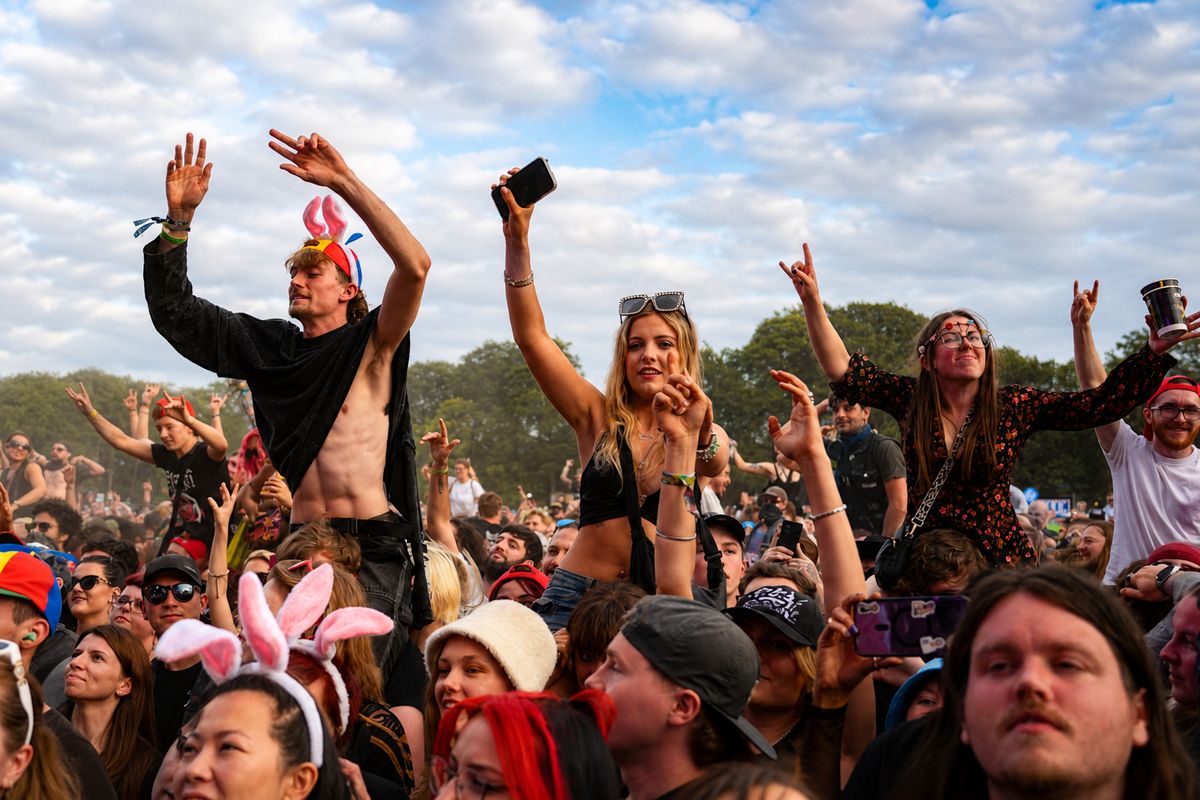
Reading and Leeds has always been a youth magnet, but in 2026 that reputation is being debated more openly. BBC Newsbeat speaks to festival-goers who describe a perception that the festival is dominated by 16 to 18-year-olds. Reggie Tanner, 20, says none of his friends wanted to go this year because of “the fact that there’s so many 16 to 18-year-olds”, and that they would rather go to another festival where the demographic is older. He attended Reading when he was 16 and 17, calling it a “massive trend” that died down when he turned 18, but he is returning in 2026 mainly to catch Charli XCX.
That is a revealing detail. It suggests the festival’s youth image is not only about who attends, but about social signalling. People age out of what their peer group considers cool, even if they still like the music. Tanner argues the diversity of the 2026 line-up, plus the new over-21 campsite, will “entice a lot of people from different age groups”. He also gives the most honest advice possible: if someone worries about feeling older, “just do it”. It is blunt, but it gets at a truth about festivals. They are social spaces first and musical spaces second, and social anxieties can be as decisive as ticket prices.
Others push back on the idea that a younger crowd is a negative. Sasha Baylors and Ciara Hornsey, both 19, say the stereotype is “fair” but “don’t think that’s a bad thing”. Hornsey argues it is important to have places for young people to listen to music and discover new artists. Baylors, who last went when she was 17, says it is “not as rowdy as people say it is”, adding it is “not like some battle zone or anything”. That is a useful corrective. The festival’s reputation can sometimes be louder than the reality.
And then there is the “rite of passage” factor. Zara Hawkins, 17, says attending feels like a rite of passage for teenagers in the UK, and she is excited for her first time at Leeds. She also points to the practical advantage of the dual sites: younger fans can go to whichever is closer, and day tickets exist if camping feels like too much. Hawkins plans to attend with a large college friend group, which she says will make her feel safer because “everyone does look after each other”. Safety, accessibility, and group dynamics are not side issues. They are central to why Reading and Leeds continues to pull in first-timers.
Stages, opportunity, and the “Nepo Fest” debate around new music
The most contentious part of the overhaul is not The Grid or The Warehouse. It is what happens to the pipeline for emerging artists. The BBC reports that the BBC Introducing stage, dedicated to highlighting new artists, has been axed. Its replacement is The Canopy, which organisers say will still host emerging musicians and “usher in a new chapter for new music”. On paper, that sounds like continuity. In practice, the optics have become complicated fast.
The Canopy line-up includes the children of several high-profile celebrities, leading some people to nickname it “the nepo baby stage” or “Nepo Fest”. The BBC lists examples: Cruz Beckham, son of David and Victoria Beckham; Violet Grohl, daughter of Foo Fighters’ Dave Grohl; Gene Gallagher, frontman of Villanelle and son of Oasis’ Liam Gallagher; and Moses Martin, son of Chris Martin and Gwyneth Paltrow, and lead singer of People I’ve Met. None of that automatically means the acts are undeserving. But it does raise a fair question about access and visibility in a festival ecosystem where slots are scarce and exposure is everything.
For years, the BBC Introducing brand has carried a particular promise: that new artists, including those without industry connections, can get a platform. Removing that stage, then launching a replacement that is immediately framed by audiences as celebrity-adjacent, risks undermining trust in the festival’s commitment to grassroots discovery. And trust is a big deal here. Reading and Leeds is not just selling tickets, it is selling identity. If it wants to be seen as a place where scenes are born, not just booked, it has to show that the ladder is still there for artists who are not already halfway up it.
There is also an industry-level tension beneath the argument. Festivals are under pressure to deliver reliable ticket sales and sponsor-friendly programming, and recognisable names, even second-generation ones, can feel like a safer bet. But festivals also rely on cultural credibility, and credibility is often built by championing the unknown. The Canopy becomes a test case: can Reading and Leeds modernise its new-music offering without turning it into a curated showroom that looks, from the outside, like it is reserved for the well-connected?
Why It Matters
Reading and Leeds Festival 2026 is not just changing its stages, it is changing its argument for existing. For a long time, the festival’s pitch was simple: big names, big crowds, a late-August blowout before term starts. That still exists, obviously. But the overhaul suggests Festival Republic is responding to a more demanding audience, one that compares festivals on atmosphere, comfort, and design as much as on headliners. The over-21 campsite and The Oasis are small signals of a bigger shift: the festival is trying to keep its teenage rite-of-passage status while also making room for people who have outgrown the chaos but not the music.
The British and Irish headliner sweep, described by organisers as the first in 25 years, also lands at an interesting moment for UK and Irish music. It is a confident cultural statement, but it is also a commercial one. Homegrown headliners can be easier to route logistically, and they can feel more “of the moment” to domestic audiences. Yet the undercard still includes US band Geese, and the festival remains globally visible through BBC broadcast. In other words, this is not isolationism. It is a recalibration of what “mainstream” looks like in 2026, where pop, rap, dance, and post-punk can all plausibly sit at the top of the same poster.
And then there is the new-music controversy. The “Nepo Fest” label sticks because it taps into a wider frustration across the creative industries: the sense that opportunity is narrowing, and that the ladder is greased for the already-connected. Reading and Leeds cannot solve that problem alone, fair enough. But it can choose what it symbolises. If The Canopy becomes known primarily for famous surnames, the festival risks weakening one of its most valuable assets: the belief among young artists and young fans that this is a place where anyone can break through. That belief is not sentimental. It is part of the festival’s long-term cultural relevance.
Historical context: Reading and Leeds evolves again, as festivals become experience-led
Reading and Leeds has always evolved, sometimes noisily. The very existence of two sister festivals, running in parallel, is part of its identity and its scale. It also makes the event unusually accessible for younger audiences, as Zara Hawkins notes, because people can choose the closer site and even opt for day tickets. That dual-site model helps explain why the festival retains its rite-of-passage aura. It is big, it is near enough to reach, and it is timed perfectly for late summer.
What feels different in 2026 is the emphasis on designed environments. The Grid’s walkway, The Gallery’s immersive framing, The Warehouse as a purpose-built dance area, these are not just new names. They are a sign that Reading and Leeds is competing with festivals that sell themselves as worlds, not weekends. In the UK, audiences have become used to festivals that offer distinct zones, curated micro-venues, and comfort upgrades. Reading and Leeds is effectively saying: it can do that too, without losing the scale and the headline heft.
Broadcast coverage adds another historical layer. When headline sets are scheduled for BBC One and then pushed to iPlayer, the festival is no longer only an in-person event. It becomes a national media moment. That changes how performances are staged, how crowds are managed, and how the festival is remembered. A great set is not just something you tell your mates about on the train home. It is something that can live on, be replayed, and be judged by people who were never there. For Fontaines D.C., whose Reading headline slot is televised at 10:40pm on 28 August 2026, that is a huge platform. For the festival, it is both marketing and accountability.
Closing thoughts: a high-stakes weekend for a legacy festival
Reading and Leeds Festival 2026 is a bold swing. The organisers are not pretending it is business as usual, and neither are the fans. The overhaul touches everything: how stages look, how spaces feel, how different age groups coexist, and how new artists are presented. Some of it is clearly designed to make the festival more comfortable and more varied. Some of it, like the debate around The Canopy, risks creating a perception problem that could linger beyond this weekend.
Still, the ambition is obvious. A British and Irish headliner line-up for the first time in 25 years, a redesigned main stage called The Grid, new immersive and dance-focused areas, and practical additions like an over-21 campsite and The Oasis quiet zone. It is a festival trying to be many things at once: a teenage milestone, a serious music event, a broadcast spectacle, and a modern experience-led destination.
The real verdict will not come from the mock-ups or the press lines. It will come from the fields. Do people move comfortably between stages? Do older fans actually return, or do they still feel out of place? Do emerging artists feel supported, or sidelined? And do the performances, from Charli XCX to Dave to Raye to Fontaines D.C., make the whole overhaul feel worth it? If the answers lean positive, Reading and Leeds may have found its next evolution. If not, well, it will not be the first festival to learn that changing the set dressing is easier than changing the story people tell about it.