The Solo Founder's Uphill Climb in an AI-Dominated World
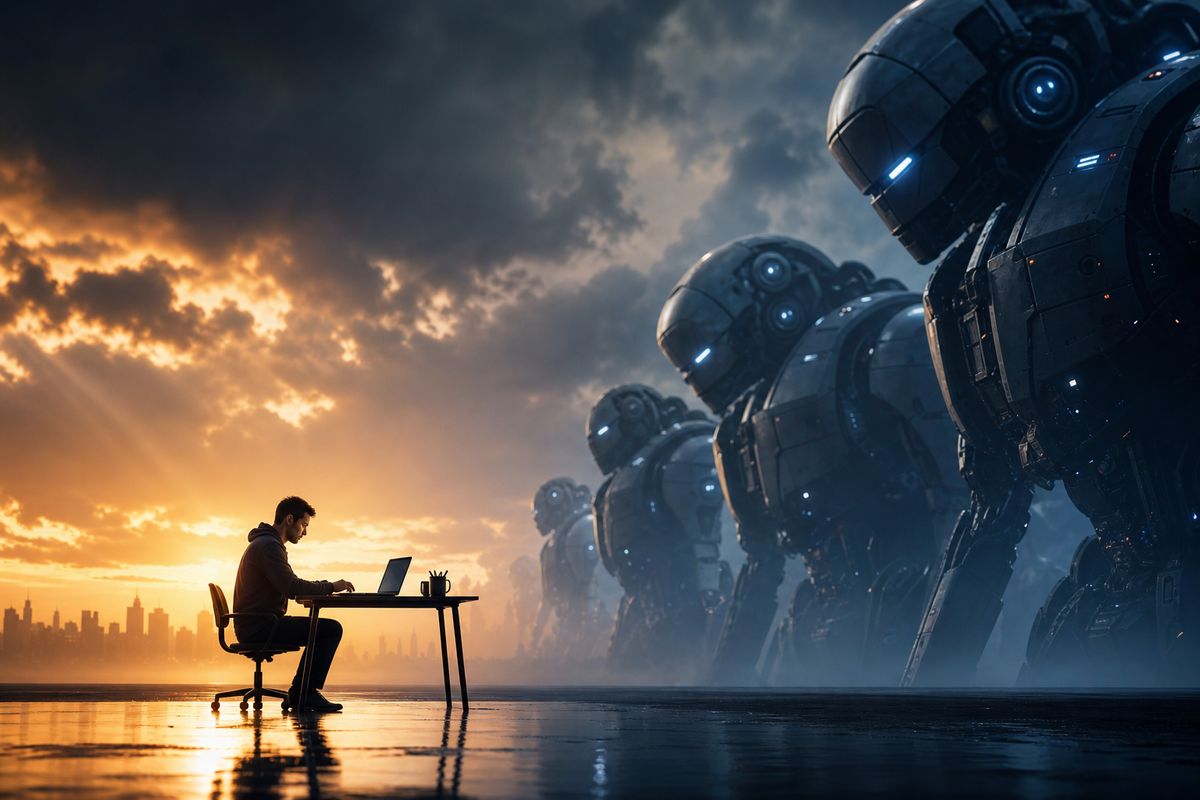
It's a tough time to be a solo founder. Everywhere you look, massive companies are pouring billions into artificial intelligence — building teams of hundreds, training models on unimaginable datasets, and rolling out features that would have taken a startup years to develop. The headlines are dominated by the likes of Google, Microsoft, and OpenAI. So where does that leave the one-person operation working from a coffee shop?
The answer, according to a growing chorus of investors and entrepreneurs, is surprisingly optimistic. A story on Entrepreneur.com titled 'How Solo Founders Can Compete With AI-Powered Giants' suggests that the very forces that seem to threaten the little guy can also be harnessed as a level playing field. It's not about matching the giants dollar-for-dollar — it's about outmanoeuvring them with speed, focus, and a willingness to embrace new tools that were only science fiction a few years ago.
But let's be real. The odds are stacked. AI-powered giants have distribution, data, and deep pockets. A solo founder typically has none of those things. Yet history shows that incumbents often struggle to innovate quickly, and that's where the solo operator can slide in. The trick is knowing which battles to fight — and how to use the enemy's weapons against them.
The 'Vibe Coding' Revolution: Turning Non-Techies Into Founders
One of the most significant shifts in the startup landscape is the rise of what's been dubbed 'vibe coding' — using large language models and AI-assisted development tools to generate working software without traditional programming skills. It's being called the greatest unlock for non-techies in recent memory, and for good reason.
Eight startups in this space are currently raising billions of dollars combined. Names like Replit, GitHub Copilot, and newer players such as Cursor are making it possible for a solo founder with a clear idea and decent prompting skills to build a minimum viable product in days, not months. That's a game-changer.
For solo founders, this means the biggest barrier to entry — technical skill — is crumbling. You no longer need a co-founder who can code. You don't need a team of engineers. You need curiosity, a willingness to iterate, and enough sense to know when the AI is hallucinating. Vibe coding doesn't replace engineering rigour for complex systems, but for prototyping and early-stage products, it's more than enough.
And here's the kicker: AI-powered giants are slow to pivot. They have legacy systems, internal politics, and quarterly earnings pressure. A solo founder using vibe coding can test a hypothesis, get user feedback, and pivot in a week. That's a speed advantage that no amount of compute can buy.
Why One Founder Stopped Marketing to Her Target Audience — and Went After the 97%
Another story making rounds on Entrepreneur.com reveals a counterintuitive strategy: a founder who deliberately stopped marketing to her target audience and instead went after the 97% of people who weren't even looking for her product. At first glance, that sounds insane. Why waste effort on people who aren't interested?
The logic is actually elegant. When you market to the people already searching for a solution, you're fighting in a crowded space. Everyone else is bidding on the same keywords, chasing the same customers, and shouting the same promises. But the 97% who aren't actively looking are unserved. They don't know they have a problem — or don't realise a solution exists. By educating them, building trust, and offering value upfront, this founder tapped into a vast pool of latent demand that the big players had ignored.
For solo founders, this is a crucial lesson. AI-powered giants often rely on performance marketing, targeting high-intent users. That's expensive and competitive. A solo founder can afford to be patient and creative — writing content, engaging in communities, and solving problems for free. It's slower, but it builds a moat of genuine loyalty that money can't easily replicate. The story underscores a deeper truth: playing the same game as the giants is a losing strategy. Changing the game is the only way to win.
Practical Strategies for Solo Founders to Compete
So what does a solo founder actually do? Based on the insights from these stories and broader industry trends, a few key strategies emerge.
Leverage AI as a Force Multiplier
Don't fear AI — use it. Solo founders can automate customer support, generate marketing copy, analyse data, and even write code using tools like ChatGPT, Claude, and Perplexity. The key is to treat AI as a tireless junior employee, not a magic wand. You still need to direct, review, and refine. But it can multiply your output by a factor of five or ten.
Focus on Niche Verticals
Giants build for the masses. A solo founder can win by serving a tiny, passionate niche that a big company would never find worthwhile. Think: custom workflows for veterinary clinics, or project management tools for indie game developers. The smaller the niche, the less competition from AI-powered giants, and the easier it is to build a loyal following.
Build in Public and Embrace Community
Transparency is a solo founder's secret weapon. Document your journey, share your failures, and invite feedback. Communities like Indie Hackers and Product Hunt thrive on this. You build an audience while building your product. The giants can't do this — they have to protect their brand and IP. Your openness becomes a differentiator.
Create a 'Marketing Funnel for the Unaware'
Taking a page from the founder who stopped marketing to her target audience, focus on educational content that reaches people before they know they need you. Blog posts, YouTube tutorials, free templates — give away value. When they eventually encounter a problem you solve, you'll be the first name they trust.
Why It Matters: The Democratisation of Entrepreneurship
Here's the bigger picture. The rise of AI doesn't just threaten solo founders — it threatens the entire model of venture-scale monopolies. For decades, starting a technology company required either deep technical expertise or significant capital. Those barriers meant that most innovation happened inside large organisations or well-funded startups with teams of twenty people or more.
Now, a single person with a laptop and a subscription to an AI coding assistant can do what once took a dozen engineers. This isn't just about levelling the playing field — it's about changing the game entirely. We may be witnessing the beginning of a new era of micro-entrepreneurship, where the solo founder is not an underdog but a default mode of innovation.
Of course, there are caveats. AI tools still have limitations. Building a real business requires more than code — it requires sales, customer support, legal, and marketing. A solo founder must either outsource or wear many hats. But the same AI tools that help build the product can also help with those tasks. The solo founder of 2025 is not the solo founder of 2015. They have a digital co-founder that never sleeps, never asks for equity, and gets smarter every month.
This matters because it changes who gets to participate in the economy. A mother in a rural town with an internet connection can now build a SaaS product that competes with a startup in San Francisco. A retired teacher with a passion for organising can build a niche app. The barriers are falling, and that's a story worth paying attention to — far beyond the usual tech bubble headlines.
Closing: The Solo Founder's Mindset for the AI Era
To compete with AI-powered giants, solo founders must think differently. They can't outspend, outstaff, or outcompute. But they can outlearn, outmanoeuvre, and out-empathise. The most successful solo founders in the coming years will be those who embrace a growth mindset — constantly experimenting with new tools, ignoring conventional wisdom, and placing small, smart bets.
The stories emerging from sources like Entrepreneur.com are more than just tips and tricks. They're evidence of a structural shift. The solo founder has not been made obsolete by AI. Quite the opposite. AI has given them a new lease on life. The giants may have the firepower, but the solo founder has the agility. And in a world that changes overnight, agility wins.