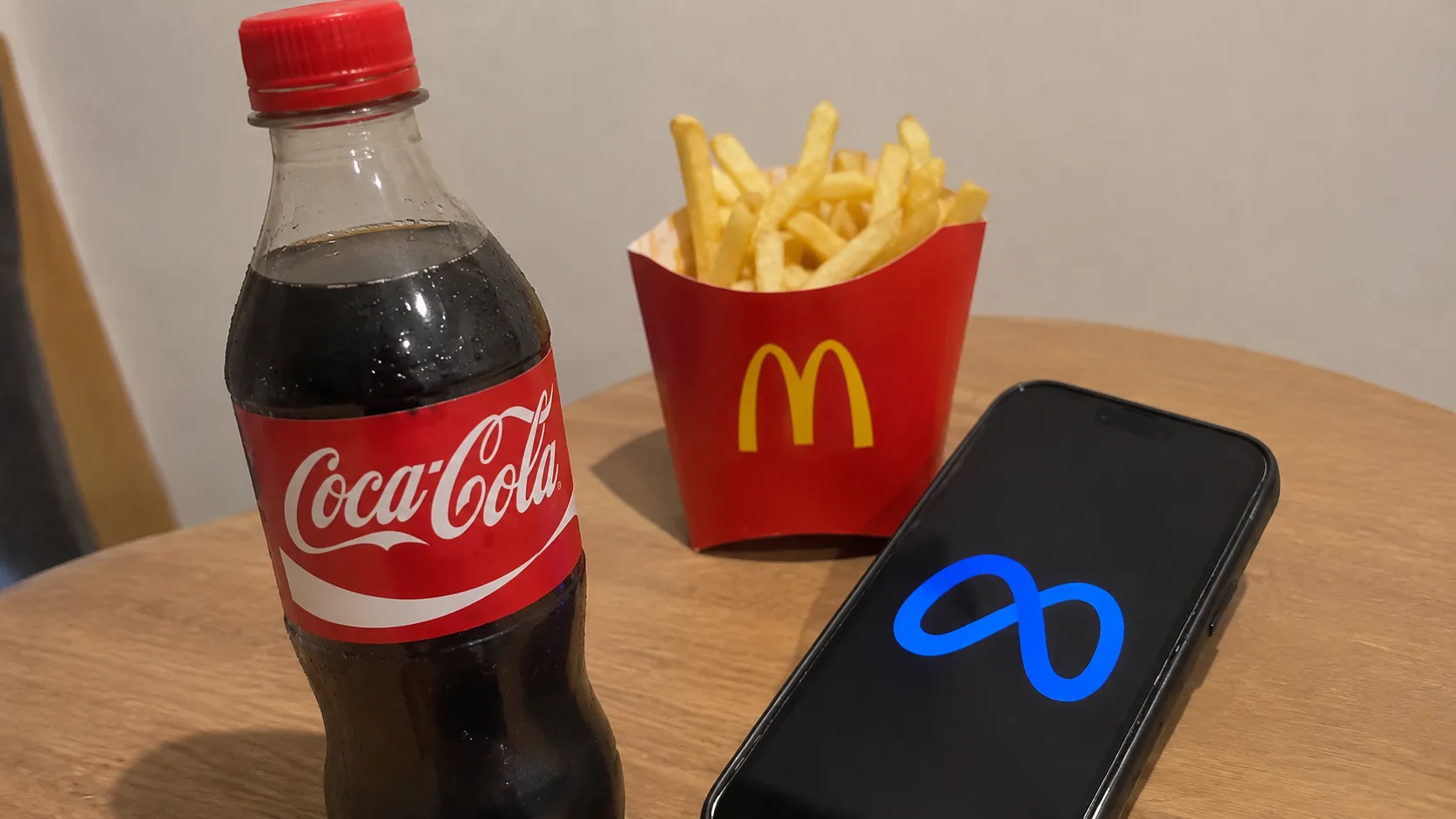
I have heard many business gurus touting that to start a business, you must solve a problem. I think this is obviously false. Many of the world's most successful businesses create more problems than they solve. For example, Coca-Cola, Meta and McDonald's.
The only thing that matters is whether there's a group of people willing to buy what you're selling.
That's quite literally the foundation of a business: a relationship between a buyer and a seller.
Therefore, the question is: Why do people buy?
In this essay, I'm going to attempt to answer that question from first principles.
I'll explore how humans evolved mechanisms to regulate energy, how those mechanisms influence purchasing behaviour, and why modern environments can cause them to malfunction.
I'll also look at how screens, scale and incomplete biological experiences might explain certain addictive buying patterns, and why products like GLP-1s offer particularly interesting evidence for this theory.
Finally, I'll apply the framework to everyday businesses, from billing software and gym memberships to luxury watches, social media and gambling.
The central idea is simple: We buy things because our feelings suggest it will improve how we regulate energy.
Starting from first principles
The honest answer to why people buy is that nobody really knows completely. We don't have a universally predictive explanation. If you keep asking why, you eventually arrive at fundamental physics, and then philosophy.
However, practically speaking, we can draw lines in the sand at different levels of the Science stack, understanding things well enough to make useful predictions and take action.
Ultimately, humans can be thought of as highly sophisticated systems that exist as a consequence of energy dissipation (they accelerate the universe's transition from order to chaos).
Living systems must acquire, use and dissipate energy to maintain themselves. Systems that can regulate this process without exhausting the resources they depend on can persist long enough to replicate.
It's not simply survival of the systems that dissipate the most energy, but those that can regulate that dissipation well enough to continue existing.
The fundamental objective, through this lens, is the continued functioning of the biological system through energy regulation.
Reproduction extends this process beyond the lifespan of an individual. It allows biological systems to continue across generations, while heritable variation and natural selection allow populations to pivot as circumstances change.
Over generations, evolution has shaped biological mechanisms that encourage behaviours contributing to this process.
As humans, we experience many of these mechanisms as physical sensations and emotions, which influence how we behave.
But these feelings are downstream of the underlying biological functions.
When I refer to energy regulation, I'm not simply talking about minimising physical energy expenditure.
I'm talking about the functioning of the entire biological system, including its nervous system, chemical signalling, emotional responses, social relationships and reproduction.
Sometimes maintaining this system requires expending more energy in the short term to improve its functioning over time.
For example, socialising requires energy. But social isolation can disrupt our biological functioning, while social connection can help regulate it. We might feel more energetic after spending time with people, or having a family, even though we've physically expended energy.
The objective isn't to minimise energy expenditure at every moment. It's to maintain a functioning biological system over time through effective energy regulation.
Our biology was built for a different environment
I make the assumption that our hunter-gatherer ancestors have enough in common with us today that we can use their behaviours and environments to understand modern purchasing behaviour.
Evolution can happen quickly, but much of our basic biological architecture has remained relatively stable over hundreds of thousands of years.
This is important because mechanisms that were adaptive historically aren't necessarily adaptive in 2026.
For example, historically, energy was often scarce. It made sense to acquire and store energy when it was available, because periods of scarcity were likely.
Humans evolved mechanisms encouraging the consumption of energy-rich foods.
Today, those same mechanisms can encourage overconsumption, even when energy is abundant.
McDonald's is an example. The fundamental biological function behind our attraction to highly dense foods is energy acquisition. Taste preferences and the associated feelings are downstream mechanisms that historically encouraged that behaviour.
If we look at what a human biological system needs to continue functioning, we find eating, sleeping, maintenance and reproduction.

Eating provides the energy required to sustain the system.
Sleeping allows the system to restore and regulate essential biological functions.
Maintenance preserves the system's ability to function, including repairing damage and protecting it from threats.
Reproduction allows the system to continue across generations, including through adaptation to changing environments.
These are fundamental processes contributing to the continued functioning and regulation of biological systems.
If we don't eat or sleep, or if the maintenance of our current situation comes under attack, we can experience downstream responses such as anger (take feeling H'Angry as an example).
These threats don't necessarily have to be physical. Conflicting beliefs, burglary or losing a job can threaten our perceived stability, resources or ability to maintain our current circumstances.
Conversely, when we have sufficient food, sleep, protection and stability, we are more likely to experience positive feelings.
Again, these feelings are downstream mechanisms. They are not the fundamental biological objective.
A note on reproduction: We don't necessarily experience anger if we don't reproduce. My explanation is that the system we're considering extends beyond the individual.
The continuation of human systems depends on reproduction across generations, not on every individual reproducing. Individuals can also contribute to the functioning of the wider group through acquiring food, providing protection and caring for others.
There are also downstream behaviours that historically improved our chances of eating, sleeping, maintaining ourselves and reproducing.
For example: play, health, building, signalling and discovery.
Play increases bonding and develops capabilities, improving the likelihood of acquiring food, protecting ourselves and reproducing.
Health maintains our ability to keep eating, sleeping, protecting ourselves and reproducing.
Building improves our control over the environment. It allows us to sleep with greater protection, improve our access to food and reproduce in safer conditions.
Signalling communicates our access to resources and capabilities. Historically, demonstrating access to food, shelter, protection and opportunities for play and discovery could improve our chances of attracting mates and forming alliances.
Discovery increases the likelihood of the system continuing to function when circumstances change. It allows us to identify new resources, improve existing methods or find an alternative strategy when the current one stops working.
Essentially, discovery provides either an improvement or a plan B, supporting our continued ability to eat, sleep, maintain ourselves and reproduce.
Through this lens, we're starting to see modern industries materialise.
Coca-Cola appeals to mechanisms evolved for energy acquisition.
Supplement products support biological maintenance.
Luxury brands appeal to signalling mechanisms historically associated with access to resources, protection and reproductive opportunities.
Entertainment and games appeal to mechanisms associated with play.
Travel and education appeal to mechanisms associated with discovery.
Importantly, these products don't necessarily have to improve how our biological systems function.
They only need to activate the mechanisms that evolved to support those functions.
This is why businesses can succeed even when their products create more problems than they solve.
What we call solving a problem
Our biological mechanisms developed under historical conditions. Modern businesses can stimulate those mechanisms in environments where their original adaptive function is no longer being served.
People don't fundamentally buy because businesses solve problems.
What we think of as a problem is often a mismatch between the biological mechanisms we've inherited and the circumstances we're living in today.
For example, if our car breaks down, we pay to repair it because of maintenance.
Changing our behaviour, finding a new job or walking to work could place greater demands on our biological system. Paying someone to repair the car may be a more efficient use of our available resources.
When we pay to sleep in a hotel room rather than a beach while on holiday, we're doing something similar.
The hotel provides shelter, protection and conditions for better sleep. These help maintain the biological system, reducing the physiological demands that would otherwise be placed on it.
We could buy a £14 Casio to tell the time, but many people buy a thousand pound Rolex to signal resource accumulation.
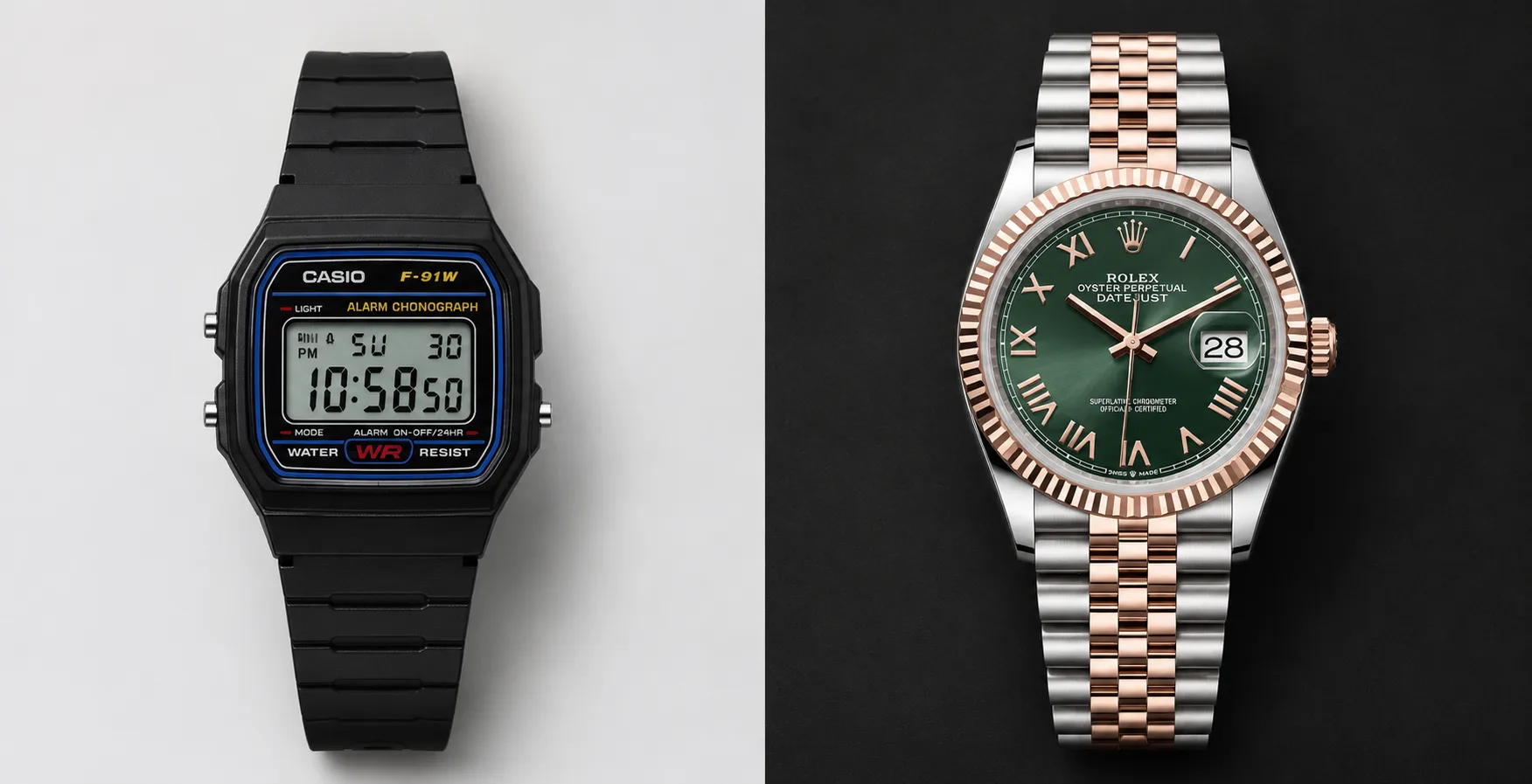
When we buy a fancy car, to impress those around us, or cosmetic products to look better for those around us. Our intuition feels that this is a good trade off, because we feel it will attract people to us, lowering on self-reliant energy output, or find us a mate, allowing for better energy conservation.
Historically, signalling access to resources or attracting mates could improve our chances of maintaining a functioning biological system. Social relationships allow us to cooperate, share resources and reduce the burden of maintaining ourselves independently.
Our evolved mechanisms can make these purchases seem like worthwhile exchanges, even when the actual benefits are uncertain.
The same applies to reproduction.
Having children is energy-intensive. But reproduction enables the biological system to continue across generations. Children can also contribute to family labour, cooperation and care, and helping to maintain the wider system.
These behaviours aren't necessarily about reducing immediate energy expenditure. They're about supporting the continued functioning of the biological system as a whole.
This is what I mean by energy regulation: not simply using less energy, but regulating its acquisition and expenditure in ways that maintain the biological system over time.
And crucially, the mechanisms encouraging these behaviours evolved under historical conditions.
They don't necessarily produce efficient outcomes today.
GLP-1s: A case study in biological energy regulation
GLP-1 medications provide a particularly interesting example of this theory.
Historically, food was often scarce. Humans evolved mechanisms encouraging energy acquisition and storage. These mechanisms supported biological functioning in environments where future access to food was uncertain.
But in modern environments, food can be abundant, inexpensive and constantly available.
The same mechanisms that historically encouraged useful energy acquisition can now contribute to overconsumption.
GLP-1 medications intervene in this biological system by regulating appetite and satiety signalling.
People taking these medications generally continue to eat, but often consume less food because hunger and satiety signals have changed.
This is important.
The underlying requirement for energy hasn't disappeared. The biological system has changed how it regulates energy intake.
Instead of purchasing more food in response to signals encouraging consumption, people may purchase a medication that helps regulate those signals.
The purchasing behaviour shifts from acquiring additional energy to improving the regulation of energy acquisition.
And people are willing to pay for that regulation.
In this sense, GLP-1 medications are a particularly strong example of the broader principle: people will purchase products that help their biological systems function more effectively.
The medications don't automatically establish the ideal energy intake for every individual, but their effects demonstrate how directly purchasing and consumption behaviour can respond to changes in biological signalling.
We're not buying products to solve externally defined problems. We're responding to the mechanisms that regulate our biological functioning.
Why scale screens create addiction - and the perfect business model
There's another important difference between the environments our biological mechanisms evolved in and the modern world: scale.
Historically, when we saw food, an animal or a potential mate, there was usually a physical opportunity associated with that visual information.
Our eyes provided the initial information transfer.
We might see food, approach it and eat it. See a dog, approach it and give it a good ol'scruff and butt scratch. See someone we have something common with, interact with them and potentially form a physical relationship.
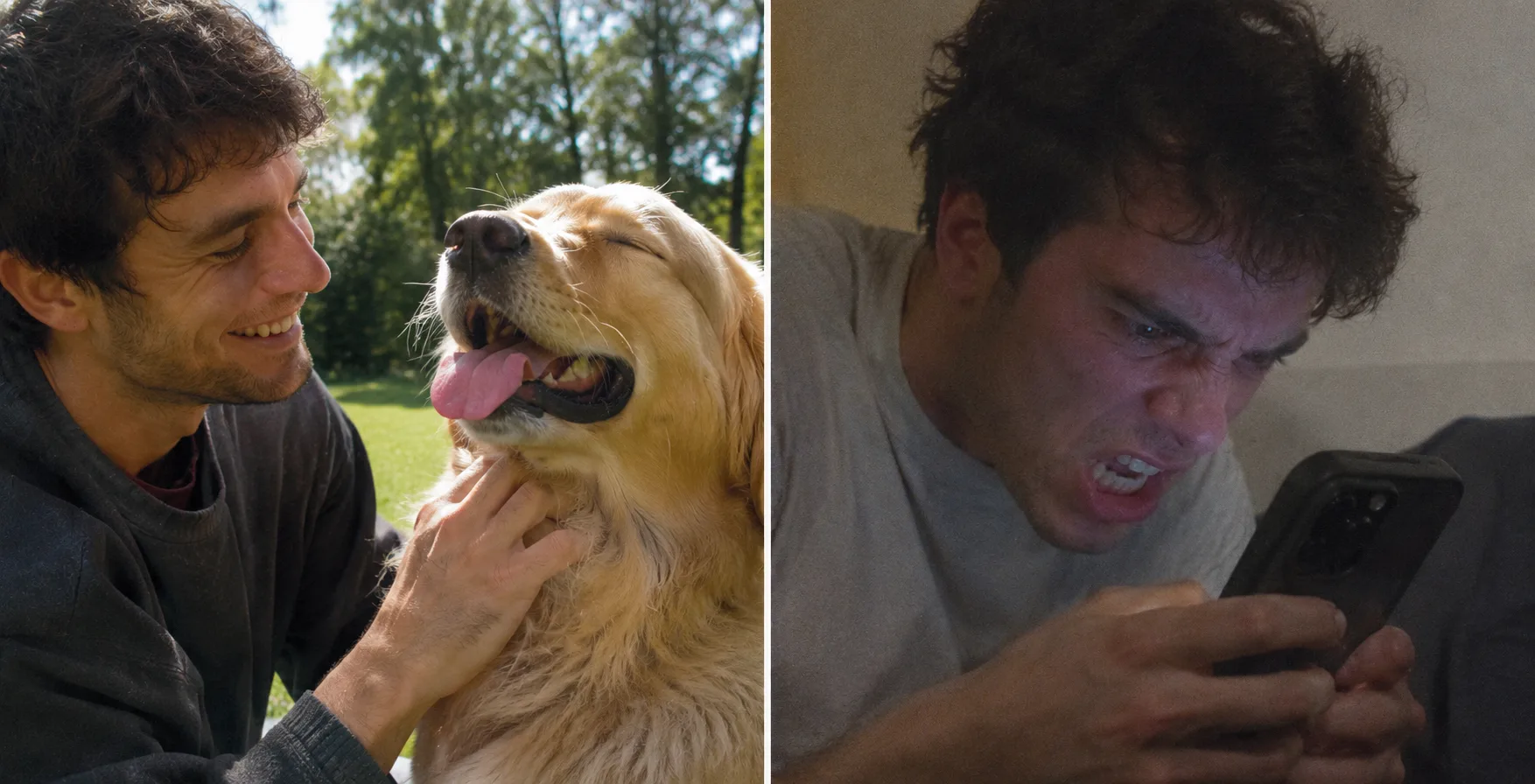
The visual cue was the beginning of a wider biological process involving multiple senses and physical interactions.
Today, screens allow us to separate that initial visual cue from the rest of the process.
We can see food without eating it, watch dogs without touching them, or see thousands of like minded people without interacting with them.
And we can do this at a scale that wasn't possible in our ancestral environments.
We're activating biological mechanisms with the initial visual information, without necessarily completing the biological processes that historically followed.
My hypothesis is that this can heighten the sense that something is missing.
We see the food but don't acquire the energy. We see the dog but don't experience the giving it a big scruffy cuddle. We see the social interaction but don't necessarily receive the benefits of participating in it.
The mechanism has been activated, but the underlying biological function remains unfulfilled.
This may help explain why some modern experiences leave us feeling frustrated or dissatisfied, despite repeatedly engaging with them.
Addiction, learned solutions and unfulfilled biological needs
I suspect some forms of addictive behaviour are an extension of this mismatch.
A biological need can drive repeated behaviour through a learned solution that doesn't reliably fulfil it.
Short-form social media scrolling provides a perfect example.
We see people and hear them speak, but we never get that fundamental, real-world connection. While we're watching the videos, our biology feels as though that connection is coming. We feel calm, but as soon as we put the phone down, we never reach the expected next stage: physical contact, presence and geometric certainty.
So we pick up the phone again and start the process all over. The loop never ends. Morals aside, this starts to look like the perfect business model.
Now take a different example: dating apps.
Someone might repeatedly use dating apps because they're seeking a relationship.
The apps provide visual signals of potential partners at enormous scale. But these signals don't necessarily lead to physical connection, bonding or a lasting relationship.
The underlying need remains unfulfilled, so the person continues searching.
However, when someone falls in love and forms a satisfying relationship, they typically stop using dating apps entirely.
The underlying need is being met, so the seeking behaviour diminishes.
If you've been following Bumble's share price, you'll know this isn't necessarily a great business model. The app effectively cannibalises its own customers.
But what if we could use chemicals to hack these biological systems?
GLP-1 medications show that these signals can also be regulated chemically, reducing food consumption without first needing to satisfy the underlying drive through eating. Emerging evidence suggests these medications may also reduce other forms of consumption and reward-seeking behaviour, including shopping and gambling.
Across these examples, the same principle emerges.
When a biological mechanism continues signalling that something is needed, we may continue seeking. When that mechanism is sufficiently regulated or its underlying need is fulfilled, the seeking behaviour can diminish.
My hypothesis is that some addictive behaviours emerge when modern environments repeatedly activate evolved seeking mechanisms without reliably fulfilling the biological functions they developed to serve.
Screens make this particularly interesting because they allow the initial visual cue to be separated from the multisensory experience that historically followed.
Scale makes the effect potentially much larger.
A person can encounter thousands of signals of food, relationships, status, resources or social opportunities without receiving the corresponding biological outcomes.
And learned behaviours can keep directing them back towards the same incomplete solution.
This isn't a complete explanation of addiction. But it offers a possible evolutionary explanation for why certain modern products can produce repeated engagement without resolving the motivation that originally attracted the person.
Putting the theory into practice
If we look at everyday purchases through the lens of biological energy regulation, we start to see the same underlying mechanism across very different businesses.
Billing software for dog groomers: Reduces the time and energy required to administer a business, freeing resources for other activities.
An "I love dogs" T-shirt: Visually signals identity, helping attract like-minded people without having to actively search for them. Reduces the energy required to establish social connections.

A Rolex: Visually signals access to resources, potentially attracting mates and allies. Reduces the perceived energy required to establish valuable relationships.
Gym membership: Improves physical health, strength and endurance. Requires energy expenditure today to improve the biological system's ability to regulate energy over time.
GLP-1 medications: Regulate appetite and energy intake, potentially improving metabolic health. People pay to improve the biological mechanisms governing energy consumption.
Meta: Makes social connections and interactions easier to access, reducing the immediate effort of finding and communicating with people. However, repeated exposure to social cues without fulfilling the underlying need for connection may create greater demands on the system over time.
Gambling: Offers an anticipated increase in resources and a potential sense of control, which may temporarily regulate feelings associated with uncertainty. But repeated losses and unfulfilled expectations can increase stress and resource expenditure over time.
These examples illustrate two fundamentally different outcomes.
Some purchases genuinely improve biological energy regulation. Others activate mechanisms that evolved to do so, without necessarily delivering the expected benefit.
The customer doesn't need to understand the distinction. Their biological system only needs to anticipate an advantage.
And that is what creates demand.
What this means for starting a business
If you're starting a business, you don't necessarily need to solve a problem, or even improve people's lives.
You need to understand which evolved biological mechanism your product appeals to, and why someone would exchange resources to engage with it.
These mechanisms ultimately trace back to how biological systems regulate energy.
Your product can either help that system regulate energy more efficiently, or activate mechanisms that evolved to do so.
The former explains why businesses that create value work. The latter explains why businesses that create demand without necessarily value work.
Leaving morality aside, a business model built around repeatedly activating a biological mechanism without fulfilling its underlying function may be among the most commercially powerful models of all.