Career tech bell schedule, the quiet operational story behind Career Technical Education in 2026
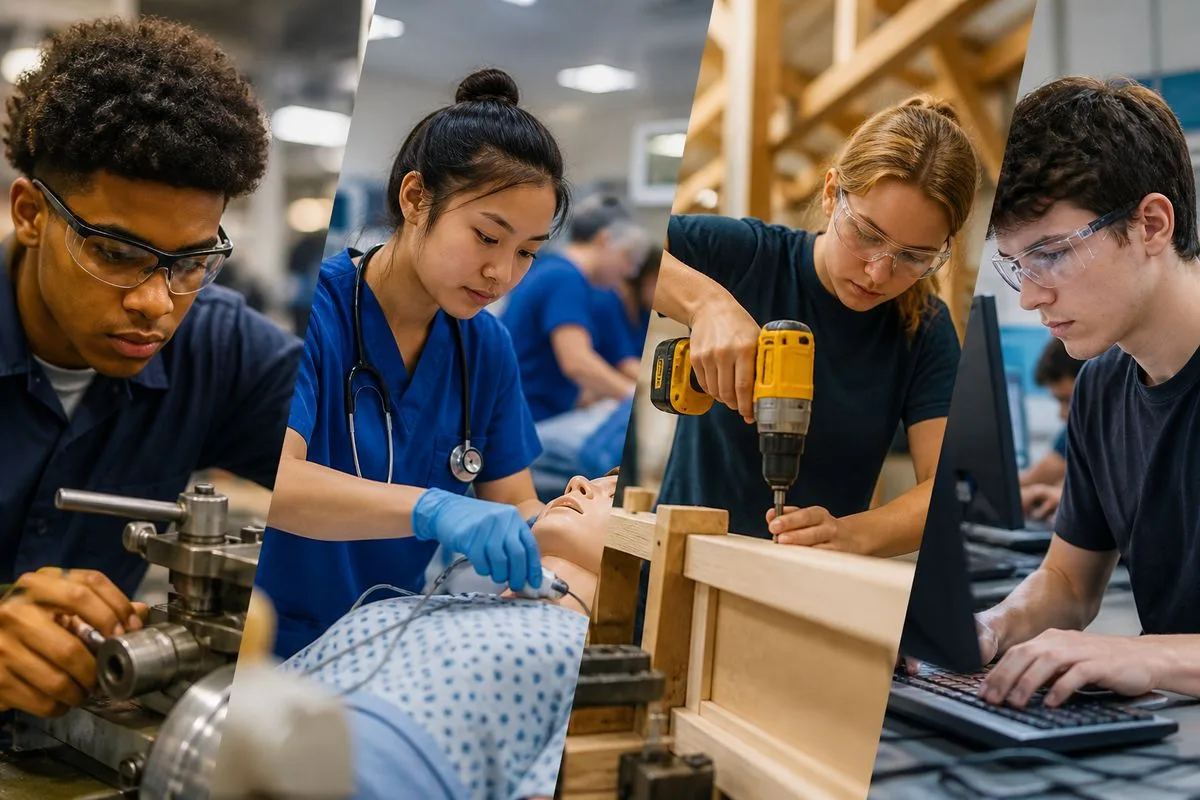
The phrase career tech bell schedule sounds mundane, almost clerical. But in October 2026, bell schedules are doing more than telling students when to move rooms. They are signalling how career technical education, often shortened to CTE, is being organised around transport logistics, shared campuses, industry engagement, and the reality that many learners split their week between a home school and a specialist career centre.
Two public schedule sets illustrate the point. Salem Keizer Public Schools’ Career Technical Education Center, known as CTEC, publishes a detailed daily structure, including an A and B day Monday format, a Wednesday late start, and precise bus departure and arrival times from multiple high schools. Meanwhile, the Hanford Joint Union High School District sets out minute by minute bell schedules for several comprehensive high schools, including a Wednesday or foggy day pattern that shortens periods. Put together, they show how timetabling has become a strategic tool, not just a routine.
And there is a third strand to the story. Warren County Career Center, a career tech provider serving both teenagers and adults, is publicly pushing back against old myths about CTE, emphasising that many graduates go on to two or four year degrees and that students can stay connected to their home school. That message matters because it explains why bell schedules are becoming more complex. If students are meant to keep one foot in their home school and another in a career centre, the timetable has to do the heavy lifting.
What is actually changing, and why people are searching for a career tech bell schedule right now
The immediate “news” development in the source material is not a single dramatic announcement. It is the publication and prominence of October 2026 calendar and bell schedule information, including multiple no school days and specific event listings. At CTEC, October 2026 includes PSAT Day with no school at CTEC, No School for inservice on 9 October 2026, and a run of Fall Conferences and no student days on 28 and 29 October 2026, followed by No School on 30 October 2026 and a listing that CTEC is closed with no staff or students that day. Those are operationally significant interruptions, and families tend to look up bell schedules precisely when calendars get choppy.

CTEC also lists Industry Pathways Parent Night sessions in early October 2026, including an Aviation themed evening from 5:00 PM to 6:30 PM, and a Main Campus session from 6:00 PM to 7:30 PM. That is a clue to what is driving interest. When schools run pathway nights, application windows, or assessment days, parents and students suddenly need to know: what time does breakfast start, when do buses leave, and how does Monday differ from Wednesday?
On the Hanford side, the district publishes a structured set of bell schedules for Hanford High School, Hanford West High School, and Sierra Pacific High School, with different timings for Monday versus Tuesday, Thursday, and Friday, and a separate Wednesday or foggy day schedule. It is not hard to see why that matters in practice. Weather disruptions, late starts, and altered period lengths can affect everything from lab time to transport coordination for students who attend off site programmes.
So when people search “career tech bell schedule”, they are typically not looking for a philosophical essay. They want the practical detail, and they want to understand how to plan their day around it. But the practical detail also tells a bigger story about how CTE is being delivered in 2026, and what schools are prioritising.
Career tech bell schedule at CTEC, the 2026 daily structure and what it is designed to solve
CTEC’s published bell schedule is built around a hybrid week. Monday uses an A and B structure with breakfast at 8:30, A Day classes from 9:00 AM to 11:15 AM, then Lunch and busing from 11:15 AM to 12:35 PM, followed by B Day classes from 12:35 PM to 2:50 PM, and buses leaving at 2:55 PM. That midday block is not a casual lunch break. It is explicitly a lunch and busing window, which tells you the schedule is engineered around moving students between locations.
On Tuesday, Thursday, and Friday, the day is more conventional but still transport aware: breakfast at 8:30, morning classes from 9:00 AM to 12:10 PM, lunch from 12:15 PM to 12:45 PM, and afternoon classes from 12:50 PM to 2:50 PM, with buses leaving at 2:55 PM. The times are tight. There is a five minute gap between morning classes ending at 12:10 PM and lunch beginning at 12:15 PM, then another five minute gap before afternoon classes. That suggests a campus trying to maximise instructional minutes while still giving enough time for transitions.
Wednesday introduces a late start, with breakfast at 9:30, morning classes from 10:00 AM to 12:10 PM, lunch from 12:15 PM to 12:45 PM, and afternoon classes from 12:50 PM to 2:50 PM, with buses leaving at 2:55 PM. Late starts are often used for staff planning, professional development, or student support structures. The source material does not state the reason, so it would be wrong to guess. But the operational effect is clear: the entire day shifts by an hour, while the afternoon end time stays the same, which can create pressure on morning instructional time and transport coordination.
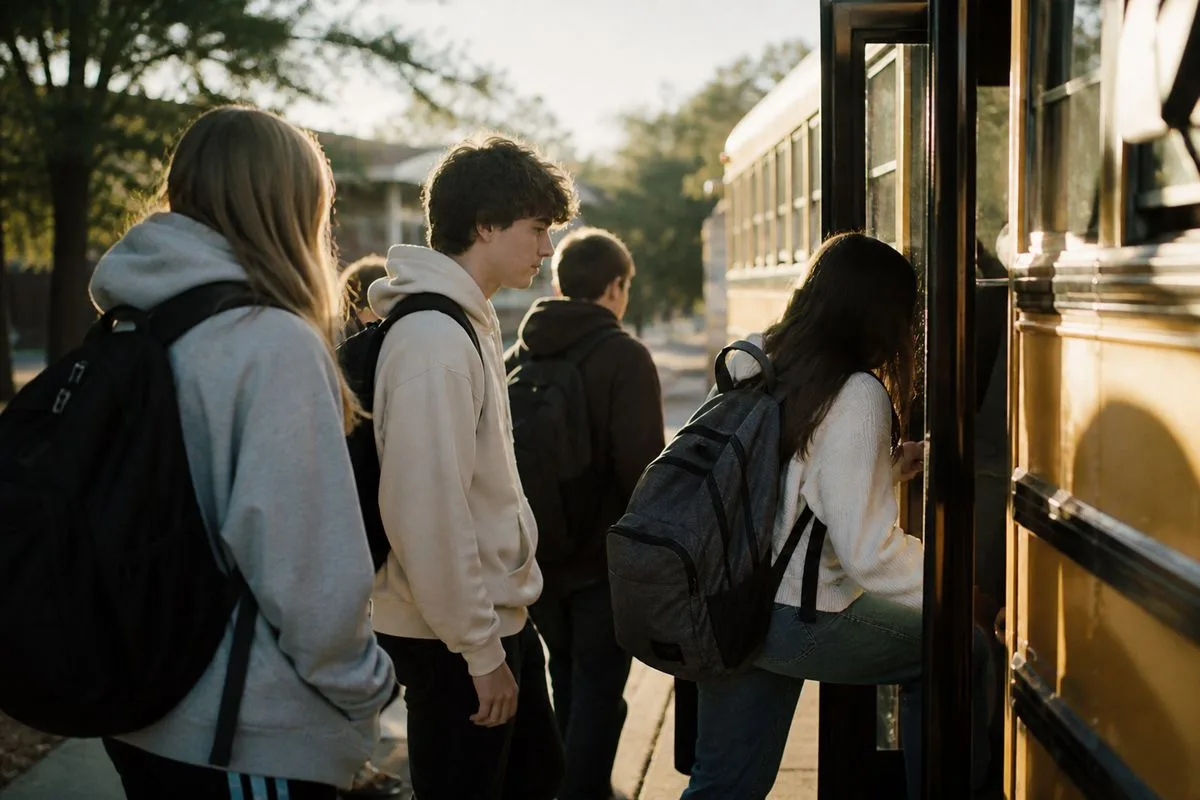
CTEC also publishes a main bus schedule with route details from multiple high schools. For example, from McKay on Route 538, the standard morning schedule departs at 8:30 AM and reaches CTEC at 8:42 AM. From McNary on Routes 640 and 635, the standard morning schedule departs at 8:30 AM and reaches CTEC at 8:45 AM. From North on Route 535, the standard morning schedule departs at 8:35 AM and reaches CTEC at 8:43 AM. These are not broad estimates. They are minute specific, which is exactly what families need when a student is commuting between campuses.
Bus routes, lunch busing, and the hidden complexity inside a career tech bell schedule
The most revealing part of the CTEC material is the way Monday lunch busing is treated as a distinct operational phase. There are separate timings for Monday A Day lunch and Monday B Day lunch, and the direction of travel flips depending on which cohort is moving. For McKay, for instance, the Monday A Day lunch schedule shows depart CTEC at 11:26 AM and reach McKay at 11:32 AM. The Monday B Day lunch schedule shows depart McKay at 11:49 AM and reach CTEC at 12:00 PM. That is a carefully choreographed swap, essentially a mid day exchange of students.
Similar patterns appear elsewhere. For McNary, Monday A Day lunch has depart CTEC at 11:25 AM and reach McNary at 11:37 AM, while Monday B Day lunch has depart McNary at 11:48 AM and reach CTEC at 12:02 PM. For South on Route 601, Monday A Day lunch has depart CTEC at 11:28 AM and reach South at 11:42 AM, while Monday B Day lunch has depart South at 11:48 AM and reach CTEC at 12:01 PM. These are not minor details. They are the backbone of a shared campus model.
And then there is the afternoon. Several routes list departures at 2:55 PM or 3:00 PM, with arrival times back at home schools ranging from a few minutes to over ten minutes later. For example, South’s standard afternoon schedule departs at 3:00 PM and reaches CTEC at 3:14 PM in the text as presented, which appears inconsistent with the direction of travel. The source material includes that wording, but it is not possible to verify whether it is a formatting error or a genuine route description. What can be said confidently is that the schedule is route specific and minute specific, and that is the point: career tech timetables are now inseparable from transport timetables.
For families, this is where the search intent gets very real. A student might have to be at their home high school early enough to catch a shuttle, arrive at the career centre in time for a 9:00 AM start, then reverse the process for lunch or the afternoon. If a parent night runs from 6:00 PM to 7:30 PM, that is another layer of planning. The bell schedule becomes a daily logistics plan, not just a school timetable.
Hanford’s bell schedules, a contrasting model with a Wednesday or foggy day pattern
Hanford Joint Union High School District provides a different but equally instructive view of scheduling. For Hanford High School, Hanford West High School, and Sierra Pacific High School, the Monday schedule includes a 0 hour from 7:45 to 8:25, then Period 1 from 8:30 to 9:20, Period 2 from 9:25 to 10:15, a break from 10:15 to 10:25, Period 3 from 10:30 to 11:20, Period 4 from 11:25 to 12:15, Period 5 from 12:20 to 1:10, lunch from 1:10 to 1:50, Period 6 from 1:55 to 2:45, and Period 7 from 2:50 to 3:40. Period lengths are listed as 50 minutes on Monday, with a 40 minute lunch.
On Tuesday, Thursday, and Friday, the schedule shifts to shorter periods. There is a SIP block from 7:45 to 8:45 listed at 45 minutes, then Period 1 from 8:55 to 9:40, Period 2 from 9:45 to 10:30, break from 10:30 to 10:40, Period 3 from 10:45 to 11:30, Period 4 from 11:35 to 12:20, Period 5 from 12:25 to 1:10, lunch from 1:10 to 1:50, Period 6 from 1:55 to 2:40, and Period 7 from 2:45 to 3:30. The listed period lengths are 45 minutes for most periods on these days.
Earl F. Johnson High shows yet another approach, with Monday periods of 40 minutes, a 30 minute lunch, and a dedicated tutoring block on Tuesday, Thursday, and Friday, including tutoring from 8:30 to 9:00 and another tutoring block later in the day. Community Day School runs a daily schedule with breakfast at 8:25 to 8:40, then seven periods largely at 50 minutes each, and lunch from 11:10 to 11:35. In other words, even within one district, bell schedules are tuned to different student populations and programme needs.

The key comparison for anyone interested in a career tech bell schedule is this: Hanford’s model is built around period based consistency and weather related adjustments, while CTEC’s model is built around movement between sites and cohort swapping. Both are rational. They just solve different problems.
Warren County Career Center and the reputational shift that makes bell schedules more complicated
Warren County Career Center, described as Warren County’s premier career tech provider, is explicit about what it offers: hands on programmes for high school students and adult learners, early career exploration, free adult education options such as Aspire HiSET, ESOL, and adult diploma programmes, a regional testing centre, Project SEARCH transition programmes for young adults with disabilities, and even a learning lab preschool. It also highlights business and industry partnerships and small business support through a small business alliance on its main campus. That is a broad remit, and it is not the old fashioned image of a trade school tucked away from mainstream education.
Just as importantly, WCCC tackles stigma head on. It rejects the idea that career tech is only for students who are not “college material”, stating that over half of its graduates head straight into two or four year degree programmes. The source material does not provide an exact percentage beyond “over half”, so that is as far as the claim can be quantified here. But the direction of travel is clear: career tech providers want to be seen as accelerators, not alternatives.
WCCC also stresses that students do not have to leave their home high school identity behind. They can remain connected, play on home school sports teams, attend dances, and walk at graduation. That matters for scheduling because it implies a split day or split week model, similar in spirit to what CTEC operationalises through lunch busing and A and B day structures. If a student is meant to access advanced placement courses, college credit options, and industry recognised certifications, the timetable has to accommodate multiple tracks without forcing a zero sum choice.
Finally, WCCC outlines adult education programmes in fields such as advanced manufacturing technology, cybersecurity and networking, CNA, cosmetology, electrical power line mechanic, fire and EMS academy, HVAC, and welding. Adult learners often need flexible scheduling, evening options, and clear start and end times that work around jobs and childcare. While the source does not provide WCCC bell times, its programme breadth helps explain why career tech scheduling is becoming a more visible, more searched topic. People are trying to fit education into real life, not the other way around.
What these 2026 schedules say about the direction of CTE delivery
There is a temptation to treat bell schedules as administrative trivia. But the 2026 detail points to three strategic priorities. First, maximising access without building duplicate facilities. CTEC’s shuttle system and midday busing windows suggest a model where students from multiple comprehensive high schools can access specialist labs and equipment at a central site. That is cost conscious, yes, but it is also about equity. A student’s access to an aviation pathway night or a technical programme should not depend entirely on whether their home school can afford a full suite of facilities.
Second, protecting instructional time while managing movement. The CTEC Tuesday, Thursday, and Friday structure has very tight transitions around lunch, and the Monday structure turns lunch into a transport exchange. That is not exactly relaxing for staff or students, but it is efficient. Hanford’s approach, by contrast, shows how a district can compress periods on certain days, including a Wednesday or foggy day pattern, while still keeping a coherent day shape. Different contexts, same underlying aim: keep learning time predictable enough that programmes can run properly.
Third, integrating career pathways with mainstream academic identity. WCCC’s messaging about staying connected to the home school, and about graduates progressing to degrees, aligns with the scheduling complexity seen at CTEC. When CTE is positioned as an “upgrade” rather than an “exile”, timetables have to allow students to do both. That means transport, late starts, cohort days, and calendar clarity. It also means more points of failure if communication is poor. A missed bus at 11:48 AM is not just a late mark, it can derail an entire afternoon block.
One more point that is easy to miss: the presence of events like Industry Pathways Parent Night in the calendar is a sign that CTE providers are marketing their pathways like products, in the best sense of the word. They are explaining options, building confidence, and trying to get families comfortable early. That is a reputational strategy, and the bell schedule is part of the customer experience. If it feels chaotic, families hesitate. If it feels precise and well supported, they lean in.
How students and families can use a career tech bell schedule to plan smarter
The practical takeaway is straightforward: treat the bell schedule as a planning document, not a poster on the wall. At CTEC, Monday is structurally different from the rest of the week, with A Day classes in the morning and B Day classes in the afternoon, separated by a long lunch and busing window from 11:15 AM to 12:35 PM. Wednesday is also different, with breakfast at 9:30 and classes starting at 10:00 AM. Anyone assuming a standard 9:00 AM start every day is going to have a bad morning sooner or later.
It also pays to read the transport lines, not just the class times. CTEC lists standard morning departures such as Sprague departing at 8:20 AM and reaching CTEC at 8:45 AM, and West departing at 8:25 AM and reaching CTEC at 8:43 AM. Late start departures shift to 9:20 AM from Sprague and 9:25 AM from West, with arrivals at 9:45 AM and 9:43 AM respectively. Those differences are the sort that can trip up even organised households, particularly when a student is juggling extracurriculars at their home school.
Calendar interruptions matter too. In October 2026, CTEC lists No School for inservice on 9 October 2026, then Fall Conferences with no school on 28 and 29 October 2026, and No School on 30 October 2026, including a closure listing with no staff or students. Families should assume that these days can affect transport availability, on campus services, and the rhythm of coursework. The source material does not specify how assignments are handled on those dates, so it would be wrong to claim remote learning or make up a policy. But it is sensible to expect knock on effects, and to plan ahead.
For districts like Hanford, the advice is slightly different. The bell schedule is period precise, and the key is understanding which day pattern applies. Monday periods are longer at 50 minutes for the listed high schools, while Tuesday, Thursday, and Friday periods are largely 45 minutes, with a consistent lunch from 1:10 to 1:50. If a student attends an off site programme, or has a work based learning placement, those five minute differences per period add up. They can affect when a student can be released, when transport can be scheduled, and how much lab time is realistically available.
Closing thoughts, bell schedules as a proxy for how seriously a system takes career pathways
In 2026, the bell schedule is no longer just a timetable. It is a statement of intent. CTEC’s A and B day Monday, its Wednesday late start, and its minute by minute shuttle routes show a system designed to make cross campus career education workable at scale. Hanford’s multi pattern schedules show how comprehensive schools manage time in a way that can accommodate tutoring blocks, weather related adjustments, and different school models under one district umbrella.
And WCCC’s blunt myth busting about who career tech is for, and where graduates go next, gives the context that makes all this scheduling effort make sense. If career tech is meant to be a mainstream, high expectation pathway that leads to certifications, college credits, and degrees, then the operational side has to be equally high expectation. That means clear calendars, predictable transport, and bell schedules that are built for real lives. Not perfect, but workable. That is the bar now.