Report warns Chinese green technology poses national security problem for Europe
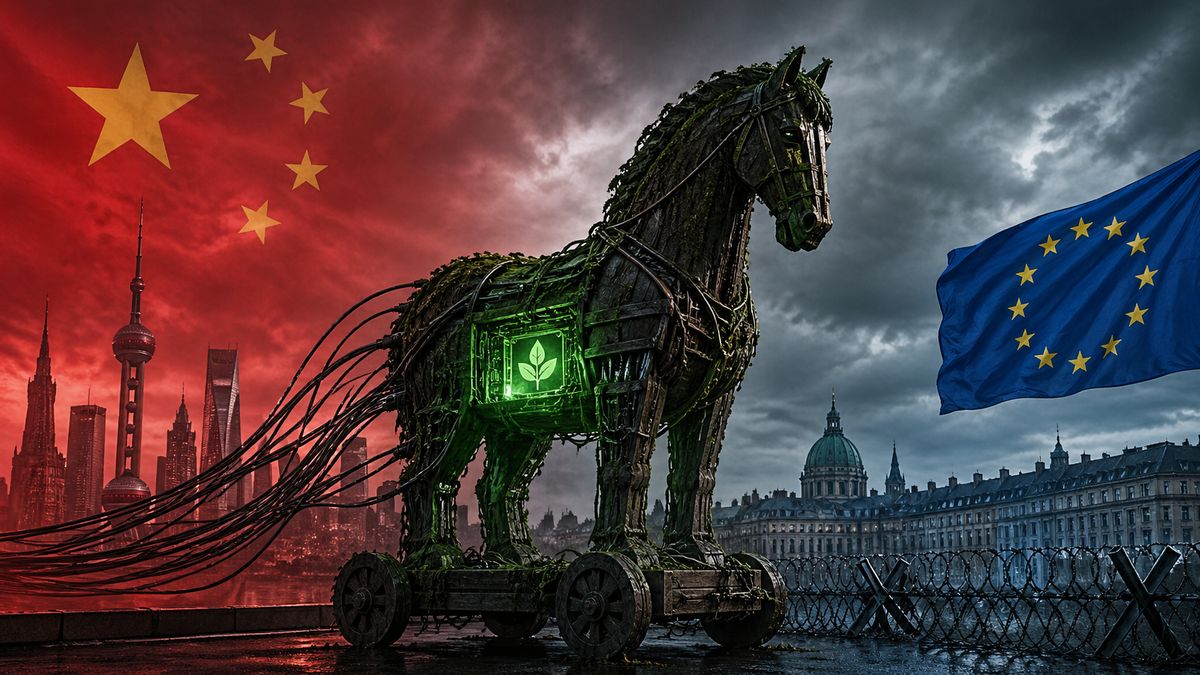
A new report has sounded the alarm over Europe's deepening reliance on Chinese green technology, warning that this dependence poses a serious national security problem for the continent. The report, covered by the Financial Times and The Guardian, argues that Europe's ambitious green energy shift risks creating a new form of strategic vulnerability, replacing its former reliance on Russian fossil fuels with a dependence on Chinese-manufactured solar panels, wind turbines, and electric vehicle batteries.
The analysis comes amid a broader geopolitical recalibration, as European policymakers grapple with the implications of sourcing critical clean energy infrastructure from a single, non-aligned supplier. Experts cited in the report describe the risk as 'serious,' noting that China now dominates global supply chains for key green technologies, including 80% of solar photovoltaic manufacturing and over 60% of wind turbine component production. This concentration of supply, the report argues, could be exploited for economic coercion or intelligence gathering, undermining Europe's energy security and strategic autonomy.
The warning is particularly timely given the European Union's accelerated push toward net-zero emissions by 2050, which requires massive deployment of Chinese-made equipment. The report calls for urgent policy measures to diversify supply chains, boost domestic manufacturing, and establish 'green technology sovereignty' as a core pillar of European security policy.
Europe's green energy shift risks new dependence on China
The report's central thesis is that Europe's green energy transition, while essential for climate goals, is inadvertently creating a new strategic dependency. This dynamic mirrors the continent's previous reliance on Russian natural gas, which left it vulnerable to supply disruptions and geopolitical pressure following the invasion of Ukraine. Now, experts warn, Europe risks repeating the same mistake with Chinese green technology.
According to the report, China controls approximately 70% of global solar panel production and 60% of lithium-ion battery manufacturing capacity. For wind energy, Chinese companies like Goldwind and Ming Yang Smart Energy have become dominant players, supplying turbines to projects across Europe. The report highlights that European wind farm developers increasingly rely on Chinese turbines due to cost advantages, but this creates a single point of failure in the supply chain.
The Guardian's coverage notes that the report was produced by a coalition of European security analysts and energy experts, who argue that the risk is not merely economic but also strategic. Chinese-made equipment could potentially be used for cyber-espionage or remote shutdown, the report suggests, though it acknowledges that concrete evidence of such activities remains limited. The broader concern is that Europe's energy infrastructure could become a vector for Chinese influence, particularly if Beijing decides to use trade as a weapon.
Chinese wind turbine maker accuses UK of 'politicisation' over product ban
The report's warnings are underscored by a recent controversy involving Chinese wind turbine maker Ming Yang Smart Energy, which accused the UK government of 'politicisation' after its products were banned from a major offshore wind project. The ban, imposed by the UK's National Grid, cited national security concerns related to the use of Chinese-made turbines in critical energy infrastructure.
Ming Yang, one of China's largest wind turbine manufacturers, responded by stating that the decision was 'unfounded and discriminatory,' arguing that its technology meets all international safety and cybersecurity standards. The company has a growing presence in Europe, with projects in Germany, France, and the Netherlands. The UK's move reflects a broader trend among Western governments to scrutinize Chinese technology investments, particularly in sectors deemed critical to national security.
This incident is part of a pattern: in 2023, the US Department of Energy restricted the use of Chinese-made transformers in its grid, while Australia has banned Chinese companies from bidding on renewable energy projects. The report argues that such ad hoc measures are insufficient and that Europe needs a coordinated strategy to address the systemic risk posed by Chinese dominance in green technology supply chains.
Background: Key players and technologies at the center of the debate
The green technology sectors most affected by Chinese dominance include solar photovoltaics, wind turbines, and battery storage systems. In solar, companies like LONGi Green Energy, JinkoSolar, and Trina Solar collectively control over half the global market. These firms have invested heavily in European manufacturing facilities, partly to circumvent tariffs and trade barriers, but their supply chains remain deeply integrated with China.
In wind energy, Goldwind and Ming Yang are the largest Chinese players, competing with European giants like Vestas and Siemens Gamesa. Chinese turbines are typically 20-30% cheaper than European alternatives, making them attractive for cost-sensitive projects. However, the report notes that European manufacturers have struggled to compete, leading to market share losses and factory closures. For example, Siemens Gamesa announced layoffs in 2023, citing competition from Chinese rivals.
Battery technology is another critical area. China's CATL and BYD dominate global production of lithium-ion batteries for electric vehicles and grid storage. European efforts to build domestic battery gigafactories, such as Northvolt in Sweden and ACC in France, are still in early stages and face significant cost and scale disadvantages. The report warns that without intervention, Europe could become dependent on Chinese batteries for its electric vehicle fleet and renewable energy storage needs.
Analysis: What this means for Europe's strategic autonomy and industrial policy
The report's findings have profound implications for European industrial policy and the concept of 'strategic autonomy'—the EU's goal of reducing dependence on external powers. The green technology dependence is particularly troubling because it cuts across multiple sectors critical to the energy transition. Unlike fossil fuels, where alternatives exist (e.g., US LNG, Middle Eastern oil), green technology supply chains are highly concentrated in China due to decades of state-led investment and economies of scale.
European policymakers face a difficult trade-off: accelerating the green transition requires cheap, readily available equipment, which China provides. But prioritizing cost over security could leave Europe vulnerable. The report recommends a multi-pronged approach: increasing tariffs on Chinese green tech to level the playing field, investing in domestic manufacturing through subsidies and tax incentives, and forging alliances with other democratic nations like the US, Japan, and South Korea to diversify supply chains.
Historical context is instructive. Europe's dependence on Russian gas was built over decades, and breaking it required painful adjustments after 2022. The green technology dependence is still in its early stages, giving Europe a window to act. However, the report warns that this window is closing, as Chinese companies continue to expand their market share and deepen their integration into European energy infrastructure. The challenge is not just economic but also political: member states with strong trade ties to China, such as Germany, may resist protectionist measures.
Historical context: From Russian gas to Chinese solar panels
The parallels between Europe's reliance on Russian natural gas and its current dependence on Chinese green technology are striking. In both cases, the dependence was driven by cost and convenience, with policymakers underestimating the geopolitical risks. Russia supplied about 40% of Europe's gas before the Ukraine war, and similar percentages now apply to Chinese solar panels and batteries.
However, there are key differences. Russian gas was a finite resource that could be replaced by LNG and renewables. Chinese green technology, by contrast, is integral to the very infrastructure needed to achieve energy independence. Moreover, China's dominance is not just in raw materials but in manufacturing know-how, patents, and supply chain logistics, making it harder to replicate quickly.
The report draws on lessons from the semiconductor industry, where Western dependence on Taiwanese and South Korean chip manufacturing has led to similar security concerns. In that case, the US and Europe have invested billions in domestic chip fabrication plants through the CHIPS Act and the European Chips Act. The report argues that a similar 'Green Tech Act' is needed for clean energy technologies, with dedicated funding for research, production, and workforce development.
Closing thoughts: A call for coordinated action and 'green technology sovereignty'
The report's warning is a wake-up call for European leaders who have prioritized climate goals over security considerations. The green transition is essential, but it must be pursued in a way that does not create new vulnerabilities. The concept of 'green technology sovereignty'—the ability to produce and control critical clean energy technologies domestically or with trusted allies—should become a central tenet of EU policy.
Concrete steps include fast-tracking permits for domestic manufacturing plants, imposing stricter cybersecurity standards for imported equipment, and creating a European version of the US Inflation Reduction Act's green subsidies. The report also recommends establishing a 'critical green technology list' similar to the EU's list of critical raw materials, with monitoring and stockpiling mechanisms.
Ultimately, the challenge is not insurmountable. Europe has the technical expertise, capital, and political will to build a competitive green technology sector. But it requires a shift in mindset: treating green tech not just as an environmental issue but as a matter of national security. The report's authors urge European leaders to act now, before the dependence becomes too deep to reverse. As one expert put it, 'The cost of inaction is not just economic—it's strategic.'