
Economic D-Day on Iran: A Warning Shot in the Financial Trenches
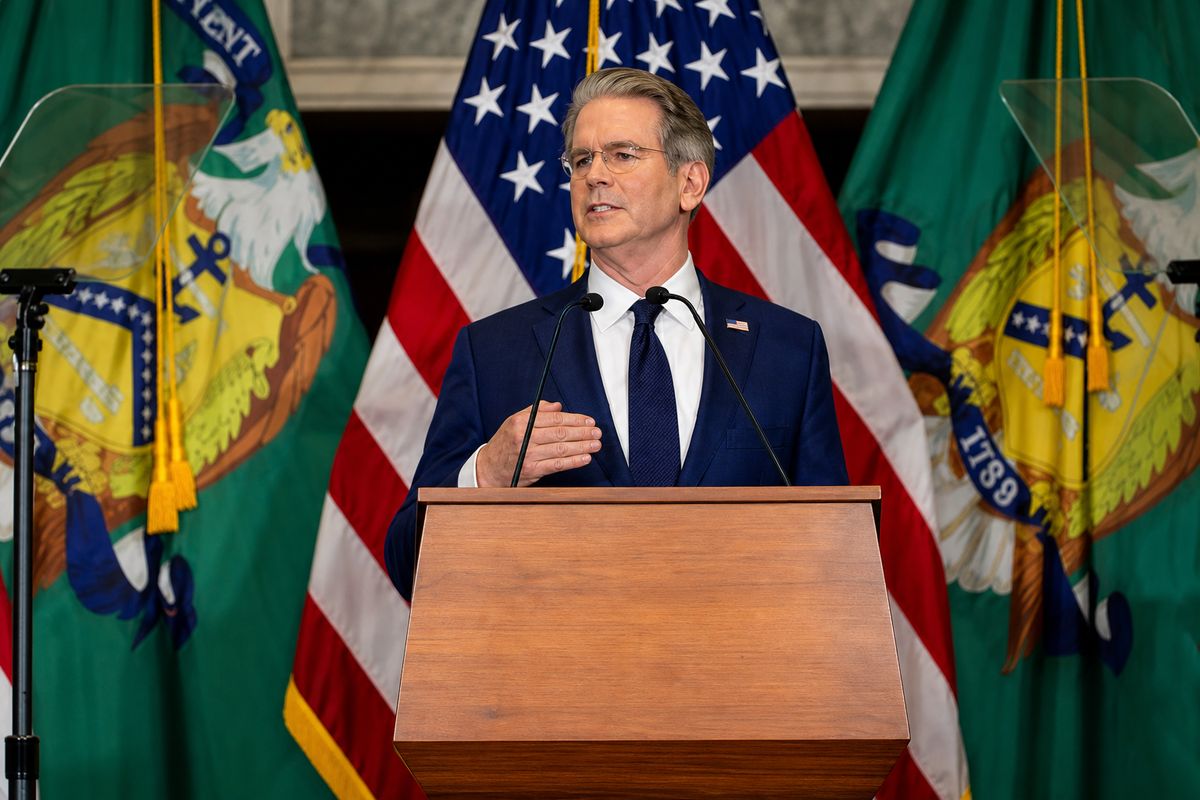
The world is watching a new kind of invasion unfold. On 25 August 2026, the United States Treasury, under Secretary Scott Bessent, launched the opening move in what has been openly described as an "economic D-Day" against Iran. The phrase is not hyperbole. It is the chosen language of the Treasury Secretary himself, who wrote in the Financial Times that "at dawn begins an economic D-Day, the single greatest financial offensive ever marshalled against an adversary."
For weeks, Bessent and President Donald Trump had signalled that a dramatic escalation was coming. The administration had promised to sever Tehran's remaining links to the global financial system, choke off its oil revenues, and make any country or company that trades with Iran pay a heavy price. Now, the first moves have been made. Officials are calling Monday's actions a "warning shot". That phrase is telling. It suggests this is not the full assault, but a demonstration of what is to come if Iran does not change course.
The precise details of the opening salvo have not been fully disclosed, which is itself a tactic. A warning shot is meant to be seen and heard, but not necessarily understood in full. What is clear, however, is that the scope of this campaign is unprecedented. Previous rounds of sanctions have been targeted and incremental. This one aims to be comprehensive, coordinated, and relentless.
What 'Economic D-Day' Means for Iran and the Global Economy
To understand the scale of what Bessent is proposing, it helps to strip away the military metaphor and look at the mechanics. The campaign is said to be designed to sever Iran's access to the international banking system, its ability to sell crude oil, and its capacity to earn foreign currency. In practice, this means a coordinated attack on every node of Iran's financial infrastructure.
The key elements, as reported, include:
- New sanctions designations targeting Iranian financial institutions and their front companies.
- A tightening of enforcement on shipping, insurance, and logistics linked to Iranian oil exports.
- Secondary sanctions aimed at foreign banks and companies that facilitate trade with Tehran, even in non-sanctioned goods.
- Freezing of assets held in jurisdictions that previously offered Iran a financial lifeline.
None of these tools are new in themselves. What is new is the ambition. Bessent's framing of "economic D-Day" suggests a single, massive, coordinated operation rather than the slow accumulation of penalties that has characterised US Iran policy for years. It also suggests that the administration views Iran's economy as a battlefield, with every trading partner a potential target.
This is where the strategy becomes genuinely global. The campaign has already put Iran's trading partners in the crosshairs. China, Turkey, the United Arab Emirates, and India all maintain significant trade relationships with Tehran. If Washington attempts to sever Iran's economy completely, it must also disrupt the economies of these countries. That is a far more dangerous proposition than simply sanctioning Iranian entities.
The Long Shadow of 1979: 47 Years of Sanctions
Bessent's reference to "47 years" is no accident. It points back to the Iranian Revolution of 1979 and the seizure of the US embassy in Tehran, an event that transformed Iran from a Western ally into the United States' most durable adversary. For nearly half a century, Washington has tried to use economic pressure to change Iranian behaviour, with mixed results.
The 1990s saw the first major sanctions regimes, aimed at isolating Iran's energy sector. The 2000s brought financial pressure through the Society for Worldwide Interbank Financial Telecommunication, commonly known as SWIFT, eventually pushing Iranian banks out of the international payments network. Under President Barack Obama, the United States pursued a dual track of negotiation and sanctions that culminated in the 2015 Joint Comprehensive Plan of Action. That deal lifted sanctions in exchange for strict limits on Iran's nuclear programme.
Then came the rupture. In 2018, President Trump withdrew the United States from the nuclear deal and reimposed sanctions under a policy dubbed "maximum pressure". That campaign crippled Iran's economy but did not topple the government. Now, with Trump back in office and Bessent at the Treasury, the strategy has evolved again. The new language of economic D-Day suggests a belief that maximum pressure was too gradual, too predictable, and too easy for Iran to adapt to. Bessent appears to want something closer to a blitzkrieg.
The 47-year history matters for another reason. It shows that sanctions alone have never produced the political change Washington wanted. The Iranian government has weathered wars, assassinations, protests, and near-total economic isolation. The question is whether a more ferocious economic campaign can succeed where decades of pressure have failed, or whether it will simply deepen the adversarial cycle.
Trading Partners in the Crosshairs
No country is more exposed to this new campaign than China. Beijing has been Iran's largest oil customer for years, buying hundreds of thousands of barrels per day, often through shadow fleets and unofficial channels. The Trump administration's plan to target trading partners is effectively a threat to Chinese refiners and their banks.
China has already responded. When asked about the "economic D-Day" plans at a news conference on Thursday, Chinese Foreign Ministry spokesperson Lin Jian said that imposing sanctions and economic pressure would "not help to solve" the underlying disputes. The statement was careful but firm. It is a clear signal that Beijing does not intend to fall into line simply because Washington issues metaphorical battle orders.
Turkey and the United Arab Emirates are equally vulnerable. Both countries maintain significant trade and diplomatic relations with Iran, and both rely on Gulf shipping lanes that Iran could destabilise in retaliation. Tehran has already threatened to respond to the US campaign, and a disruption of the Strait of Hormuz remains the most dangerous card Iran can play. Roughly a fifth of the world's oil passes through that narrow waterway. If Iran makes good on its threats, the economic D-Day would quickly become a global energy crisis.
The US administration appears willing to accept that risk, at least publicly. Bessent's strategy is built on the assumption that Iran will blink first, that the pain inflicted on its economy will force a political reckoning in Tehran. But the trading partners caught in the crosshairs are not passive observers. They have agency, and they have alternatives. China has been building alternative payment channels that bypass the dollar. Russia has been deepening its own financial relationship with Iran. The more aggressively Washington pushes, the more it may push these countries together.
Why It Matters: The Weaponisation of the Dollar
Beyond the immediate crisis with Iran, Bessent's "economic D-Day" raises a deeper question about the durability of American financial power. The United States has long used the dollar's central role in global trade as a strategic weapon. Sanctions are only effective because the world uses dollar-based clearing systems. If the US overuses that weapon, it risks accelerating the very de-dollarisation that China, Russia, and other nations have been quietly pursuing.
This is the paradox of economic D-Day. A successful financial offensive requires the cooperation of the global financial system. Yet that system is built on voluntary participation. Banks and companies choose to process dollar transactions because doing so is profitable and safe. When the Treasury begins threatening every entity that does business with Iran, it sends a message to the entire world: using the dollar makes you vulnerable to Washington's whims. That is not a message that encourages loyalty. It encourages hedging.
Few analysts expect the dollar to be dethroned overnight. But the cumulative effect of aggressive secondary sanctions across multiple countries could chip away at its supremacy. The more the United States treats its financial infrastructure as a battlefield weapon, the more incentives it creates for China to develop alternatives, for Russia to trade in yuan or gold, and for countries like India and Turkey to seek non-dollar settlement routes. The US military's D-Day in 1944 liberated Europe and cemented American dominance. An economic D-Day in 2026 might, ironically, begin to undo that dominance by fragmenting the global financial order.
There is also a political dimension. The language of D-Day carries enormous moral weight. It evokes the sacrifice of the Normandy landings and the defeat of tyranny. Using that metaphor for an economic sanctions campaign is a deliberate rhetorical choice. It frames Iran as an enemy of civilisation rather than simply a difficult negotiating partner. That framing may rally domestic support in the United States, but it also makes compromise nearly impossible. If Iran is the Nazi regime, then negotiation is appeasement. The administration may be painting itself into a corner where the only acceptable outcome is total Iranian surrender.
What Happens Next: The Warning Shot or the First Bomb?
The immediate question is what form the rest of the campaign will take. If Monday's move was indeed a warning shot, the next phase could involve the formal designation of Iran's entire banking sector, the seizure of specific assets, or a direct challenge to Chinese oil purchases. Each step is likely to be met with legal challenges, retaliation, and escalating rhetoric.
Iran's options, while limited, are not negligible. The country can retaliate through its proxies in the region, through cyber attacks, or through the ominous threat of closing the Strait of Hormuz. It can also simply absorb the pain, as it has done for 47 years, and wait for the political winds in Washington to shift. Sanctions fatigue is a real phenomenon. Every previous maximum pressure campaign has eventually been relaxed or replaced by a new approach.
The next few months will test whether Bessent's economic D-Day can achieve what half a century of sanctions could not. The answer may not be found in Tehran, but in Beijing, Ankara, and New Delhi. If the United States can force its trading partners to choose between the Iranian market and the American financial system, the campaign could work. If those partners resist, as China's response suggests they might, then the economic D-Day could become a quagmire, not of troops and tanks, but of waivers, exemptions, and sanctions workarounds.
One thing is certain. The phrase "economic D-Day" has changed the stakes. The United States has committed its prestige to a campaign of total financial warfare against Iran. There is no graceful exit, no easy off-ramp. For better or worse, the battle has begun.