
Entrepreneurship courses are shifting from theory to lived practice
Entrepreneurship courses have been around for decades, but the news out of two very different universities in 2026 makes one thing clear, the centre of gravity is moving. It is no longer enough to teach a tidy sequence of ideation, market sizing, pitch deck, fundraising. Programmes are increasingly built around the messy reality of venture building, where students test assumptions, get things wrong, talk to customers who do not care, and then try again.
Two developments underline that shift. At Stanford Graduate School of Business, the Stanford Venture Studio Demo Day on 27 May 2026 showcases a year of venture exploration across sectors from ports and logistics to environmental risk and caregiving. And at the University of Colorado Boulder, the appointment of Julie Penner as director of the Innovation and Entrepreneurship Initiative on 21 September 2026 signals a push to connect a sprawling ecosystem of courses, competitions, mentors and community partners into something students can actually navigate.
Put together, these stories offer a practical answer to what people searching for entrepreneurship courses really want to know in 2026: what do the best programmes teach, how do they teach it, and what outcomes should a student or early stage founder reasonably expect? Not every course is a golden ticket. But the best ones are starting to look a lot more like real venture practice, with structured support and a community that keeps founders moving when motivation dips (because it always does).
The 2026 developments: Stanford’s Demo Day and CU Boulder’s new leadership
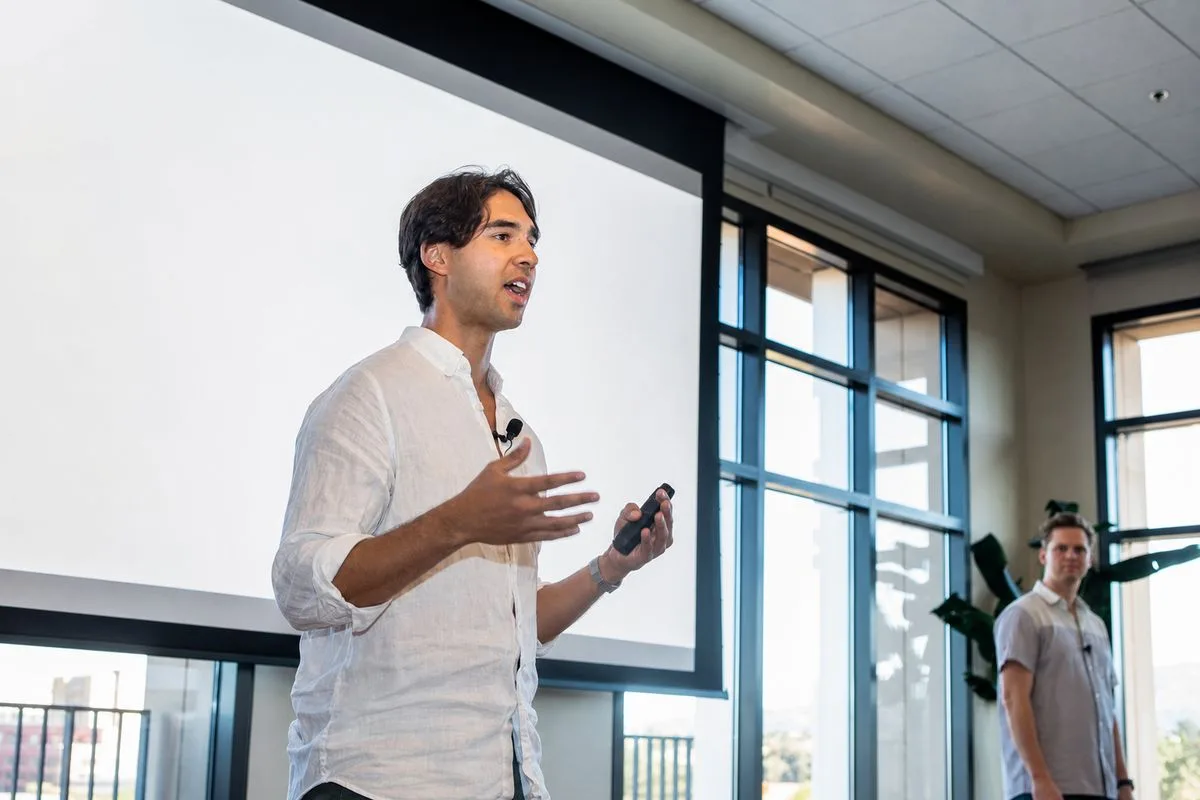
Stanford’s Venture Studio Demo Day, hosted by the Grousbeck Holloway Center for Entrepreneurial Studies in collaboration with the Center for Social Innovation, brings together founders, advisors and supporters to mark a year of learning. The key detail is not the stagecraft. It is the design philosophy behind it. Teams are not required to be investor ready or actively fundraising, and yet several are beginning fundraising efforts as graduation approaches. That is a subtle but important distinction, the programme is built to support exploration and validation, not to force every idea into a pitch competition mould.
Students spend the year validating technical and market challenges, building prototypes, engaging customers, refining business models and continuously testing hypotheses. They also arrive with different starting points. Deborah Whitman, director of the Grousbeck Holloway Center for Entrepreneurial Studies, describes two common paths, students with deep industry expertise innovating from inside knowledge, and students who have to work hard to build understanding in a new problem space. Either way, the work is framed as determination and perseverance, not just inspiration.
At CU Boulder, the headline is leadership, but the underlying story is scale. Julie Penner, a startup founder, mentor, investor and community builder, is named director of the Innovation and Entrepreneurship Initiative. The initiative’s job is to connect and elevate CU Boulder’s many innovation and entrepreneurship programmes and resources, with an explicit focus on improving the student experience and strengthening community connections. Bryn Rees, senior associate vice chancellor for innovation and partnerships, is blunt about the problem, it is not a lack of programmes, it is navigation and connectivity across them.
CU Boulder also provides a rare hard number that helps prospective students calibrate what “entrepreneurship education” looks like at a large public university. For fiscal year 2026, 3,605 undergraduate students participate in 34 entrepreneurship courses offered at CU Boulder. That is not a niche elective. That is a significant slice of the undergraduate population engaging with entrepreneurship as a skill set, whether or not they plan to found a venture next week.
Inside Stanford’s entrepreneurship courses: a studio model with real ventures
Stanford’s Venture Studio model sits alongside formal Stanford entrepreneurship courses, then extends them with co curricular support. The source material describes a full stack of learning, coursework plus Startup Office Hours, workshops, community programming and advising sessions. In practice, that matters because classroom frameworks only become useful when someone has to apply them to a real decision, which customer segment to prioritise, which prototype to build, which assumption is most dangerous, and what evidence would actually change the team’s mind.
Demo Day itself functions less like a beauty parade and more like a structured moment of accountability. Teams share specific “asks”, including introductions to pilot partners, researchers and industry experts, prospective customers and future founding team members. That is a very different posture from “please invest”. It treats entrepreneurship as a networked process, where progress often depends on access to domain expertise, distribution partners, and early adopters who will tolerate an imperfect product.

The ventures highlighted in the 2026 cohort also show how entrepreneurship courses are expanding beyond consumer apps and marketplace clichés. Birdseye, founded by Blake Jones, MBA ’26, and Spencer Adams Rand, MBA ’26, focuses on ports, factories and logistics hubs, helping them make real time decisions about labour and equipment during operational disruptions. Telluscope, developed by Kathryn Bacher, MBA MS ’26, targets investors and insurers, surfacing environmental liabilities hidden within real estate and infrastructure transactions. Terra Compliance, led by Emily Lee, MBA ’26, with Ethan Holtzclaw and Peter Holtzclaw, aims to streamline waste operations and reporting for cities and enterprises pursuing Zero Waste goals.
Food and sustainability show up too, but again with a technical edge. Samwise Labs, launched by Loubaba El Ayoubi, MS&E ’26, is described as an AI enabled formulation platform for food scientists, helping evaluate nutrition, ingredient, cost and regulatory trade offs. Good Avenue, founded by Lelina Chang, MBA MPP ’27, enables cafés to produce fresh oat milk on site while reducing packaging waste, emissions and sugar content. DropSense, developed by Pingyu Wang, PhD Postdoc ’26, Tooba Sofia Riaz, MA ’27, and Professor Will Tarpeh, uses chemical monitoring technology to help wastewater facilities reduce energy use and improve operational efficiency. Even in this partial list, the pattern is obvious, these are not “build an app” projects. They are attempts to change complex systems, which is exactly where structured entrepreneurial learning can make the difference between a clever idea and a viable organisation.
CU Boulder’s entrepreneurship courses at scale: connectivity becomes the product
CU Boulder’s story is not a single event like Demo Day, it is an organisational bet. The Innovation and Entrepreneurship Initiative is positioned as connective tissue, bringing coherence to programmes and resources across campus. That is harder than it sounds. Universities accumulate entrepreneurship offerings over time, a course here, a competition there, a mentor network somewhere else, a partnership with an accelerator, a student club running events. The result can be impressive on paper and baffling in practice.
Julie Penner’s appointment is framed as a “full circle” moment. As an undergraduate, she and classmates enter the university’s business plan competition with a startup later named Zeo. She describes how a single entrepreneurial experience can alter someone’s life direction, and she wants everyone at CU Boulder to have the opportunity to discover what is possible when given resources, skills and encouragement to build organisations, whether nonprofits, small businesses or venture backed startups. It is a deliberately broad definition of entrepreneurship, and that breadth matters for course design.
Penner’s background also signals what CU Boulder thinks it needs next. She earns a JD from Colorado Law and an MBA from the Leeds School of Business. As a graduate student, she helps start CU Boulder’s New Venture Challenge and stays connected as a guest lecturer, mentor and collaborator. Professionally, she brings more than two decades of experience with entrepreneurs, accelerators, venture funds, business plan competitions and community builders. The university notes five years at Techstars Boulder, seven years as an Entrepreneur In Residence at Telluride Venture Network working with small businesses, solo entrepreneurs and deep tech founders, and seven years as a venture partner with two funds, Frazier VC and Next Frontier Capital. She also co organises community events including Boulder New Tech and the Women’s Venture Challenge.
Then there are the metrics and milestones. CU Boulder reports 3,605 undergraduate students in 34 entrepreneurship courses in fiscal year 2026. It highlights that the New Venture Challenge will celebrate its 20th season in 2027. And it states CU Boulder has spun out 87 startups from its research labs over the past three years. Those numbers do not prove quality on their own, but they do show volume and momentum, which changes what “entrepreneurship courses” need to do. At that scale, the differentiator is often guidance, helping students choose the right entry point, sequence experiences sensibly, and connect to mentors and partners without getting lost.
What these programmes teach that typical entrepreneurship courses often miss
There is a temptation to treat entrepreneurship education as a checklist. Idea, customer discovery, MVP, pitch, funding. Neat, linear, comforting. But both Stanford’s Venture Studio approach and CU Boulder’s connectivity push suggest a more realistic curriculum, one that treats entrepreneurship as iterative learning under uncertainty, supported by community.
At Stanford, the emphasis on hypothesis testing and continuous validation is the tell. Teams are described as building prototypes, engaging customers, refining business models and testing new hypotheses throughout the year. That is essentially the scientific method applied to markets and operations. It also implies that “progress” is not always visible as revenue or investment, sometimes it is a negative result that saves months of wasted build time. Many entrepreneurship courses talk about this. Fewer operationalise it with sustained advising, office hours and a cohort structure that makes the work harder to dodge.

CU Boulder’s approach highlights another gap, the transition from learning to doing is often blocked by friction. Students might take a course, then fail to find the next step, a mentor, a lab commercialisation office, a co founder, a customer discovery workshop. Rees explicitly says the priority is making it easier for students, faculty, staff and community partners to participate and find inspiration. That sounds soft until someone has tried to navigate a large university ecosystem. Reducing friction is not a nice to have, it is the difference between a student with a half formed idea and a student who actually runs customer interviews next week.
Both stories also broaden what counts as entrepreneurship. Stanford’s cohort includes industrial operations, environmental risk, AI infrastructure, consumer protection and caregiving. CU Boulder’s leadership messaging explicitly includes nonprofits and small businesses alongside venture backed startups. That matters because most people searching for entrepreneurship courses are not future unicorn founders. They are people who want to build something viable, in their community, in their industry, or alongside their day job. A course that only teaches venture capital dynamics is useful for a subset. A course that teaches opportunity identification, assumption testing, cross disciplinary collaboration and resilience is useful for almost everyone.
Why It Matters
The quiet revolution in entrepreneurship courses is that the “product” is no longer the lecture content. It is the environment. Stanford’s Demo Day is a visible moment, but the real value sits in the year long scaffolding, the mix of coursework and co curricular support, the repeated contact with advisors and alumni who challenge assumptions, and the expectation that teams will articulate concrete asks to move their venture forward. That structure teaches a habit of execution. And it teaches a social skill that founders often learn the hard way, progress is frequently unlocked by asking clearly for specific help.
CU Boulder’s move is significant for a different reason, it treats navigation as an equity issue. When entrepreneurship ecosystems sprawl, the best connected students win by default. They know which professor to speak to, which competition matters, which workshop is worth the time, which mentor will actually reply. Penner’s stated goal, putting the entrepreneur’s journey at the centre so everyone knows where to start, is not just administrative tidiness. It is an attempt to democratise access to entrepreneurial learning and support. Fair enough, it is also hard. But if it works, it changes who gets to participate, and that changes what gets built.
There is also an industry level implication that is easy to miss. As universities professionalise venture support, they become more legible partners for accelerators, investors, local employers and civic institutions. Stanford’s cohort already leans into regulated, infrastructure heavy sectors where partnerships and pilots matter. CU Boulder highlights partnerships that expand mentorship, educational and funding opportunities. Neither story claims a magic formula. But together they point to a future where entrepreneurship courses are less about isolated classroom achievement and more about building durable pipelines between talent, research, community needs and capital.
How to choose entrepreneurship courses in 2026, practical signals to look for
Prospective students often ask the wrong first question, “Which course is best?” A better question is, “Best for what outcome?” The Stanford and CU Boulder examples suggest a few concrete signals that separate high impact entrepreneurship courses from the merely well marketed.
First, look for evidence of sustained practice, not just a short module. Stanford’s teams work throughout the academic year, repeatedly validating and refining. That time horizon matters because entrepreneurial competence is built through cycles of action and reflection. Second, look for structured access to feedback. Stanford explicitly mentions Startup Office Hours, workshops, community programming and advising sessions, with advisors, alumni and industry experts challenging teams. Courses that rely only on peer feedback or end of term grading can miss the point, founders need informed critique while decisions are still reversible.

Third, check whether the programme supports multiple venture types. CU Boulder’s framing includes nonprofits, small businesses and venture backed startups. That is a sign the curriculum may cover a wider set of operating realities, including customer discovery for non traditional users, partnership driven growth, and resource constrained execution. Fourth, pay attention to ecosystem design. CU Boulder’s initiative exists because even strong offerings can fail if students cannot find them or stitch them together. A good entrepreneurship course is often part of a pathway, course to workshop to competition to mentor network to pilot opportunities.
Finally, be wary of programmes that imply investment readiness is the only finish line. Stanford’s Demo Day explicitly does not require teams to be investor ready or fundraising. That is refreshing, and realistic. Many ventures should not raise money early. Some should never raise venture capital at all. The best entrepreneurship courses teach students how to decide, not just how to pitch.
Closing thoughts: entrepreneurship education grows up, and gets more honest
The 2026 stories from Stanford and CU Boulder are not identical, and that is the point. Stanford showcases a studio style model where graduate students pursue ambitious ideas across industries, supported by a blend of entrepreneurship courses and hands on co curricular infrastructure. CU Boulder, operating at large scale, invests in leadership and connectivity so thousands of undergraduates engaging in 34 entrepreneurship courses can more easily find their way through an ecosystem of challenges, mentors and opportunities.
Both point to a more honest version of entrepreneurship education. Less mythology, more method. Less obsession with the pitch, more focus on the work that happens before and after it. And more recognition that entrepreneurship is not a single identity, it is a set of skills that can be applied to startups, research commercialisation, community organisations, and new initiatives inside existing institutions.
For anyone searching for entrepreneurship courses in 2026, the takeaway is simple. Look for programmes that treat entrepreneurship as practice, build community around the learner, and make it easier to take the next step. The rest is just branding.