

Example of entrepreneurship in 2026, a boom that is hiding in plain sight
An example of entrepreneurship is not always a hoodie-wearing founder pitching venture capitalists. In 2026, the clearest illustration is broader and, frankly, more interesting: a surge of people and teams turning ideas into trading organisations at a pace that is hard to ignore. The US Census Bureau records 531,423 new businesses formed in June 2026, and projects 29,741 of those to become payroll tax liable within four quarters. That is not a niche trend. It is a mass movement, and it is reshaping what “entrepreneurship” looks like in practice.
The headlines behind this story are not about a single IPO or one celebrity founder. They are about a structural shift: technology lowers the cost of starting, distribution is easier than it used to be, and more people are willing to build something of their own. And while the loudest stories still come from Silicon Valley style start-ups, the underlying reality is more diverse, spanning small businesses, corporate innovation inside large firms, and social ventures that treat community impact as the point, not a marketing line.
This matters because searchers looking for an “example of entrepreneurship” are usually asking a practical question. What does entrepreneurship actually look like today, and what can be learned from it? The answer in 2026 is that entrepreneurship is both a personal choice and an economic pattern. It is the local therapy practice scaling into a group. It is the tech founder building a platform. It is also the product team inside a giant company pushing into a new market because customers demand it. Different routes, same core behaviour: spotting a problem, organising resources, taking risk, and executing.
The 2026 development, new business formation accelerates, and the numbers are specific
Two data points in the source material frame the current moment. First, the US Department of the Treasury reports that in 2024 the United States averaged 430,000 new business applications per month, described as a 50% increase compared to 2019. Second, the US Census Bureau reports 531,423 new businesses formed in June 2026 alone. Those are not small changes. They indicate a sustained step up in entrepreneurial activity, not a one month blip.

There is also a crucial nuance in the June 2026 figure. The Census Bureau projects that 29,741 of those June 2026 businesses become payroll tax liable within four quarters. In plain English, a subset is expected to hire and operate at a scale that triggers payroll tax obligations. That projection does not mean the rest fail. Many will remain owner-operated, contractor-based, or early-stage. But it does underline a key point: a lot of entrepreneurship is not about building the next global platform. It is about building a viable operation that supports a livelihood, sometimes with a small team, sometimes with none.
And that is where the “example” becomes useful. Entrepreneurship is not one thing. It is a set of behaviours expressed across different business models and ambitions. The 2026 surge forces that conversation into the open because when hundreds of thousands of new entities appear in a single month, they cannot all be the same type of venture. Some are lifestyle businesses. Some are scalable start-ups. Some are social enterprises. Some are spin-outs. Some are simply people formalising work they were already doing informally. The economy is absorbing all of it.
Example of entrepreneurship through four types, small, large, start-up, and social
One of the most practical ways to understand entrepreneurship in 2026 is to organise it by type. The source material identifies four types of entrepreneurship: small business, large business, start-up, and social entrepreneurship. That framework is not exactly groundbreaking, but it is useful because it stops people forcing every founder story into the same template.
Entrepreneurship, as described by Ann Sanok, associate dean of business programmes at Southern New Hampshire University, is “the fun, creative side of business”. Her definition is broader than start-ups. She explicitly includes “launching a startup, leading a family business or driving innovation within an established company”. That matters because it validates what many operators already know: entrepreneurship is not only about founding, it is also about building, adapting, and pushing change through organisations.
For small business entrepreneurship, the US Small Business Administration definition is used: fewer than 500 employees. The source gives a grounded example, a psychologist opening a therapy group practice. It is a reminder that entrepreneurship is often professional services plus operational discipline. Hiring, compliance, client acquisition, cash flow. Not glamorous, but real. And it can scale, too, from a single practitioner to a multi-site operation.
Large business entrepreneurship is described as either the founding of a large corporation or innovation within an established company. The source material points to companies such as Google, Apple and Microsoft as examples of constantly evolving businesses offering new products and services or expanding into new sectors. This is entrepreneurship expressed through corporate capability: capital, talent, distribution, and brand. The risk profile is different, but the entrepreneurial act is still there, placing bets on new markets and making them work.
Start-up entrepreneurship is framed as disruption, a unique product or service, and often a desire to scale quickly with investment. The source notes that the model is common in technology but can apply to virtually any industry. The key is not “tech”, it is the intent to build something that can grow fast and reshape a market.

Social entrepreneurship is driven by solving community-based problems and social issues. The source material lists examples such as donating a percentage of profits to a cause, building financial institutions that support underserved communities, or donating products and services to those who otherwise lack access. It also includes a personal perspective from Jonathan Oubenslimane, who earns a bachelor’s in business with a concentration in entrepreneurship online at SNHU and says education helps him pursue social entrepreneurship initiatives while staying flexible enough to gain experience through community service projects. The point is simple: impact can be the business model, not a side effect.
Profiles that still define the archetype, Gates, Jobs, Zuckerberg, Page, Brin, Hoffman
Even with the 2026 boom, the public imagination still gravitates to a familiar set of founder stories. The source material highlights several: Bill Gates, Steve Jobs, Mark Zuckerberg, Larry Page, Sergey Brin, and Reid Hoffman. These names matter not because they are the only valid examples, but because they illustrate patterns that keep repeating across industries.
Gates co-founds Microsoft with Paul Allen in 1975 and focuses on software licensing rather than hardware. That strategic choice is a classic entrepreneurial move: pick the profit engine that scales. The source material also notes that Gates later channels wealth into the Gates Foundation to tackle global health and education at scale. That arc, build a scalable business model, then redeploy resources into large-scale problem solving, is one of the more consequential examples of entrepreneurship evolving into institutional impact.
Jobs co-founds Apple in 1976 with Steve Wozniak, is ousted in 1985, then returns in 1997 and leads a transformation through products including the iMac (1998), iPod (2001), iPhone (2007), and iPad (2010). The entrepreneurial lesson here is not just invention. It is focus, integration, and timing. Jobs pushes tightly integrated hardware and software design, prioritising simplicity and user experience. That is a strategic stance, not a lucky accident.
Zuckerberg launches what becomes Meta Platforms, originally Facebook, in 2004 at Harvard with co-founders including Eduardo Saverin and Dustin Moskovitz. He scales it into a global ecosystem and expands through acquisitions such as Instagram (2012) and WhatsApp (2014), then invests heavily in VR and AR through Reality Labs with an ambition to build a “metaverse” ecosystem. Whether one admires the strategy or questions it, the entrepreneurial pattern is clear: consolidate distribution, then place long-term bets on the next platform shift.
Page and Brin co-found Google in 1998, with Page introducing the PageRank algorithm to improve relevance in search results. The company expands into products including Android, YouTube (acquired in 2006), and Google Maps, and restructures into Alphabet in 2015. Brin later leads experimental work within Google X, including initiatives such as Google Glass. The lesson is that entrepreneurship is not only about the initial product. It is about building a machine that can keep producing new bets.
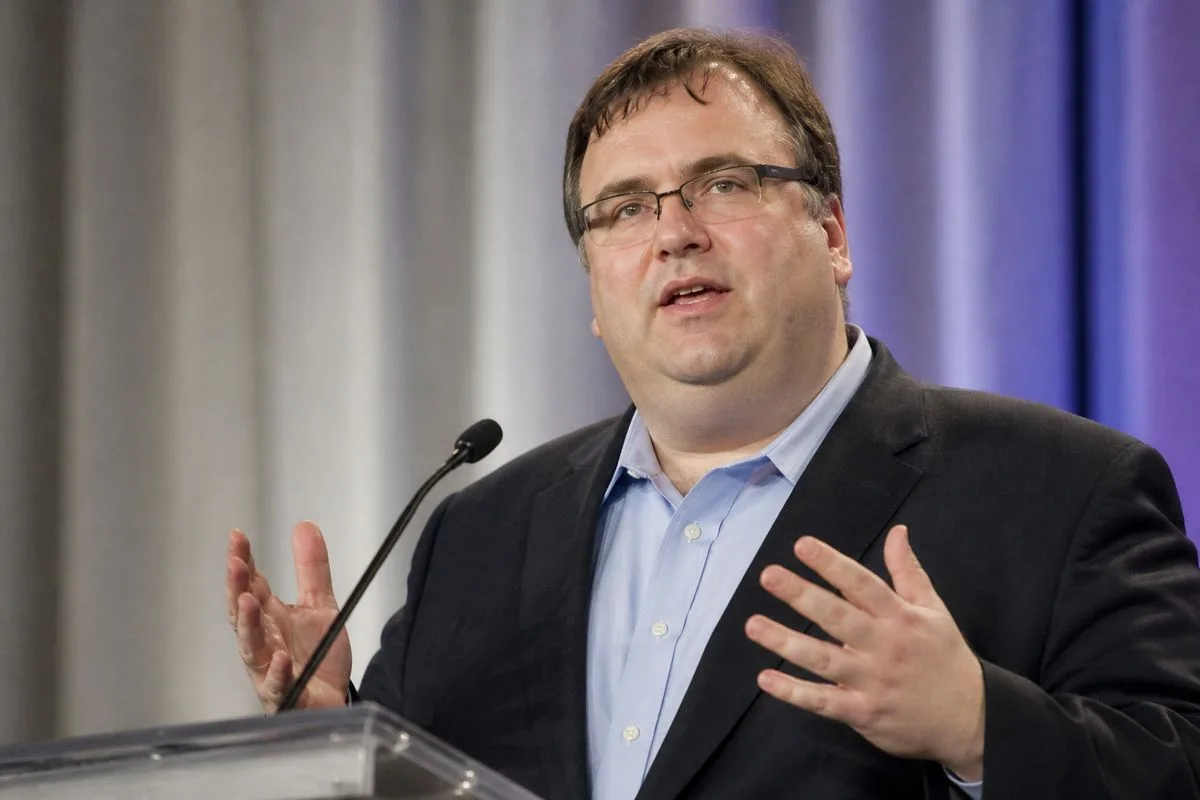
Hoffman, after being part of the early PayPal team, co-founds LinkedIn in 2003 and builds a platform around professional identity and networks. It is a different kind of entrepreneurship, one that treats networks as infrastructure. In 2026, that thinking shows up everywhere, from creator economies to B2B marketplaces. The product is often the network itself.
What the 2026 surge changes for founders, competition, distribution, and expectations
When business formation rises to the levels described in the source material, the competitive baseline shifts. More entrants mean more noise, more choice for customers, and less tolerance for vague positioning. In other words, it is not enough to “start”. The market now expects clarity: what problem is being solved, for whom, and why this organisation is credible. That is true for a local service business as much as for a start-up chasing scale.
Technology is a major enabler here, and the source material explicitly notes that “the expansion of new technology” makes it easier for entrepreneurs to reach national and global markets. That convenience cuts both ways. Distribution is easier, yes. But so is imitation. So is customer churn. So is the ability for a competitor to appear from another region and target the same audience. The practical implication for 2026 founders is that defensibility increasingly comes from execution: operational reliability, customer experience, brand trust, and speed of iteration.
There is also a subtle cultural shift embedded in the numbers. If the United States averages 430,000 new business applications per month in 2024, and sees 531,423 new businesses formed in June 2026, entrepreneurship becomes normalised. It stops being a rare career choice and becomes a mainstream option. That changes labour markets. It changes how people think about risk. And it changes what employers need to offer to retain talent, because “go independent” becomes a more realistic alternative for more people.
And then there is the payroll tax liable projection, 29,741 from June 2026 within four quarters. That figure hints at a pipeline of small employers. Not huge corporations, but organisations that hire. This is where entrepreneurship becomes a jobs story, not just an innovation story. It also raises the bar for founders, because hiring introduces management complexity fast. Policies, culture, compliance, training. The romantic version of entrepreneurship rarely mentions that part, but it is where many ventures either mature or stall.
From famous founders to everyday operators, turning “example” into a repeatable playbook
Big-name founders make for neat narratives, but the 2026 reality is that most entrepreneurship is carried by ordinary operators building ordinary businesses, and doing it well. The source material’s small business example, a psychologist opening a therapy group practice, is instructive precisely because it is not flashy. It is a service, delivered locally, with real demand, and a clear path to differentiation through quality and trust. For many readers searching “example of entrepreneurship”, this is the more relevant model.
What makes it entrepreneurial is not the industry. It is the decision to organise resources around an opportunity. That includes choosing a business model, setting pricing, building a referral engine, hiring clinicians, and managing capacity. It is also about resilience. Demand fluctuates, regulations change, and staffing is never as simple as it looks on a spreadsheet. A founder who navigates that is practising entrepreneurship in its most grounded form.

At the other end of the spectrum, start-up entrepreneurship is still defined by the ambition to disrupt and scale. But even here, the playbook is evolving. The source material does not provide step-by-step tactics, so it would be wrong to invent them. What it does provide is a clear description of the intent: create a unique product or service, often seek investment, and aim for profound impact. The practical takeaway is that founders need to be honest about which game they are playing. A small business optimises for profitability and stability. A start-up often optimises for growth and market share first, sometimes at the expense of short-term profit. Confusing the two is a common, costly mistake.
Social entrepreneurship adds a third dimension, mission. The source material’s examples, donating profits, supporting underserved communities, or donating products and services, show that social ventures can be structured in multiple ways. The key is alignment. If the mission is bolted on, it tends to be the first thing cut when margins tighten. If it is built into the operating model, it becomes a source of focus and, in some cases, a competitive advantage because it attracts customers, partners, and employees who care about the same outcomes.
A grounded definition of entrepreneurship, creativity plus strategy plus resilience
Definitions can feel academic, but in 2026 they matter because the word “entrepreneurship” is used so loosely. Ann Sanok’s framing is useful because it combines the creative and the operational. Entrepreneurship is “fun” and “creative”, yes. But it also requires “strategic thinking, leadership and resilience to turn ideas into action”. That last phrase is the tell. Ideas are cheap. Action is the work.
The Center for American Entrepreneurship definition in the source material is similarly practical: entrepreneurship is the process by which an individual or group brings a new product or service to market, or improves upon an existing offer. That “improves upon” clause is important. Many of the June 2026 formations are likely not inventing entirely new categories. They are improving delivery, pricing, convenience, or customer experience in existing categories. And fair enough, that is still entrepreneurship. Markets move forward through incremental improvements as much as through breakthroughs.
The source material also points to the role of education and structured learning, via SNHU’s entrepreneurship programmes and the student perspective from Jonathan Oubenslimane. The point is not that everyone needs a degree to start a business. The source does not claim that. But it does show that formal study can support entrepreneurship by providing frameworks, flexibility, and a platform for practical projects. In a crowded 2026 market, that kind of structure can reduce avoidable mistakes.
Put together, the 2026 story is not simply “more businesses exist”. It is that entrepreneurship is becoming a more common method of organising work and solving problems. That changes expectations. Customers expect better service. Employees expect more autonomy. Founders need to be sharper, because the competition is not sleeping.
Closing thoughts, what a modern example of entrepreneurship really signals
A modern example of entrepreneurship is best understood as a response to opportunity under new conditions. In 2026, those conditions include easier access to tools, broader reach to markets, and a cultural shift that makes business creation feel more attainable. The numbers, 430,000 average monthly applications in 2024 and 531,423 new businesses formed in June 2026, are the clearest signal that this is not a fringe phenomenon.
But the deeper signal is about variety. Entrepreneurship now spans small business owners building stable local operations, start-up founders chasing disruption, leaders inside large organisations pushing into new markets, and social entrepreneurs designing ventures around community outcomes. The famous founders, Gates, Jobs, Zuckerberg, Page, Brin, Hoffman, still offer valuable lessons about strategy, product focus, networks, and long-term bets. Yet the quieter stories, the group practice, the local chain, the mission-led service model, are just as representative of what entrepreneurship looks like day to day.
And that is the takeaway for anyone searching for an example. The best example is not a single person. It is a pattern of behaviour: identify a problem worth solving, choose a model that fits the goal, commit to execution, and keep going when it gets messy. In 2026, that pattern is everywhere. The data proves it.