
Small entrepreneurship ideas surge in 2026 as low cost, solo businesses go mainstream
In October 2026, a cluster of fresh guides and updated research lands with the same blunt message, small entrepreneurship ideas are no longer a niche hobby for weekends, they are a practical response to how work, costs, and consumer habits are shifting. One widely shared playbook published on 13 October 2026 argues that the smartest starting point is not a product, a shopfront, or a big brand plan. It is a service that can be sold this month, using skills and tools already to hand, cleaning, detailing, tutoring, baking, the unglamorous stuff that actually pays.
That framing matters because it is grounded in how small businesses really operate. According to the US SBA Office of Advocacy, 82.3 percent of the 36.2 million small businesses in the United States have no employees. In other words, the typical small business is not a mini corporation in waiting. It is one person, doing work, getting paid, and trying to keep cash flow steady. And that is exactly the lens these 2026 updates bring to the table, start small, validate quickly, avoid debt before demand exists.
Alongside that service first approach, an updated small town business guide (last updated 26 June 2026) highlights a different but complementary reality, smaller communities can offer lower rent, lower labour costs, and less direct competition, but only if the business fills a genuine gap or becomes a destination. And a separate 2026 round up of low budget, high demand ideas adds a wider economic context, it points to 5.5 million new business applications filed in the US in 2023, a record, and argues that the barrier to entry has fallen because digital tools and simple service models can replace expensive premises and inventory.
The October 2026 playbook, start with a service you can sell this month
The most concrete development in the latest coverage is the October 2026 guidance that pushes would be founders towards service businesses with four specific traits, low upfront cost, paid on the spot, repeat customers, and the ability to run solo. It is not exactly groundbreaking as a concept, but the clarity is the point. A service business is often easier to test than a product business because it does not require inventory, packaging, shipping, or a long lead time before the first pound or dollar arrives.
It also comes with a built in discipline, the market gives immediate feedback. If five paying customers cannot be found, the idea is not ready for expensive equipment or a lease. That “sell to five paying customers before you buy expensive equipment” rule is a simple filter that blocks a lot of avoidable pain. And it is especially relevant in 2026, when many people are experimenting with self employment while still juggling other commitments. The test is not whether friends like the idea, it is whether strangers pay for it.
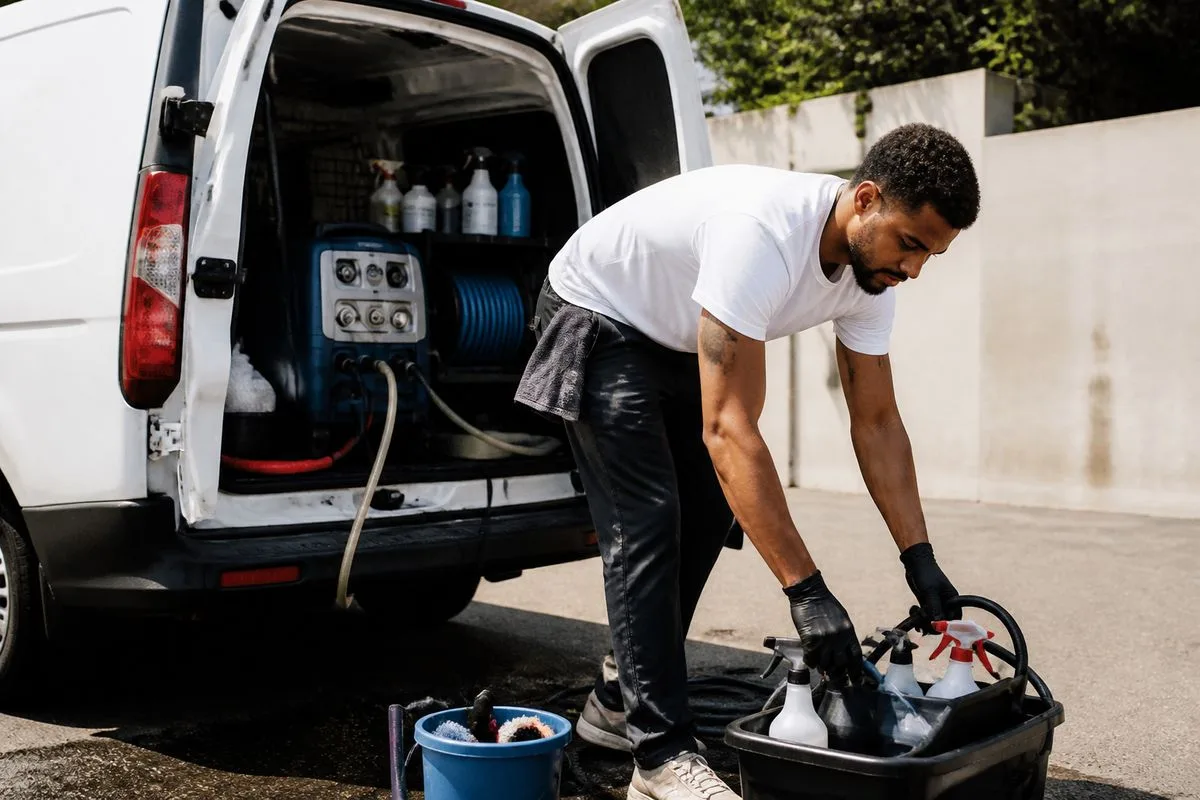
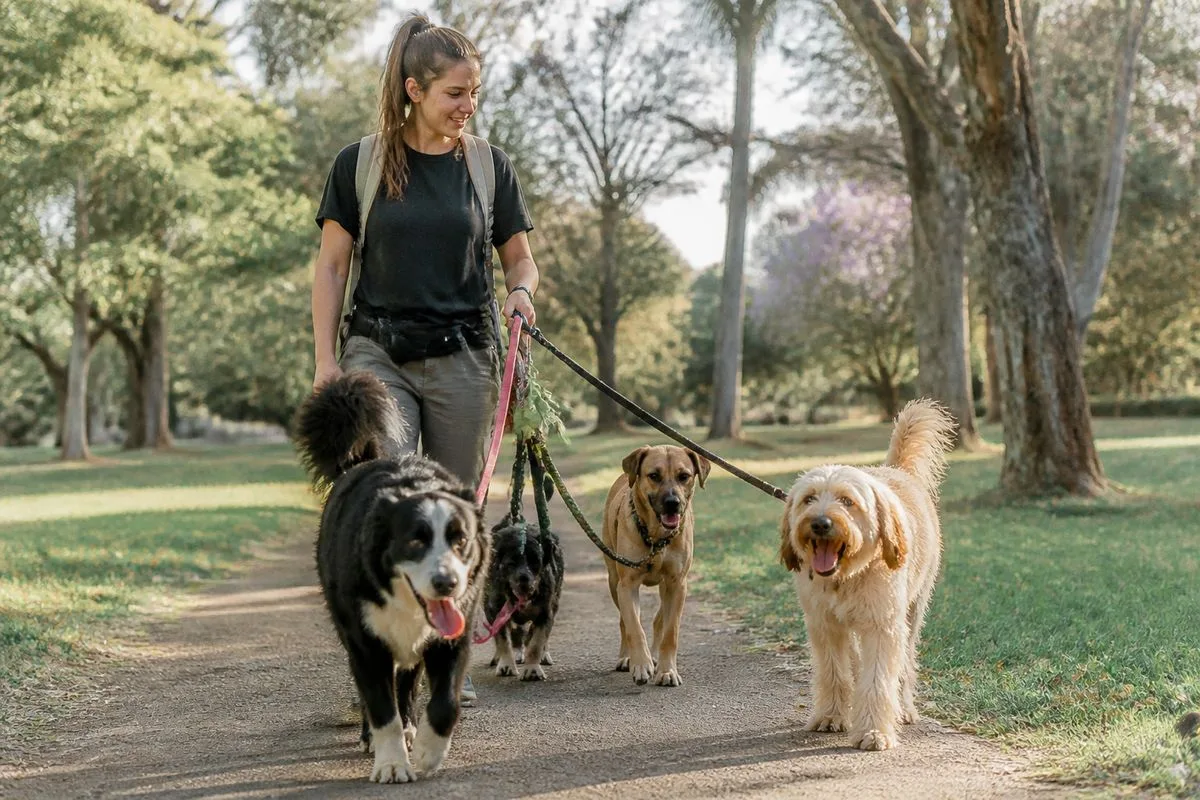
The playbook lists ten service ideas that can be launched quickly with basic kit, a car, and a phone. They include house cleaning, mobile car detailing, lawn care, dog walking, trash can cleaning, clean outs and junk hauling, mobile mechanic work, knife sharpening, solar panel cleaning, and mobile massage. It also flags a practical constraint that newcomers often miss, licensed trades take longer to launch because of state requirements. So anyone who needs income in weeks, not months, is nudged towards the unlicensed services at the top of the list.
Even the operational advice is deliberately unromantic, pick a name, check local licences, get a free EIN from the IRS, and set up card payments on a phone. The message is that “before day one” admin is not optional. It is part of being paid reliably and looking credible, even as a one person operation.
Small entrepreneurship ideas that work because the maths works, pricing, fees, and real profit
One of the more useful details in the October 2026 guidance is that it does not treat revenue as profit. It spells out the basic equation, profit comes from price minus supplies and fees. In an example used to make the point, a $160 car detail leaves $136.82 after supplies and fees. The article does not provide the full fee breakdown in the excerpted material, but the takeaway is clear, founders should calculate the true margin before they commit to a price list that looks good on a flyer but collapses under costs.
This is where many “small entrepreneurship ideas” quietly fail. Not because demand is absent, but because the operator underprices to win early customers, then discovers that consumables, fuel, card processing, and travel time eat the margin. Service businesses feel simple, but they are still businesses. A cleaner who charges per hour without accounting for travel and restocking can end up effectively working for less than expected. A junk hauling side hustle can look lucrative until dump fees and vehicle wear are treated as real costs rather than background noise.
The 2026 low budget guide reinforces the same discipline from a different angle. It argues that a strong business idea connects a clear customer problem with a practical solution that generates repeat demand and steady revenue. That “repeat demand” phrase is doing a lot of work. Weekly or monthly jobs, like lawns or bin cleaning, beat one time sales because they reduce the constant scramble for new customers. And for a solo operator, predictability is not a luxury, it is what makes scheduling, cash flow, and eventual hiring possible.
There is also a subtle strategic point here. A service that is paid on the spot reduces the need for working capital. That is why the October 2026 playbook favours models where the customer pays when the job ends. It is not just convenience. It is risk management. Late invoices can sink a micro business faster than a lack of demand.
Small entrepreneurship ideas for home and small towns, where demand is local and specific
Not every founder wants to drive from job to job. The October 2026 guidance outlines home based ideas that trade travel time for production time, work done at a kitchen table, sold at markets, online, or to local businesses. Examples include cookies and baked goods, press on nails, gift baskets, stationery, clothing resale, and bookkeeping. Each comes with its own operational “watch out”, cottage food rules for baking, sizing returns and photo quality for press on nails, printing costs per unit for stationery, and sourcing time per item for resale.
That last point is worth lingering on. Product businesses can be deceptively time heavy. A clothing resale operation, for instance, is not just listing items. It is sourcing, cleaning, photographing, measuring, posting, packing, and handling returns. In a small town, where the customer base is smaller, that time cost can be the difference between a tidy side income and an exhausting grind. The advice to set price from real costs before the first market is a quiet warning, do not let the excitement of “making sales” hide the reality of thin margins.
The small town guide updated in June 2026 adds a community lens. It argues that the right business either fills a gap, such as missing childcare, or creates a destination that draws people in from surrounding areas. It also cites a LendingTree survey that says 65 percent of Americans actively seek out small businesses during the holidays, and 76 percent plan to buy at least some of their gifts from them. The survey methodology is not included in the source excerpt, so it cannot be interrogated here, but the directional insight is still useful, seasonal demand for local goods is real, and it can be planned around.
And then there is the money question. The small town guide provides concrete cost ranges for some higher overhead models. It estimates coffee shops typically cost $80,000 to $300,000 to open, food trucks $40,000 to $150,000, and restaurants $175,000 to $750,000, depending on size and buildout. Those figures sit in sharp contrast to the service first approach that can start with tools already owned. The implication is not that coffee shops are a bad idea. It is that they are a different category of entrepreneurship, one where financing, location risk, and fixed costs dominate the early years.
The people and organisations shaping 2026’s small business conversation
Behind these 2026 updates are a few key institutions and editorial voices that influence how new founders think. The SBA Office of Advocacy provides the headline statistic that most small businesses have no employees, 82.3 percent of 36.2 million. That single data point reframes the cultural image of entrepreneurship. It suggests that policy debates, banking products, and even business advice should be designed for solo operators first, not for the minority that scale quickly.
On the consumer side, LendingTree’s editorial team, including named contributors and editors in the June 2026 update, positions small town entrepreneurship as a practical economic choice, lower rent, lower labour costs, less competition. It also includes a disclosure that the platform is compensated by companies whose listings appear on the site, and that compensation may affect placement. That does not invalidate the guidance, but it is a reminder that some “how to fund it” sections are written in a context where financial products are part of the ecosystem being discussed.
The 2026 low budget guide takes a more motivational, trend driven approach, pointing to record business applications in 2023 and arguing that more people are questioning the traditional 9 to 5 path. It also cites the US Small Business Administration view that small businesses account for 44 percent of total US economic activity. The guide’s real value, though, is its emphasis on specificity. It argues that “marketing consultant” is invisible, while “email strategist for independent restaurants” is findable and referable. That is a modern take on positioning, and it aligns neatly with how search, social media, and word of mouth actually work in 2026.

Put together, these sources are not describing a single company announcement or a new government scheme. They are documenting a shift in the mainstream advice itself, away from big launch fantasies and towards fast validation, narrow offers, and operational realism. That is the news, in effect, the playbook for starting small is being standardised and popularised.
From “idea” to “offer”, how 2026 guidance changes execution for first time founders
The most actionable change in the 2026 guidance is the move from brainstorming to packaging. A “small entrepreneurship idea” is not a business until it becomes an offer someone can buy. The low budget guide proposes a one sentence test, “I help [WHO] get [RESULT] by providing [SERVICE or PRODUCT].” If that sentence cannot be written cleanly, the concept is not ready. It is a deceptively tough exercise because it forces a founder to choose. Who exactly is the customer. What result is being sold. What is actually delivered.
That matters because generalist positioning is expensive. It requires more marketing, more explanation, and more trial and error. A narrow offer, by contrast, can be repeated, improved, and referred. The October 2026 service list already nudges founders in that direction, but the positioning framework makes it explicit. “House cleaning” becomes “weekly cleaning for short let hosts” or “move out cleans for letting agents”, depending on local demand. “Tutoring” becomes “GCSE maths catch up sessions” or “university admissions interview prep.” The sources do not provide those exact examples, so they are illustrative rather than quoted, but the principle is straight from the material, specific beats broad.
Execution also changes when the “five paying customers” rule is treated as a gate. It encourages founders to sell a minimum viable version of the service before investing. For a mobile detailing business, that might mean starting with basic interior cleans using existing equipment, then upgrading to a pressure washer once repeat bookings justify it. For a home baking business, it might mean selling a limited menu at a local market before buying larger mixers or renting kitchen space. The discipline is the same, prove demand, then expand capacity.
And there is a cultural shift embedded here too. The 2026 advice is not obsessed with scale. It is obsessed with sustainability. A solo business that pays reliably and fits around life constraints is treated as a valid end state, not merely a stepping stone. Fair enough, most people are not trying to build the next global brand. They are trying to build control over their time and income.
Industry implications, why service micro businesses are winning, and where the risks sit
For the wider small business ecosystem, the 2026 emphasis on low cost services has a few clear implications. First, it increases competition in local service categories, cleaning, lawn care, dog walking, detailing. When entry costs are low, more people can enter. That pushes successful operators to differentiate through reliability, packaging, and repeatable systems rather than just price. In practice, it means subscriptions, maintenance plans, and clear service tiers become more common, even among one person businesses.
Second, it changes what “support” looks like from banks, local authorities, and business groups. If most businesses are solo and service based, then the most useful support is not always a large loan. It is guidance on licensing, insurance, payment processing, basic bookkeeping, and pricing. The October 2026 playbook’s checklist, name, licences, EIN, card payments, is a snapshot of the infrastructure that makes micro entrepreneurship viable. The less friction there is in those steps, the faster someone can move from idea to income.
But there are risks, and the sources hint at them even when they do not dwell on them. Licensed services, such as massage and some mechanic work, take longer to launch because of state requirements. That delay can tempt people to operate informally, which can create legal and insurance exposure. Product businesses, meanwhile, can be hit by seasonal demand spikes, as the home based gift basket example notes. A founder who buys inventory for a holiday rush can be left holding stock in January. And small towns, for all their advantages, have a smaller customer base. A business that relies on constant new customers may struggle unless it becomes a destination or captures repeat local demand.
Finally, the cost ranges for coffee shops, food trucks, and restaurants underline a hard truth, some popular “dream” businesses are capital intensive. In 2026, with many people attracted to entrepreneurship for flexibility and control, taking on a large fixed cost base can be a mismatch. It can work, absolutely. But it is a different risk profile, and the founder needs to go in with eyes open.
Choosing among small entrepreneurship ideas, a practical filter for 2026
Across the 2026 material, a coherent selection filter emerges. It starts with the four tests from the October 2026 playbook, low upfront cost, paid on the spot, repeat customers, runs solo. Then it layers on the positioning discipline from the low budget guide, narrow the offer to one problem, one person, one outcome. And finally it adds the small town lens, does the business fill a gap or create a destination.
Applied together, this filter helps founders avoid two common traps. The first is choosing an idea because it sounds exciting rather than because it fits the founder’s constraints. The low budget guide explicitly asks, how many real hours per week can be given, not optimistic ones. The second trap is overbuilding too early, buying equipment, signing leases, or taking loans before the first real sales. The “red flag” in the October 2026 guidance is blunt, any idea that needs a big loan before the first sale should be tested smaller first.
There is also a tactical takeaway for anyone starting in late 2026. The fastest path to stability is often a repeatable local service with clear packaging and immediate payment. That does not mean everyone should start a cleaning business. It means the model, simple, cash flowing, repeatable, is a proven foundation. From there, founders can expand into higher ticket services, add complementary offers, or hire once the calendar is full. That sequence, validate, systemise, then scale, is the quiet logic running through all three sources.
And for those set on a higher overhead venture, such as a coffee shop or food truck, the 2026 guidance still offers a lesson, start with a smaller format where possible, a kiosk or cart is mentioned as a lower cost entry point for coffee. The principle is the same, reduce fixed costs until demand is proven. In 2026, that is not caution for caution’s sake. It is how small businesses survive long enough to become established.
Closing thoughts, small entrepreneurship in 2026 is less about hype and more about proof
The 2026 conversation around small entrepreneurship ideas is becoming more grounded, and that is a good thing. The headline statistic from the SBA Office of Advocacy, that 82.3 percent of US small businesses have no employees, is not just trivia. It is a reality check. Most founders are building solo operations, at least at the start, and the best advice now reflects that.
What stands out in the October 2026 playbook and the broader 2026 guides is a shared insistence on proof. Sell to five paying customers before buying expensive equipment. Choose ideas that get paid on the spot. Prioritise repeat customers. Write a one sentence offer that makes the business findable and referable. These are not glamorous steps. But they are the steps that turn a vague ambition into a functioning business.
And perhaps that is the real development this year. Entrepreneurship advice is moving away from the myth of the big launch and towards the discipline of the small start. For many people, that is not a compromise. It is the whole point.