

UK StartUp Awards 2026 lands at Ideas Fest, and the ecosystem turns up in force
The UK StartUp Awards 2026 reaches its defining moment on 9 September 2026, with the national final staged at Ideas Fest in Champneys, Tring, Hertfordshire. It is not just another trophy night. It is a deliberately public, high-energy showcase of early-stage ambition, where regional winners from across the UK step onto a national platform in front of founders, investors, and business leaders.
The organisers describe Ideas Fest as a gathering of 6,000 entrepreneurs, investors, and business leaders, and the awards final sits on that main stage as the culmination of a months-long pipeline. That scale matters. It signals that the UK StartUp Awards is positioning itself as both a celebration and an infrastructure, a mechanism that helps young companies move from local credibility to national visibility (and, in many cases, to the next serious conversation about customers, partnerships, and capital).
In 2026, the story is also about momentum. The shortlist is live, regional finals run throughout June, and the national finalists are announced in July. Then, in early September, the winners are crowned. It is a clean narrative arc, and it is built to keep attention on startups over time, rather than for a single evening.

From January applications to a September finale: how UK StartUp Awards 2026 works
The UK StartUp Awards 2026 programme is structured like a funnel, and it is refreshingly transparent about the steps. Applications open from January to March 2026, with founders applying across 22 categories. Entry is free, which is not a small point. Awards can be a pay-to-play world, and removing fees changes who can realistically put themselves forward, especially outside London and the South East.
After the application window closes, a regional shortlist is announced, and finalists are selected for each of the 10 regions. The regional finals then take place across the UK from 2 June to 25 June 2026, with regional finalists celebrated and regional winners crowned. Those winners progress to the national stage, with national finalists announced in July 2026.
By the time the national final arrives at Ideas Fest on 9 September 2026, the field has already been pressure-tested through regional competition and public recognition. That sequencing is important for credibility. It also creates a practical benefit for founders: each stage offers a new reason to talk to customers, talent, and investors, and a new moment to sharpen the company narrative.
And there is a broader strategic choice here. The awards are not presented as a standalone gala, but as part of a wider calendar: regional events, a national festival setting, and year-round ecosystem language. That is a deliberate attempt to make recognition feel less like a one-off and more like a platform founders can keep using.

More than 200 winners head to the UK StartUp Awards 2026 national final
On 1 July 2026, the UK StartUp Awards announces that more than 200 category winners from across the UK are confirmed for the national final at Ideas Fest. That is a striking figure, not because it tells the whole story of the UK startup economy, but because it hints at the breadth of categories and the sheer number of companies being pulled into a single national moment.
In practice, this means the national final is not a narrow contest between a handful of household-name scaleups. It is a broad, category-driven competition, where many different types of business can plausibly win something meaningful. That matters for the health of the ecosystem, because it validates more than one model of success. Not every high-potential company is a venture-backed software business, and the awards structure implicitly acknowledges that.
The regional finals provide concrete examples of that diversity. On 30 June 2026, Tailored Spirits Company is named Scotland StartUp of the Year at the regional final in Edinburgh, with 18 winners from that event heading to Ideas Fest for the national final. On the same date, DigiProp is named Wales StartUp of the Year at the regional final in Cardiff, with 22 winners progressing. The source material does not provide further operational details about these businesses, so any deeper claims about their products or performance would be speculation. But the signal is clear: the awards are surfacing winners in very different sectors, across multiple nations.
There is also a subtle but important implication in those regional winner counts. Different regional finals appear to crown different numbers of winners, which suggests the awards are flexible enough to reflect local participation and category strength. That is not exactly groundbreaking, but it is pragmatic. A rigid, one-size-fits-all model often fails to capture what is actually happening on the ground.
Inside the Ideas Fest experience: networking shifts from conference halls to fields
One of the most revealing pieces of colour comes not from an official press release, but from a LinkedIn post reshared by the UK StartUp Awards. FundOnion, which has 4,949 followers on the platform, describes attending Ideas Fest and coming away convinced that “festivals are the new conferences”. The post argues that being outdoors in a field strips away the usual networking formalities and makes room for more genuine connections across professional backgrounds.
That observation lands because it speaks to a real problem in startup culture: networking can become performative, transactional, and frankly a bit exhausting. A festival format changes the social physics. People linger. Conversations are less scripted. And founders who are not naturally drawn to the hard-sell conference circuit may find it easier to build relationships in a setting that feels less like a corporate obstacle course.
The same post notes that FundOnion is “proud to present the Professional Services Award” to Littlechild & Haley at the UK StartUp Awards finals tent. The source material does not specify whether this is a national category win or a specific event-level award within the Ideas Fest setting, and it does not provide further details about Littlechild & Haley. Still, it illustrates how partners and sponsors show up in a visible, participatory way, not just as logos on a backdrop.
And that is the point. The UK StartUp Awards is increasingly as much about convening as it is about judging. The ceremony is the headline, but the real economic value often sits in the side conversations: the investor who finally meets a founder in person, the adviser who offers a crucial introduction, the future hire who decides this is the kind of company they want to join.
Magic AI and the credibility flywheel: what last year’s winner tells founders in 2026
The UK StartUp Awards does not operate in a vacuum. It builds its authority by pointing to past winners and the narratives they represent. In 2025, the overall UK StartUp of the Year is Magic AI, founded by Varun Bhanout. The awards describe Magic AI as delivering “cutting-edge AI solutions” that help companies “automate, innovate, and scale”. The source material does not provide metrics, customer names, or funding figures, so it is not possible to quantify impact from the information provided. But the positioning is unambiguous: AI is not a side category, it is central to the awards’ view of where excitement and opportunity sit.
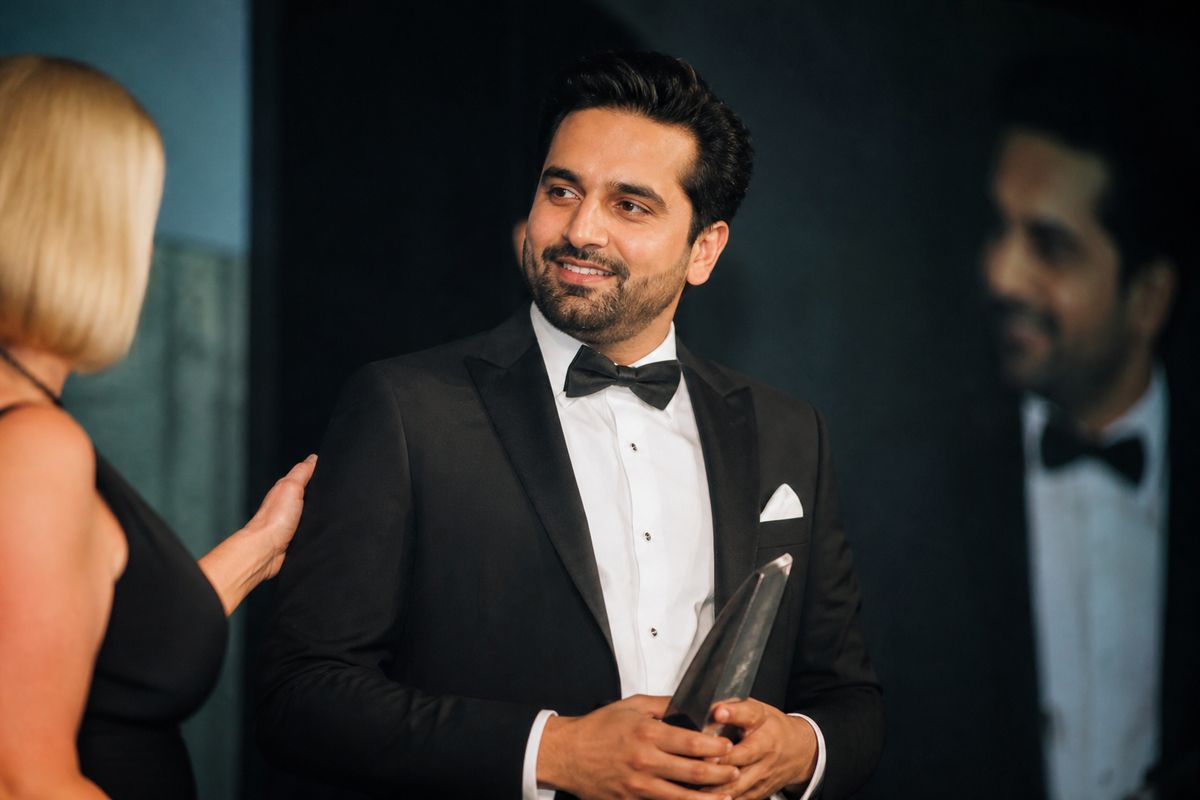
Magic AI’s 2025 recognition also includes East of England AI StartUp of the Year, plus UK AI StartUp of the Year and UK Equity Backed StartUp of the Year. That cluster of awards is telling. It suggests the programme is comfortable rewarding both technical promise and the ability to attract equity backing, which is often a proxy for investor confidence and scalability.
Professor Dylan Jones Evans, founder of the UK StartUp Awards, is quoted praising Bhanout’s vision and describing Magic AI as “a very worthy winner”. It is a short quote, but it reinforces the awards’ role as a credibility mechanism. For founders watching in 2026, the message is simple: win here, and the market may take you more seriously tomorrow than it did yesterday.
But there is a second, more nuanced lesson. The awards are not only about who wins. They are about who gets seen. Even being shortlisted can become a marketing asset, a recruitment tool, and a conversation starter with potential partners. In a crowded market where attention is scarce, that kind of third-party validation can be the difference between being ignored and being considered.
What the UK StartUp Awards 2026 signals about the UK’s startup economy
At a high level, the UK StartUp Awards 2026 reflects an ecosystem that is both decentralising and professionalising. Decentralising, because the programme is explicitly regional, with 10 regions and regional finals across June. Professionalising, because the awards are wrapped in a structured process, partner involvement, and a national finale embedded within a major entrepreneurial gathering.
The “more than 200” figure for category winners heading to the national final is particularly revealing. It implies a wide base of recognised companies, which can be read in two ways. Optimistically, it suggests a deep bench of entrepreneurial activity across sectors. More cautiously, it suggests that recognition is being distributed broadly, which can dilute the perceived exclusivity of winning. The truth is probably somewhere in the middle. Broad recognition can be a feature, not a bug, if the goal is to build a pipeline of companies that feel supported and visible.
The festival setting adds another layer. If Ideas Fest genuinely attracts 6,000 entrepreneurs, investors, and business leaders, then the awards are not just handing out titles, they are creating a marketplace for relationships. That is where industry impact happens. Deals do not close on stage, but they often start in the queue for coffee, or in a conversation that feels casual until it suddenly is not.
There is also a cultural signal. The UK startup scene has sometimes been criticised for being overly London-centric and overly finance-led. A regional awards circuit culminating in a national festival is a counter-narrative. It says: talent is everywhere, and the community can gather on terms that are not purely corporate.
How this compares with investor-led awards like The Ventures, and why founders should care
It is useful to compare the UK StartUp Awards with other award models operating in the same broad space. The Ventures Award, for example, positions itself as an investor-connection engine, identifying high-potential startups and linking them with a network of leaders from 119 VC funds and business angels, collectively managing over $11 billion in assets. That is a very different framing. It is less about public celebration and more about curated access.
The Ventures material emphasises pitching to handpicked investors, meeting them face-to-face, and gaining advice from industry leaders associated with major technology companies and universities. It also describes a global footprint, stating that it is hosted across 19 top tech capitals and spans 6 continents, 19 countries, and 30 major cities. The source material includes multiple date references, including an applications close date of 7 June and a final pitch in London on 9 June, but it also contains an additional “Until November 8” line that appears inconsistent in context. Without clearer information, it is not possible to present a definitive 2026 calendar for The Ventures from the text provided.
Still, the contrast is instructive. The UK StartUp Awards is designed to build broad-based recognition and community legitimacy, with a free-to-enter model and a regional pathway. The Ventures is designed to accelerate investor exposure and global visibility, with a strong emphasis on pitching and VC networks. Neither approach is inherently better. But founders should be clear-eyed about what they need. Is the priority credibility with customers and local partners, or direct investor access and pitch-driven momentum?
And there is a practical takeaway here. A founder can treat these as complementary, not competing. A regional win at the UK StartUp Awards can strengthen a narrative before stepping into a more investor-centric environment. Conversely, investor feedback from a pitch-led award can sharpen messaging ahead of a public-facing national final. The smart play is to build a calendar that compounds, rather than chasing every badge going.

The mechanics of recognition: partners, perks, and the business case for entering
The UK StartUp Awards makes a direct case for why founders should participate, and it is worth unpacking because it reveals how modern awards programmes compete for attention. The benefits listed include national recognition and media coverage across major outlets, a “100,000+ entrepreneur network”, credibility and trust, and finalist perks such as press release tools and resources. The source material does not provide a breakdown of the network figure or how it is measured, so it should be treated as a headline claim rather than a verifiable statistic in this context. But the intent is clear: the awards are selling outcomes, not just applause.
There is also an explicit promise of accessibility. The programme is “completely free to enter”, with “no entry fees, no barriers”. That matters in a year when many early-stage businesses remain cost-sensitive. Free entry lowers friction, increases diversity of applicants, and can improve the quality of the shortlist by widening the pool. It also puts pressure on the organisers to secure sponsorship and partnerships, which in turn shapes how the event is staged and marketed.
Partner involvement shows up in the Ideas Fest anecdote, where FundOnion presents an award. Sponsorship is not merely financial support, it becomes part of the theatre and the networking fabric. For corporate partners, this is a way to align with high-growth companies early, spot potential suppliers or acquisition targets, and build brand credibility with entrepreneurs. For startups, it is a chance to meet decision-makers who are not just browsing, they are invested enough to be in the room.
But founders should also be realistic. Awards do not replace fundamentals. A trophy does not fix product-market fit, and a shortlist does not guarantee funding. What it can do is open doors that are otherwise closed, and speed up conversations that would have taken months to start. In business, that time advantage is often the real prize.
Closing thoughts: a national final that reflects a changing UK startup culture
The UK StartUp Awards 2026 national final at Ideas Fest is, on the surface, a celebration. But underneath, it is a snapshot of how the UK startup ecosystem is evolving. It is more regional, more community-driven, and more conscious of experience design. The fact that attendees talk about festivals replacing conferences is not just a throwaway line, it is a clue about where professional culture is heading.
For the industry, the implications are practical. Investors and corporates that want early access to innovation increasingly need to show up where founders actually gather, not just where the suits traditionally meet. For founders, the message is equally pragmatic: visibility is a lever, and structured recognition can be used to recruit, sell, and partner more effectively.
And for policymakers and ecosystem builders, the awards offer a model worth studying. A free-to-enter, regionally distributed programme that culminates in a high-profile national moment can help rebalance attention across the country. It will not solve structural issues on its own, fair enough. But it does create a stage, and stages have a habit of changing who gets heard.
As the 2026 shortlist goes live and the winners emerge from June’s regional finals into September’s national spotlight, the UK StartUp Awards continues to do what the best ecosystem institutions do. It tells founders, in public, that their work counts. Then it puts them in a field with thousands of people who might help them make it count even more.