

Youth entrepreneurship financing gets a practical reset, and Liberia is making the case
Youth entrepreneurship financing is having a moment in 2026, but not in the way many people expect. The loudest announcements are not about handing out cheques. They are about building the unglamorous machinery that makes a young business investable: records, governance, product discipline, and the ability to explain a business model without hand waving. And in Liberia, that shift becomes very concrete on 28 August 2026, when the Ministry of Commerce and Industry (MoCI) and the Youth Entrepreneurship Investment Bank Management Company (YEIB MANCO) launch a new Technical Assistance Program backed by the African Development Bank (AfDB).
At first glance, technical assistance can sound like the sort of thing that belongs in a donor report. But the Liberian programme is explicit about what it is and what it is not. It is not a cash grant scheme. It is a structured effort to move young people from informal enterprise and unemployment into businesses that can qualify for financing, connect with markets, and survive growth pressures. That distinction matters because it tackles the real bottleneck in youth enterprise: not ideas, but credibility.
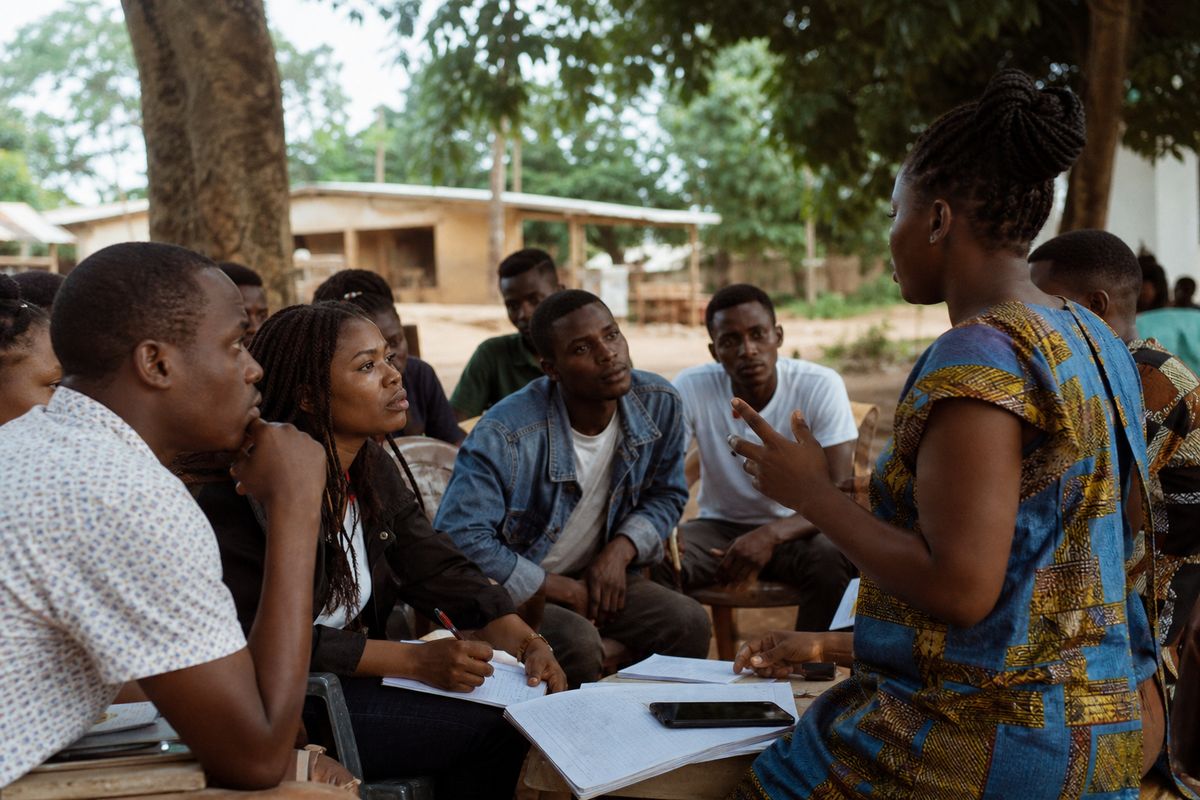
What makes this story bigger than one launch event is the parallel movement elsewhere. In the United States, entrepreneurship education non profit NFTE is rolling out its 2026 to 2027 World Series of Innovation for ages 5 to 24, and it is doing so with a clear message about skills, credentials, and real world experience. In San Francisco, Enterprise for Youth continues to scale paid internships and professional development, including employer exposure such as a behind the scenes visit to The RealReal and a major annual event built around mock interviews. Different geographies, different tools, same underlying thesis: capability first, money second.
YEIB MANCO Technical Assistance Program launch, what happens on 28 August 2026
The Liberian government frames the launch as a direct response to a persistent economic challenge: helping young people transition from unemployment and informal enterprise into sustainable businesses that can attract investment, create jobs, and generate income. On 28 August 2026, MoCI and YEIB MANCO formally launch the YEIB MANCO Technical Assistance Program, implemented through the Ministry’s Small Business Administration and financed by the AfDB.
The immediate focus is deliberately non monetary. The programme is designed to help entrepreneurs build enterprises that can eventually qualify for financing, connect with markets, and withstand growth. That means the work starts with basics that many early stage founders skip, or never had the chance to learn properly: business planning, financial management, marketing, record keeping, product development, digitalisation, and market access. It is hands on, and it is meant to produce businesses that lenders and investors can trust.
There is also a clear cohort structure. The first cohort selects 50 MSMEs from across Liberia. And at least half of that cohort is expected to come from outside Montserrado County, according to the official application platform referenced in the reporting. That is a small detail with big implications, because it signals an attempt to avoid concentrating opportunity in the capital region and to bring rural counties into the financing ecosystem.
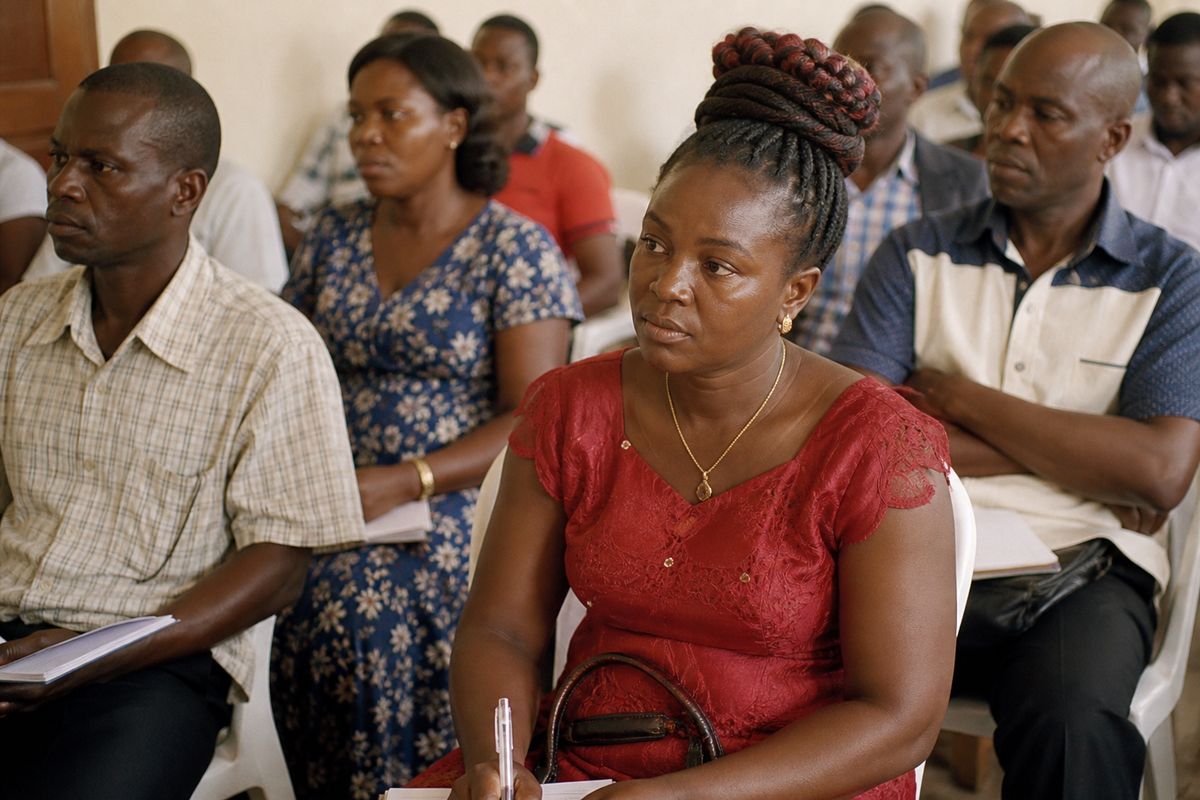
Minister of Commerce and Industry Magdalene Ellen Dagoseh positions the initiative within the Government’s ARREST Agenda for Inclusive Development, describing the goal as a more inclusive, productive, and resilient private sector economy where young people and women have real support to start, formalise, and grow job creating businesses. YEIB MANCO Chief Executive Officer Joseph Fatorma Sando reinforces the same point from the operator’s side: the mandate is to make Liberian businesses stronger, more organised, and ready for investment and growth. Not exactly flashy, but that is the point.
Inside the mechanics of youth entrepreneurship financing, why “investment readiness” is the new currency
The reporting around YEIB MANCO is unusually frank about why young entrepreneurs struggle. It is not always because the idea is weak. It is often because the enterprise is poorly documented, financially disorganised, informally operated, or unable to demonstrate capacity to lenders and investors. In other words, the business might be real, but it is not legible to finance. Banks and investors do not fund vibes. They fund evidence.
This is where technical assistance becomes a form of infrastructure. Record keeping creates proof of performance. Financial management improves cash flow control and accountability, which is what repayment depends on. Business planning forces clarity on revenue models and strategy. Marketing and product development improve competitiveness. Digitalisation can raise efficiency and expand market reach. And investment readiness coaching changes the founder’s posture from “please give me money” to “here is why an investment makes sense, and here is how it gets repaid”. That shift is fundamental.
The programme also aims to address both sides of the finance gap at once. Financial institutions may be reluctant to lend to young businesses due to perceived risk, limited collateral, weak records, and inadequate information. Meanwhile, entrepreneurs may not yet have the systems to absorb and repay financing responsibly. Technical assistance is the bridge. It does not remove risk, but it makes risk measurable and manageable. That is how lending markets actually expand.
There is a subtle but important point here for policymakers and donors. When youth entrepreneurship financing is treated as a distribution problem, the solution becomes grants and small loans. When it is treated as a capability problem, the solution becomes systems, standards, and pathways. Liberia is signalling that it wants the second model. Fair enough. It is harder work, but it is the kind that tends to stick.
NFTE’s entrepreneurship education pipeline, from classrooms to credible founders
While Liberia builds an investment readiness track for MSMEs, NFTE is working further upstream, at the point where young people first learn to think like entrepreneurs. NFTE describes its mission as bringing the power of entrepreneurship education to learners, educators, and decision makers so young people can own their futures. It positions its model as a way for partners and school districts to integrate entrepreneurial education across curricula and equip students with skills, connections, credentials, and real world experiences needed to lead change.
NFTE’s scale is not trivial. Since 1987, it has reached nearly 1.5 million learners worldwide. It reports that 62 percent of its students are people of colour and 40 percent identify as female. It also notes that NFTE schools average a 61 percent free or reduced lunch rate, and 66 percent of schools have rates of 50 percent or higher. Those figures matter because they place entrepreneurship education in the context of access and inequality, not just innovation theatre.
In 2026, NFTE is not only running programmes, it is staging moments that create momentum. The organisation highlights a 2026 Youth Entrepreneurship Showcase dated 18 November 2026. And on 9 September 2026, it announces the launch of the 2026 to 2027 World Series of Innovation for young changemakers aged 5 to 24. That age range is strikingly broad, but it reflects a strategic view: entrepreneurial thinking is a literacy, not a late stage elective.
NFTE’s own impact claims also point to labour market relevance. It reports that 90 percent of employers say the workforce needs the entrepreneurship skills NFTE teaches. It also reports that 75 percent of alumni have career satisfaction, 64 percent say they have launched at least one business, and 41 percent currently own a business. Those are big numbers, and NFTE publishes them as part of its impact story. What the source material does not provide is the methodology behind those figures, so they should be read as organisational reporting rather than independently verified statistics. But they still indicate what NFTE believes the market values: agency, adaptability, and execution.
Enterprise for Youth and the paid internship model, turning “soft skills” into hard outcomes
Entrepreneurship is one route. Employment readiness is another. And in practice, the two are closer than people admit. Enterprise for Youth positions itself as a central employment resource that provides job readiness skills and soft skills, then gives young people a place to practise those skills in supportive, paid internships. It also emphasises ongoing professional development workshops that help youth build a network of peers, colleagues, and mentors. That network piece is not a nice to have. It is often the difference between a first opportunity and a second one.

The organisation’s events calendar in 2026 shows how it operationalises exposure to real workplaces. One example is The RealReal Site Visit, listed on 12 September 2026 with a behind the scenes tour of The RealReal, described as an online marketplace for luxury fashion, jewellery, and accessories with expert authenticated items. The event is framed as a way to explore career paths in e commerce, sustainability, and luxury resale, especially for students interested in fashion, business, or tech. It also includes practical details such as group travel and sponsored lunch, which sounds minor until one remembers that logistics costs can quietly exclude under resourced students.
Then there is Enterprise for Youth Day 2026 on 16 October 2026, a celebration of the organisation’s 57 years of connecting San Francisco youth to transformative paid internships. The structure is telling. It begins with an hour of mock interviews so young people can practise interview skills with volunteers, then moves into the celebration. That sequencing is not accidental. It puts skill building at the centre and the social event around it. And it reflects a broader truth: confidence is built through repetition in safe environments, not through motivational speeches.
Enterprise for Youth also surfaces how new technologies are entering youth development. Its stories include a participant who joined an AI workshop and went on to apply learning in a project building a biomedical vision language model to analyse pneumonia, blood cells, and dermatology scans while addressing biases in how skin tones are represented. The source material does not provide performance metrics or outcomes for that model, so it should be treated as an illustrative example rather than a clinical claim. Still, it shows the direction of travel: youth programmes are increasingly blending employability with technical literacy, because the workplace is doing the same.
From education to finance, the emerging “capability stack” that links NFTE, Enterprise for Youth, and YEIB MANCO
Put these three strands together and a pattern emerges. NFTE builds entrepreneurial mindset and foundational business skills early, often in underserved communities. Enterprise for Youth builds workplace readiness through paid internships, professional development, and employer exposure. YEIB MANCO builds investment readiness for MSMEs so that finance can flow with less friction. Different stages, same pipeline. It is a capability stack, and it is increasingly how serious youth entrepreneurship financing ecosystems are organised.
This matters because youth policy often swings between extremes. One camp argues that young people need jobs, not business plans. Another argues that entrepreneurship is the answer to unemployment. The more realistic view is that young people need options, and those options require skills that travel. Interview practice, financial record keeping, product thinking, and digital fluency are transferable across employment and entrepreneurship. And when a young person does choose to start a business, the leap is smaller if they already understand how organisations work.

There is also a geographic lesson. Liberia’s programme is explicitly trying to include entrepreneurs outside Montserrado County. In the US examples, both NFTE and Enterprise for Youth are explicit about serving under resourced communities. The common thread is that talent is widely distributed, but opportunity is not. Programmes that ignore that reality tend to reproduce it. Programmes that design around it can, over time, change who gets to participate in the formal economy.
And yes, there is a finance angle that is easy to miss. Technical assistance is sometimes criticised as slow, but it can be the cheapest form of risk reduction available. If a cohort of 50 MSMEs becomes more bankable, that does not just help those founders. It can also teach lenders what to look for, create templates for documentation, and normalise better reporting. That is how ecosystems mature, one boring spreadsheet at a time.
Historical context, what Liberia’s YEIB model borrows from, and what it tries to avoid
The YEIB MANCO Technical Assistance Program sits within a broader structure. Liberia becomes the first country to launch an AfDB supported Youth Entrepreneurship Investment Bank in July 2025. The reporting describes the broader initiative as combining financial and non financial instruments, including an early stage investment fund, technical assistance, and credit guarantee mechanisms. The AfDB frames it as a mechanism to strengthen youth entrepreneurship, address unemployment, and expand access to finance, with an original design intended to support thousands of youth led businesses over time and mobilise additional private sector lending.
That architecture is not invented from scratch. Development finance has long used blended models that pair capital with capability building and risk sharing. What is notable here is the explicit sequencing. The 2026 technical assistance launch emphasises that the first step is not disbursement. It is preparation. That is a direct response to the historical failure mode of many youth enterprise schemes: money goes out quickly, but businesses are not ready, repayment falters, and the programme becomes politically fragile.
There is also a governance point embedded in the creation of YEIB MANCO as a management company. By separating management and technical support functions from political cycles, the model aims, at least in theory, to create continuity. The source material does not provide details on governance structures, oversight, or performance targets, so it is not possible to assess how insulated the programme is in practice. But the intent is visible. It is trying to build an institution, not just run a training.
Comparisons with US based youth programmes are not one to one, because the labour markets and financial systems differ. But the underlying historical lesson travels well: ecosystems that produce investable youth led businesses tend to invest heavily in education, mentorship, and standards long before they scale lending. Liberia’s YEIB approach is an attempt to compress that timeline, using AfDB backing to build both the financial instruments and the readiness pipeline in parallel.
What success looks like in 2026 and beyond, and the risks that could derail it
For YEIB MANCO, success in the near term is not best measured by how much money is disbursed, because the programme is not designed as a cash grant scheme. A more meaningful early indicator is whether the first cohort of 50 MSMEs exits the programme with improved documentation, clearer business plans, stronger financial controls, and demonstrable market access. If banks and investors begin to treat graduates differently, that is the real proof. The source material does not provide KPIs or timelines for graduation, so any evaluation framework beyond this logic would be speculative.
There are also execution risks. Technical assistance can become generic if it is delivered as classroom theory rather than hands on business improvement. It can also skew towards founders who are already more literate, more connected, or more urban, which is why the commitment to include at least half the cohort from outside Montserrado County is worth watching. Another risk is that entrepreneurs become “programme ready” rather than market ready, producing documents that satisfy application requirements but do not translate into sales and margins. That is a common trap. Avoiding it requires mentors who are commercially sharp and a curriculum that forces real world testing.
In the US context, NFTE and Enterprise for Youth face their own versions of the same challenge: turning participation into durable outcomes. NFTE’s scale, nearly 1.5 million learners since 1987, is impressive, but scale can dilute intensity if not managed carefully. Enterprise for Youth’s paid internship model is powerful, but it depends on employer partnerships and the availability of placements. And as AI reshapes entry level work, programmes have to keep updating what “job readiness” actually means. Enterprise for Youth’s AI workshop example suggests it is already moving in that direction.
The encouraging part is that these models are complementary. Education builds mindset. Internships build workplace fluency. Technical assistance builds investability. Youth entrepreneurship financing, done properly, is not a single intervention. It is a ladder. The 2026 developments in Liberia and the US show more organisations and governments are finally treating it that way.